
News
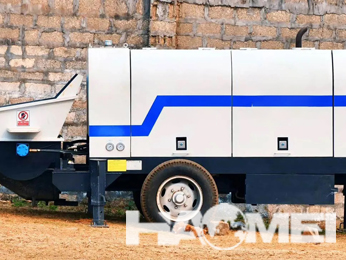
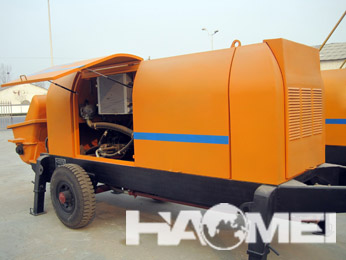
Trailer Concrete Pump for Lightweight Concrete
With the rapid development of prefabricated construction, thermal insulation structures, and energy-efficient buildings, lightweight concrete is increasingly used in roof slope leveling, floor heating backfilling, partition wall filling, and insulation layer construction. Compared with conventional concrete, lightweight concrete places higher demands on conveying equipment in terms of stability, continuity, and adaptability.
The newly launched HAOMEI HBT Series trailer concrete pump effectively addresses these challenges.
Why Choose a Trailer-Mounted Concrete Pump?
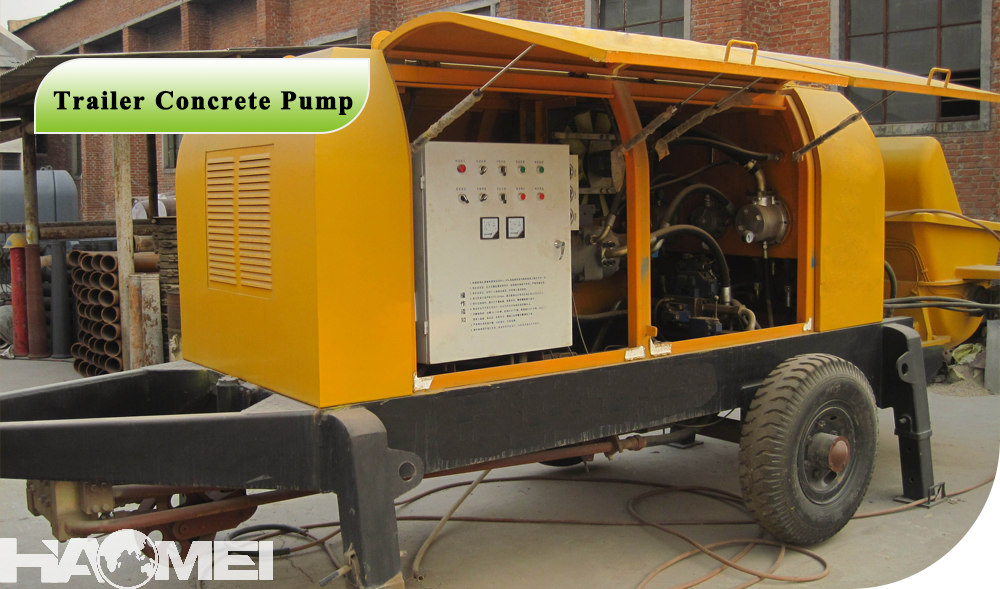
Trailer concrete pumps demonstrate distinct technical advantages when handling the pumping challenges of lightweight concrete. From structural design to power systems, these machines are specifically optimized for the conveying characteristics of lightweight materials.
Compared with boom pump trucks, trailer pumps typically utilize a smoother S-valve shifting system, which reduces shear disturbance to lightweight concrete and helps maintain material homogeneity during pumping.
Most high-performance trailer pumps are equipped with a two-stage pressurization system, capable of automatically adjusting delivery pressure according to actual pumping resistance. This prevents pipeline blockage caused by insufficient pressure while also avoiding aggregate damage due to excessive pressure.
To address the tendency of lightweight concrete to segregate, modern trailer pumps are usually fitted with a low-speed agitator inside the hopper, ensuring consistent material uniformity throughout the pumping process.
Performance Advantages of Trailer-Mounted Concrete Pumps
1. Stable Conveying, Reduced Segregation
Trailer-mounted concrete pumps adopt a dual-cylinder hydraulic drive system, ensuring continuous pumping with minimal pulsation, effectively preventing layering and segregation during lightweight concrete transport.
2. Adjustable Pumping Pressure for Multiple Mix Designs
By regulating hydraulic pressure and pumping frequency, the pump can adapt to lightweight concrete with different densities and foaming ratios, ensuring consistent construction quality.
3. Strong Vertical and Horizontal Conveying Capacity
These pumps are suitable for multi-story construction, roof backfilling, and long-distance horizontal conveying, making them ideal for large-area leveling and high-rise projects.
4. Compact Structure and High Site Adaptability
With a compact footprint and easy relocation, trailer pumps perform well in confined job sites, narrow access roads, and dispersed construction locations.
Core Technical Parameters of Trailer-Mounted Concrete Pumps
Maximum Output (m³/h)
Lightweight concrete models: typically 30-120 m³/h
Selection guidance:
Small-scale projects: 30-60 m³/h
Large construction sites: 80-120 m³/h
Maximum Pressure (MPa)
Standard configuration: 6-10 MPa
High-pressure models: up to 15 MPa for high-rise buildings or complex pipeline layouts
Delivery Cylinder Diameter (mm)
Common sizes: 50-125 mm
Recommended for lightweight concrete: 75-100 mm, balancing flow rate and material stability
Power Source
Diesel generator: Independent power supply, ideal for remote locations
Electric motor: Connected to external power, energy-efficient and environmentally friendly
Pipeline System
Hose material: High-wear polyurethane, resistant to abrasion and chemical corrosion
Pipeline length: Standard 30-60 m, extendable up to 100 m
Application Areas
1. Residential and Civil Buildings
Lightweight concrete wall filling: rapid delivery to high floors or confined spaces
Floor slab pouring: ensures uniform distribution and reduces hollowing defects
2. Commercial and Industrial Buildings
Factory roofing: compatible with lightweight concrete roof panel construction
Garage flooring: improves load-bearing capacity and thermal insulation performance
3. Precast Component Plants
Mold filling: precise flow control ensures uniform concrete distribution within molds
4. Temporary and Maintenance Projects
Repair and reinforcement: easy mobility for bridges, tunnels, and temporary strengthening works
On-Site Configuration Optimization
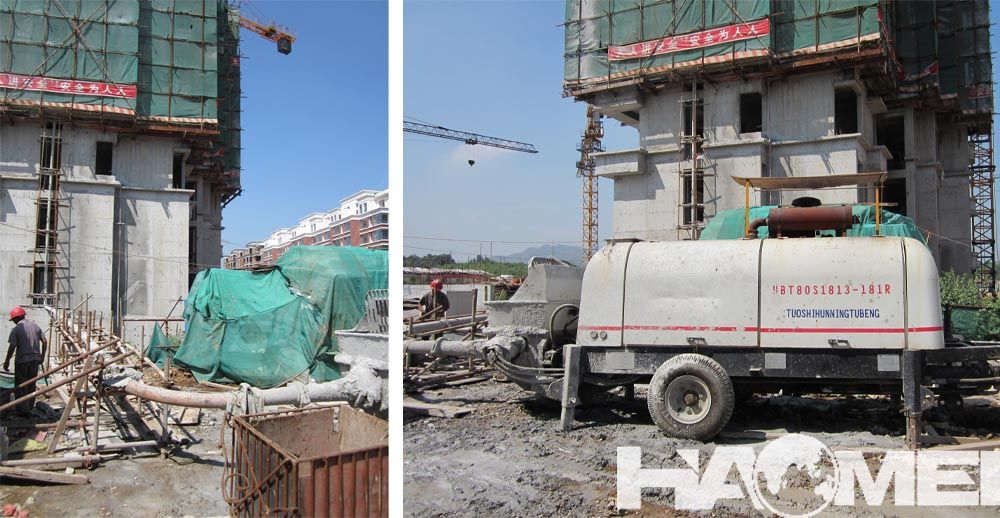
Successful pumping of lightweight concrete depends not only on equipment performance but also on scientific site setup and process optimization. From pipeline layout to pumping parameter adjustment, every detail influences final results.
Pipeline layouts should minimize the number of bends. Each 90° elbow increases pumping resistance equivalent to 8-12 meters of horizontal pipeline. When pumping height exceeds 20 meters, it is recommended to install a hydraulic shut-off valve at the base of the vertical pipeline to prevent concrete backflow during shutdown.
Pumping speed must be precisely controlled. The optimal pumping velocity for lightweight concrete ranges from 0.6 to 0.9 m/s. Excessive speed may cause aggregate segregation, while overly slow pumping can result in pipeline blockage. Modern trailer pumps equipped with wireless remote control systems allow operators to adjust pumping parameters directly at the pouring point.
For ultra-light materials such as foamed concrete (density < 1000 kg/m³), pre-wetting the pipeline before pumping can reduce adhesion resistance. However, water volume must be strictly controlled to avoid altering the concrete water–cement ratio.