
News
Best Budget Js750 Twin Shaft Mixer For Road Construction
Overview: Why Road Projects Often Specify a JS750 Twin-Shaft Mixer
Road construction projects typically demand consistent concrete quality, stable output, and easy maintenance under continuous operation. Within small-to-mid capacity mixing systems, the JS750 twin-shaft forced concrete mixer is frequently selected because it balances mixing intensity, cycle stability, and equipment investment.
From a manufacturer perspective, "best budget" should be understood as lowest life-cycle cost for the required performance, not simply the lowest purchase price. For roadworks, this means selecting a configuration that matches aggregate grading, admixtures, mobility requirements, and maintenance conditions.
What is a JS750 concrete mixer?
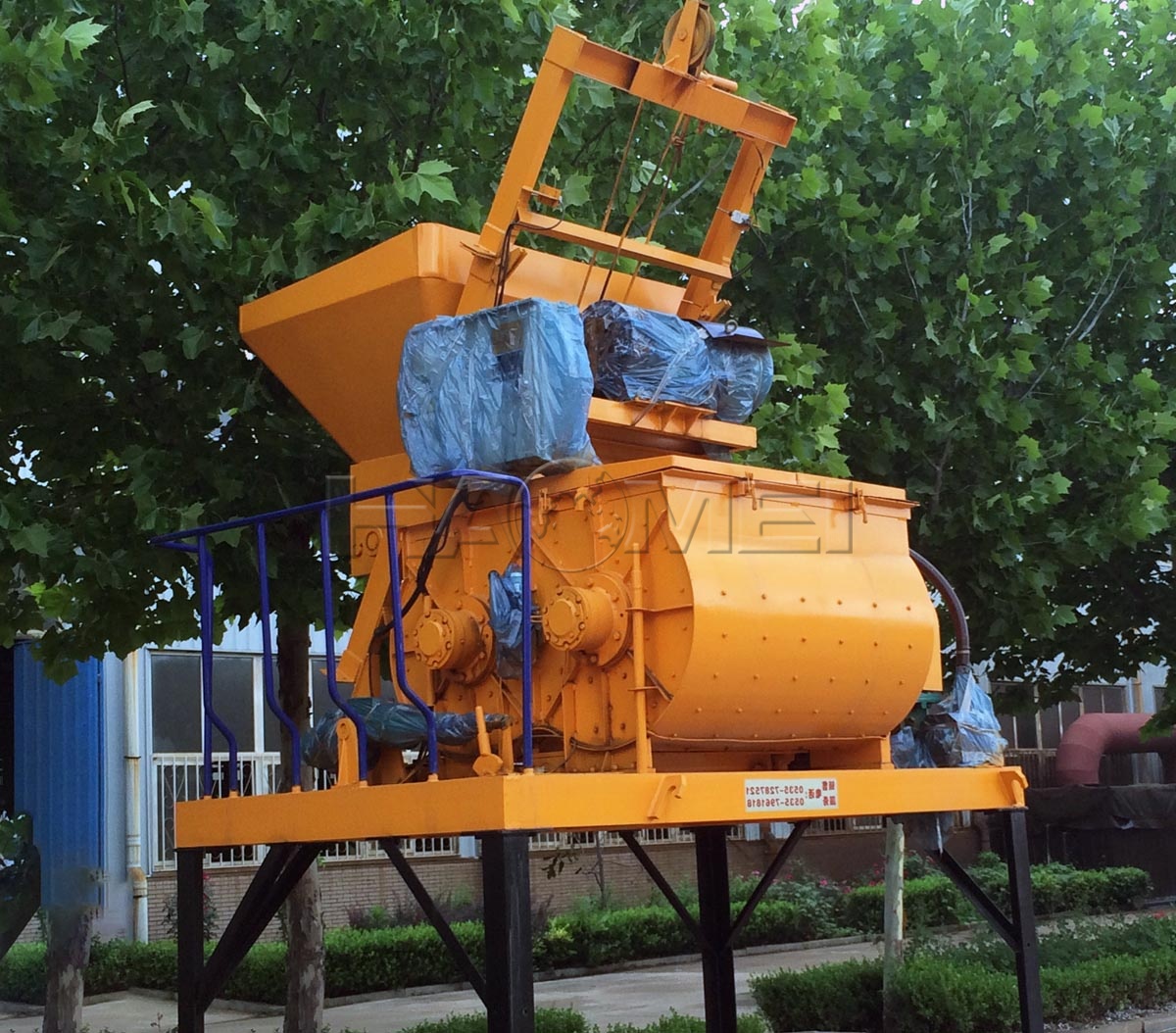
The JS750 horizontal twin-shaft concrete mixer features pneumatic discharge, a hopper lifting speed of 18 m/min, and can handle aggregates with a maximum particle size of 60 mm. It has a rated feeding capacity of 1.2 m³ and a theoretical output of 36 m³/h. Its mixing power is 30 kW, the mixing drum rotates at 31 r/min, and its dimensions are 3400 x 2600 x 5500 mm. The total weight of the machine is 5500 kg.
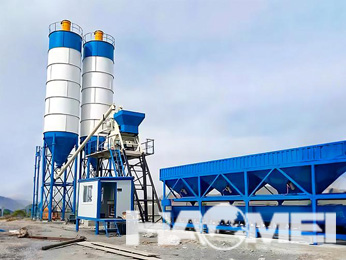
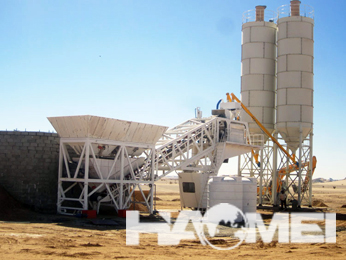
The JS750 concrete mixer is suitable for various medium and small-sized precast concrete component factories and construction departments involved in roads, bridges, water conservancy, ports, docks, and other industrial and civil construction projects. It can mix dry-hard concrete, plastic concrete, fluid concrete, lightweight aggregate concrete, and various mortars. Besides being used as a standalone machine, it can also be combined with a batching machine to form a simple concrete mixing plant.
How a JS750 Twin-Shaft Forced Mixer Works
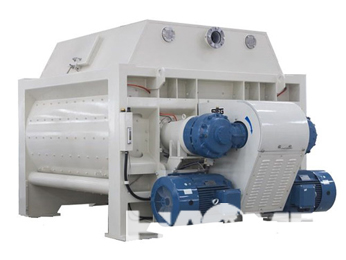
A JS750 is a twin-horizontal-shaft forced mixer. Two synchronized mixing shafts rotate in opposite directions. Mixing arms and paddles create strong axial and radial material movement, achieving high uniformity in a relatively short mixing time.
Key working stages in a typical road concrete production cycle:
Charging: aggregates, cement, and water enter the mixing drum (often via batching system and conveyor).
Forced mixing: dual shafts drive material circulation; fine materials disperse and coat aggregate.
Discharging: hydraulic or pneumatic discharge gate opens to release concrete to hopper/truck.
This working principle is well-suited for pavement-grade concrete, where uniformity and repeatability are critical to finishing and durability.
Core Structure and Wear Parts That Affect Budget
For road construction, equipment cost is strongly influenced by wear-part design and service accessibility. A JS750 mixer typically includes:
Mixing drum and liners: protect the shell; liner material and thickness affect replacement interval.
Mixing shafts, arms, and paddles: direct wear components; selection should consider aggregate hardness and sand ratio.
Shaft-end sealing system: prevents slurry leakage into bearings; critical for uptime.
Reducer and drive system: determines torque stability and energy efficiency.
Central lubrication (optional): improves bearing and sealing reliability in long shifts.
A budget-oriented configuration should prioritize reliable sealing, durable liners, and easy access for inspection, because unscheduled downtime costs on road paving are often higher than the savings from lower initial specifications.
Configuration Options That Matter in Road Construction
A JS750 concrete mixer can be integrated into stationary or semi-mobile mixing solutions. When selecting a "budget" configuration, the following options most directly impact cost-effectiveness.
Typical Option Matrix (Selection Logic)
| Configuration Item | Common Choices | When It Fits Road Construction | Budget Impact (Relative) |
|---|---|---|---|
| Feeding system interface | Hopper, belt conveyor interface | Belt interface preferred for stable continuous supply | Medium |
| Shaft-end seal type | Standard seal, enhanced multi-stage seal | Enhanced seal for long shifts and high slurry exposure | Medium to High |
| Liner and paddle material | Standard wear alloy, higher wear grade | Higher wear grade for hard aggregate or high production days | Medium |
| Discharge gate actuation | Pneumatic, hydraulic | Hydraulic often preferred for stable control in cold/variable sites | Medium |
| Control system | Basic control, integrated batching control | Integrated control supports mix traceability and consistent batching | Medium |
| Dust and splash protection | Standard covers, improved sealing/covers | Important near roadworks with strict environmental requirements | Low to Medium |
Note: The "budget" recommendation is to upgrade the components that protect uptime (seals, wear parts, discharge reliability) while keeping non-critical options practical.
Engineering Applications in Road Construction
JS750 concrete mixers are commonly deployed for:
Rigid pavement concrete (slipform or fixed-form paving)
Shoulders, curbs, drains, and roadside structures
Bridge approach slabs and small-to-medium municipal road sections
Precast road elements when paired with accurate batching and consistent workability control
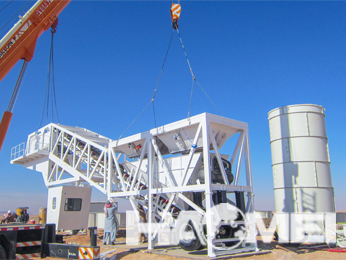
Where projects require frequent relocation, a JS750 can be combined with modular batching and quick electrical/pneumatic connections to reduce commissioning time.
Integration With a Batching Plant: Practical "Budget" System Design
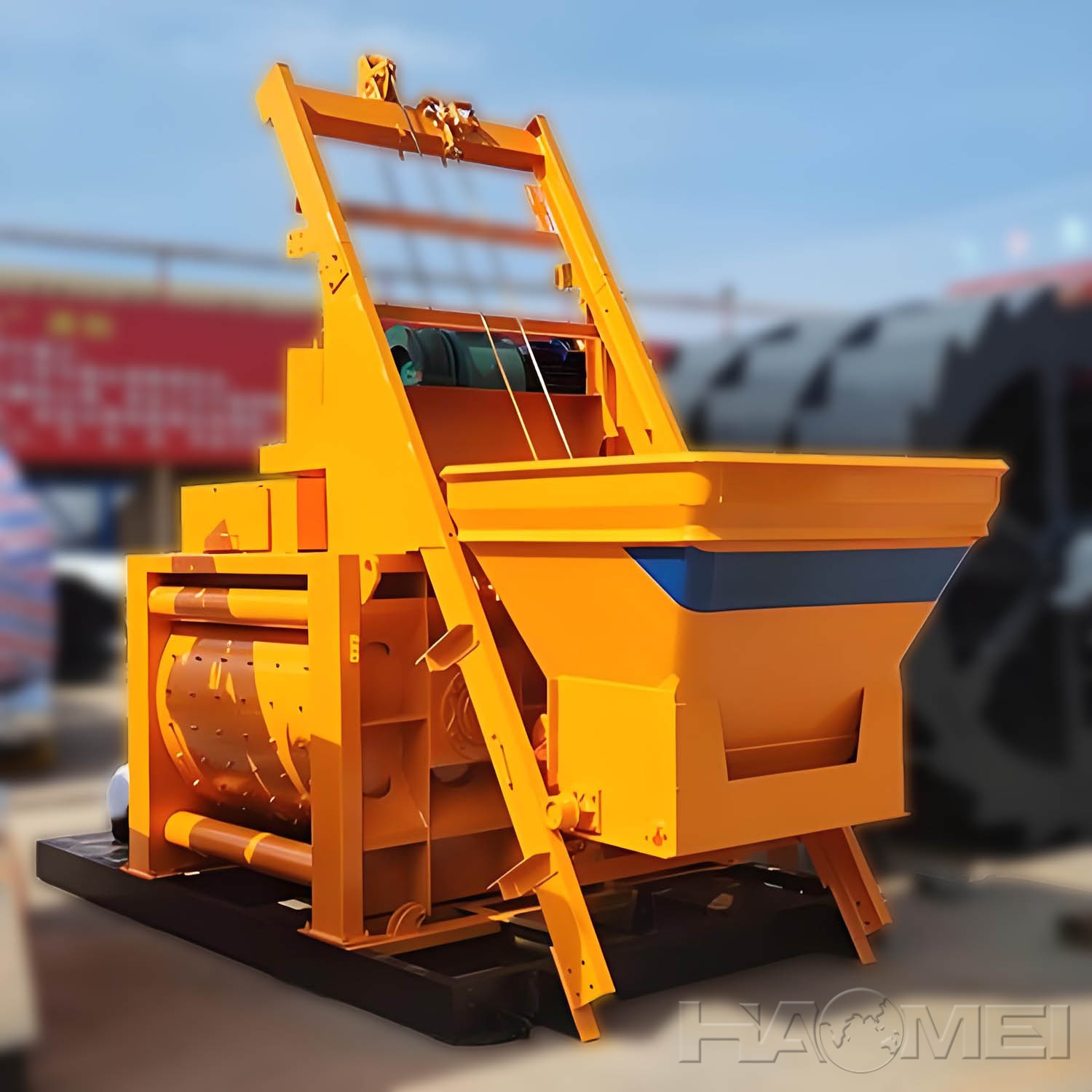
A mixer performs best when upstream and downstream systems are matched. For road construction, a cost-effective setup typically includes:
Accurate aggregate batching and stable moisture correction
Sufficient cement and water metering precision
Reliable discharge to transit mixer or bucket/skip
When specifying a mixer for an existing line, verify:
Aggregate max size and grading
Required slump/workability window
Admixture usage (water reducer, retarder, air-entraining agent)
Expected daily runtime and maintenance schedule
For project planning and model selection, the JS750 Concrete Mixer is commonly evaluated as a core mixer choice in small-to-mid road concrete systems, while other Concrete Mixer configurations may be selected based on capacity, mobility, and mix design demands.
Recommended Quality-Control Points for Pavement Concrete
To maintain consistent road concrete performance, manufacturers generally advise users to establish controls around:
| Control Point | What to Check | Why It Matters for Roads |
|---|---|---|
| Mixing uniformity | Visual consistency, sample testing per site standard | Avoids strength variability and finishing defects |
| Moisture correction | Sand/aggregate moisture updates | Prevents slump drift and segregation |
| Mixing time management | Stable cycle timing | Supports repeatability across paving batches |
| Discharge cleanliness | Gate sealing and residual build-up | Reduces contamination between batches |
| Wear inspection | Liners, paddles, arms, seals | Prevents sudden failure and quality fluctuation |
These points improve "budget" outcomes by reducing rework risk and stabilizing consumption of cement and admixtures.
Maintenance Considerations That Reduce Total Cost
A JS750 used for road construction often runs long shifts in dusty environments. A practical maintenance plan typically includes:
Daily: check sealing area for slurry leakage, verify lubrication, inspect discharge gate.
Weekly: inspect paddles and liners for uneven wear, check reducer mounting and coupling.
Periodic: verify shaft-end sealing condition, replace wear parts based on measured thickness rather than only runtime.
From a manufacturing standpoint, the most frequent causes of avoidable downtime are inadequate lubrication, delayed seal inspection, and operating with severely worn paddles/liners that reduce mixing efficiency.
Industry Trend: Budget Selection Is Shifting Toward Lifecycle Value
Road contractors increasingly evaluate mixers by:
maintainability and standardization of spare parts,
sealing reliability and environmental compliance,
compatibility with automated batching controls,
predictable wear-part replacement planning.
This trend aligns with project requirements for schedule certainty and quality traceability, especially on municipal and highway upgrades.
Conclusion
Selecting the best budget JS750 twin-shaft concrete mixer for road construction is a technical decision: the mixer should match the mix design and production rhythm while prioritizing reliability of sealing, wear parts, and discharge control. A well-chosen configuration can deliver stable pavement concrete quality and controlled operating costs without unnecessary specification or overspending.