
News
Js Series Compulsory Concrete Mixer Working Principle
JS series compulsory concrete mixers are widely used in concrete production because they can deliver stable mixing quality, good material adaptability, and reliable continuous operation in engineering projects. From a manufacturing perspective, understanding the working principle of a JS mixer is essential not only for equipment selection, but also for matching the mixer to aggregate grading, concrete slump requirements, plant capacity, and jobsite conditions.
This article explains the JS series compulsory concrete mixer working principle, its main structure, common configurations, application scenarios, and practical selection points in a clear and objective way.
1. What Is a JS Series Compulsory Concrete Mixer?
A JS series forced-type concrete mixer is generally a twin-shaft horizontal mixer. Unlike drum mixers that mainly rely on gravity for blending, a compulsory mixer uses rotating mixing shafts, arms, and blades to force cement, sand, aggregate, water, and admixtures into repeated shearing, convection, and overturning motion inside the mixing drum.
Because of this forced mixing action, the JS series is suitable for:
Plastic concrete
Dry-hard concrete
Semi-dry concrete
Lightweight aggregate concrete
Standard commercial concrete production
Precast concrete applications
In practical engineering, the JS series concrete mixers is often used as the core mixing unit in a concrete batching plant, and it is also used as a standalone Concrete Mixer for smaller production tasks.
2. Core Working Principle of the JS Series Compulsory Concrete Mixer
The working principle of the JS series compulsory concrete mixer can be summarized as: motor-driven transmission powers two horizontal mixing shafts that rotate synchronously, causing the blades to forcibly mix materials in the drum until a uniform concrete mixture is formed, after which the discharge system opens to release the finished concrete.
2.1 Feeding Stage
Raw materials enter the mixer according to the batching sequence set by the control system. In a complete batching plant, weighing systems usually measure:
Aggregates
Cement and powder materials
Water
Liquid admixtures
After weighing, the materials are fed into the mixing drum. Aggregate usually enters first or together with cementitious materials depending on the process design. Water and admixtures are then added according to the mixing recipe.
2.2 Mixing Stage
Once the feeding process is complete, the drive system starts the mixing shafts. The two shafts rotate in opposite directions at a designed speed. The mixing arms and blades mounted on the shafts generate several mixing effects simultaneously:
Shearing: breaks material clusters and improves cement paste distribution
Lifting and dropping: increases contact between coarse aggregate, fine aggregate, and slurry
Axial and radial circulation: reduces dead zones inside the drum
Forced overturning: improves homogeneity in a shorter time than gravity mixing
This is the essential reason why the JS series is called a compulsory concrete mixer.
2.3 Homogenization Stage
As mixing continues, cement paste gradually coats aggregate surfaces more evenly. The material flow inside the drum becomes more consistent, and the concrete reaches the required uniformity for discharge. Proper blade arrangement and shaft synchronization are important here, because they directly affect mixing efficiency, residue rate, and wear balance.
2.4 Discharge Stage
After the preset mixing time is reached, the discharge gate opens. Depending on model and configuration, the discharge door may be driven by hydraulic, pneumatic, or electric mechanisms. Concrete is discharged quickly through the bottom outlet into a truck mixer, transfer hopper, concrete pump hopper, or mold equipment.
3. Main Structural Components and Their Functions
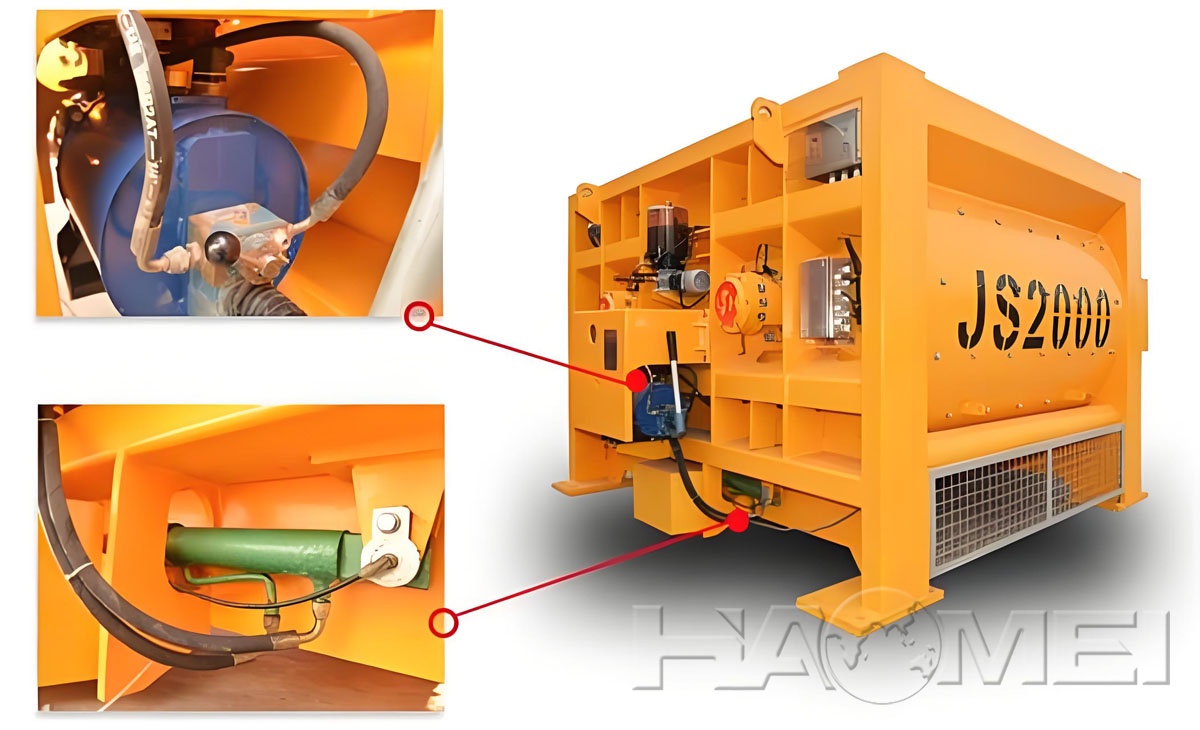
The JS series compulsory concrete mixer working principle is closely related to its structural design. The main components are shown below.
3.1 Mixing Drum
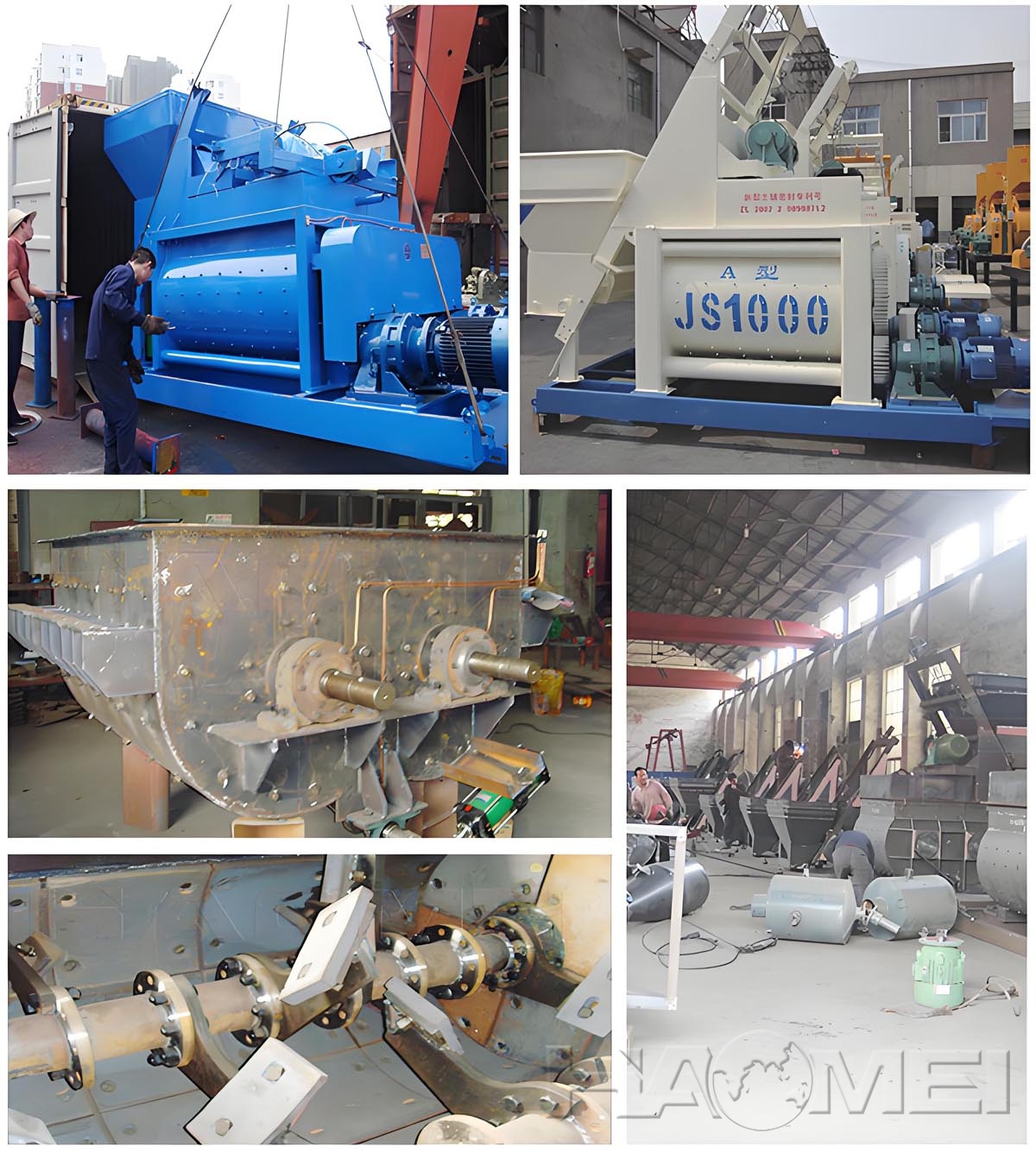
The mixing drum is the main chamber where materials are blended. It is usually fabricated from welded steel plates, and high-wear areas are often lined with replaceable wear-resistant liners. The drum structure must provide sufficient rigidity to withstand impact loads from aggregate and long-term cyclic operation.
3.2 Mixing Shafts
The twin horizontal shafts are the key moving parts of the mixer. They rotate in opposite directions and create the forced mixing motion. Shaft strength, machining accuracy, and sealing performance directly affect equipment reliability.
3.3 Mixing Arms and Blades
Mixing arms connect the shafts to the blades, while the blades directly contact and move the materials. Blade angle, arrangement, and material selection influence:
Mixing intensity
Material circulation path
Energy consumption trend
Wear resistance
Final concrete uniformity
3.4 Drive System
The drive system usually includes:
Electric motor
Reducer or gearbox
Coupling
Synchronization mechanism
Its function is to convert motor power into stable shaft rotation. For factory production equipment, transmission matching should balance torque output, startup smoothness, and maintenance accessibility.
3.5 Shaft End Sealing System
The shaft end area is exposed to cement slurry and fine particles, so sealing is a critical design point. A reliable shaft end sealing structure helps reduce slurry leakage, protect bearings, and extend service life.
3.6 Discharge System
The discharge door controls the release of finished concrete. Its design affects discharge speed, residual material level, and operation stability. In batching plants, quick and clean discharge is important for cycle efficiency.
3.7 Lubrication System
Automatic or centralized lubrication helps maintain bearings, seals, and moving joints. This is particularly important in high-frequency production environments.
4. Typical Process Flow of a JS Mixer
The following table shows a standard operating flow of a JS series compulsory concrete mixer.
| Process Stage | Main Action | Purpose |
|---|---|---|
| Material batching | Aggregate, cement, water, and admixtures are weighed | Ensure mix proportion accuracy |
| Feeding | Materials enter the mixer drum | Prepare for forced mixing |
| Forced mixing | Twin shafts rotate in opposite directions | Achieve rapid and uniform blending |
| Homogenization | Concrete reaches target consistency | Improve quality stability |
| Discharge | Bottom gate opens and concrete is released | Complete one production cycle |
| Preparation for next batch | Residual inspection and next feeding sequence | Maintain continuous production |
5. Why Twin-Shaft Compulsory Mixing Is Widely Used
Compared with simple gravity mixing methods, the JS series compulsory concrete mixer offers structural advantages in many common production conditions.
| Comparison Item | JS Series Compulsory Mixer | Gravity-Type Mixing Principle |
|---|---|---|
| Mixing method | Forced mixing by twin shafts and blades | Material mainly tumbles by drum rotation |
| Material adaptability | Better for dry-hard, plastic, and mixed aggregate concrete | Better suited to less demanding mixes |
| Mixing uniformity | Generally more stable in batching plant production | More dependent on mixing time |
| Mixing intensity | Higher shearing and circulation effect | Lower forced action |
| Application | Batching plants, precast, engineering projects | Small-scale or simpler mixing tasks |
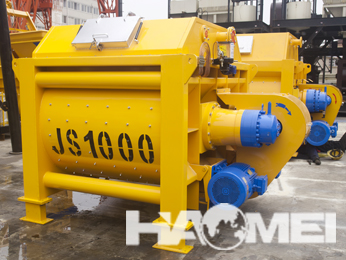
This is also why models such as the JS1000 Concrete Mixer and larger units are commonly selected for commercial concrete and infrastructure production lines.
6. Common JS Series Models and General Application Range
JS series concrete mixers are usually classified by their nominal discharge capacity per cycle. Different models are suitable for different plant scales and project demands.
| Model | General Capacity Positioning | Typical Use Scenario |
|---|---|---|
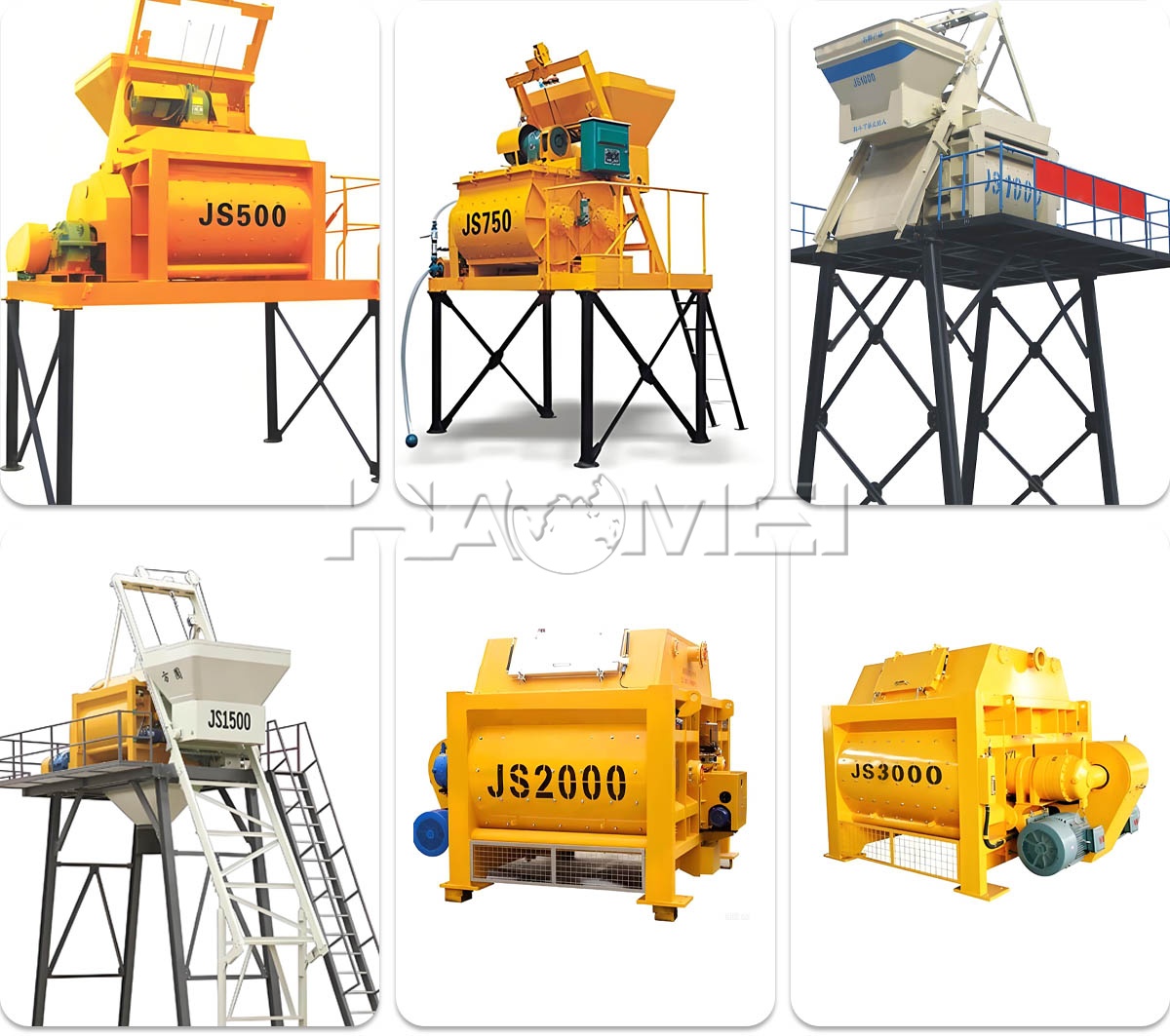
| JS500 | Small to medium output | Small batching plant, block production, rural construction |
| JS750 | Medium output | General construction projects, medium-demand supply |
| JS1000 | Medium to large output | Commercial concrete, infrastructure support |
| JS1500 | Large output | Standard commercial batching plant |
| JS2000 | Larger output | Large plant, road and bridge works |
| JS3000 | High output | Large-scale commercial concrete and major projects |
When selecting a model, the decision should not rely only on mixer size. It should also consider:
Required hourly output of the plant
Concrete grade and slump range
Aggregate size and moisture fluctuation
Feeding and storage configuration
Local power conditions
Maintenance access and parts management
For example, a JS500 Concrete Mixer can be suitable where output demand is moderate and site space is limited, while larger projects may require JS1500, JS2000, or JS3000 class equipment.
7. Engineering Application Scenarios
From the manufacturer's perspective, the JS series compulsory concrete mixer is not defined only by model size, but by how well it matches the process requirements of the project.
7.1 Commercial Concrete Batching Plants
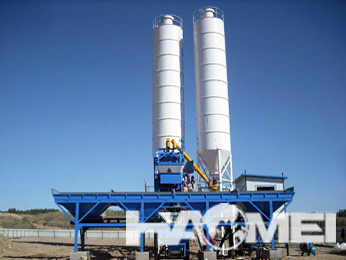
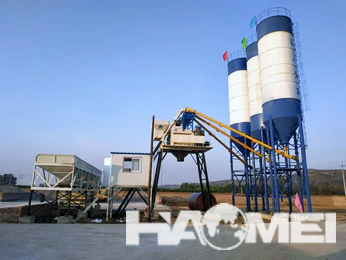
This is one of the most common application scenarios. The mixer works with aggregate batching machines, cement silos, screw conveyors, weighing systems, and automatic controls to form a complete production line.
7.2 Precast Component Production
Precast factories usually require stable concrete consistency and repeatable batching cycles. Twin-shaft compulsory mixing is suitable for this because it supports relatively consistent blending quality for repeated mold production.
7.3 Road, Bridge, and Municipal Projects
These projects often require continuous concrete supply under scheduled construction conditions. The JS series can be integrated into stationary or modular batching plants to support engineering progress.
7.4 Block, Pipe, and Other Concrete Products
For dry-hard or semi-dry mixes, compulsory mixing is often preferred because it can improve cement dispersion and aggregate wrapping compared with simpler mixing methods.
8. Configuration Options That Affect Working Performance
Although the working principle remains the same across the JS series, configuration differences can significantly affect real operating results.
| Configuration Item | Optional Direction | Main Influence |
|---|---|---|
| Discharge mode | Hydraulic, pneumatic, electric | Discharge response and control stability |
| Liner and blade material | Standard wear-resistant alloy options | Wear life and maintenance cycle |
| Lubrication method | Manual or automatic | Maintenance efficiency |
| Motor and electrical components | Different brands/specifications | Reliability and local service support |
| Control integration | Standalone or batching plant control linkage | Automation level |
| Inspection and cleaning design | Standard or optimized access structure | Maintenance convenience |
When evaluating a mixer, engineering users usually pay attention not only to theoretical performance, but also to ease of maintenance, parts replacement logic, and adaptation to the full batching process.
9. Factors Influencing Mixing Quality
Even if the JS series compulsory concrete mixer working principle is well understood, concrete quality still depends on correct operation and process matching.
9.1 Mix Proportion Accuracy
If aggregate, cement, water, or admixture weighing deviates significantly, mixer performance alone cannot compensate for recipe errors.
9.2 Mixing Time
Insufficient mixing time may lead to poor homogeneity, while excessive mixing can reduce cycle efficiency and may affect certain concrete properties.
9.3 Aggregate Characteristics
Aggregate size distribution, moisture, mud content, and shape all influence mixing resistance and concrete consistency.
9.4 Blade Wear
As blades and liners wear, the material movement path inside the drum changes. This can gradually affect mixing quality and discharge cleanliness.
9.5 Maintenance of Seals and Lubrication
Poor shaft end sealing or inadequate lubrication may increase downtime risk and maintenance cost.
10. Routine Maintenance Points
A well-designed mixer should also be maintainable in practical factory and site conditions. The following items are part of normal maintenance management.
| Maintenance Item | Main Check Content | Purpose |
|---|---|---|
| Blades and liners | Wear, looseness, deformation | Maintain mixing quality |
| Shaft end seals | Leakage, temperature, sealing condition | Protect bearings and reduce slurry intrusion |
| Drive system | Reducer condition, coupling alignment, abnormal noise | Ensure stable transmission |
| Discharge door | Opening and closing response, sealing | Avoid discharge delay and leakage |
| Lubrication system | Grease supply and line condition | Reduce wear of moving parts |
| Electrical control | Wiring, sensors, interlocks | Support safe and reliable operation |
11. Industry Development Trends
From equipment manufacturing and application feedback, several trends are shaping the development of JS series forced-type concrete mixers.
11.1 Higher Integration With Automation
Mixers are increasingly linked with intelligent batching controls, moisture compensation systems, and remote diagnostic functions to improve process consistency.
11.2 Greater Attention to Wear Resistance
Long-term operation in commercial batching plants places high demands on blades, liners, and shaft end sealing systems. Wear-resistant design continues to be a key focus.
11.3 Easier Maintenance and Parts Replacement
Users increasingly value maintenance accessibility, modular replacement logic, and reduced downtime during routine service.
11.4 Adaptation to Diverse Concrete Types
As market demand expands to precast, pipe piles, high-performance concrete, and special aggregate applications, mixers need broader process adaptability rather than only larger size.
12. Conclusion
The JS series compulsory concrete mixer working principle is based on twin-shaft forced mixing. Through the coordinated action of the drive system, mixing shafts, arms, blades, drum, and discharge mechanism, the machine produces repeated shearing, circulation, and overturning of materials, resulting in more uniform concrete within a practical production cycle.
For engineering users, understanding this principle helps with correct model selection, process matching, maintenance planning, and batching plant design. For equipment manufacturers, the key value lies not only in providing mixer capacity, but in optimizing structural reliability, wear resistance, sealing performance, and compatibility with actual project conditions.
When properly selected and maintained, the JS twin-shaft forced concrete mixer remains an important core unit in modern concrete production systems.