
News
Sicoma Twin Shaft Concrete Mixer for Sale
A Sicoma twin shaft concrete mixer for sale should be evaluated as part of a complete concrete production process rather than as an isolated machine. For ready-mix plants, precast facilities, infrastructure projects, and on-site batching systems, the mixer must match the required concrete formula, aggregate grading, production rhythm, discharge arrangement, and maintenance conditions.
As a concrete equipment manufacturer, the factory focuses on equipment structure, component matching, manufacturing quality, and practical integration with batching and control systems. A properly selected twin shaft forced mixer can support stable mixing operations for conventional concrete, dry or stiff mixes, and selected special concrete applications when the material properties and process requirements are confirmed in advance.
Working Principle of a Twin Shaft Concrete Mixer
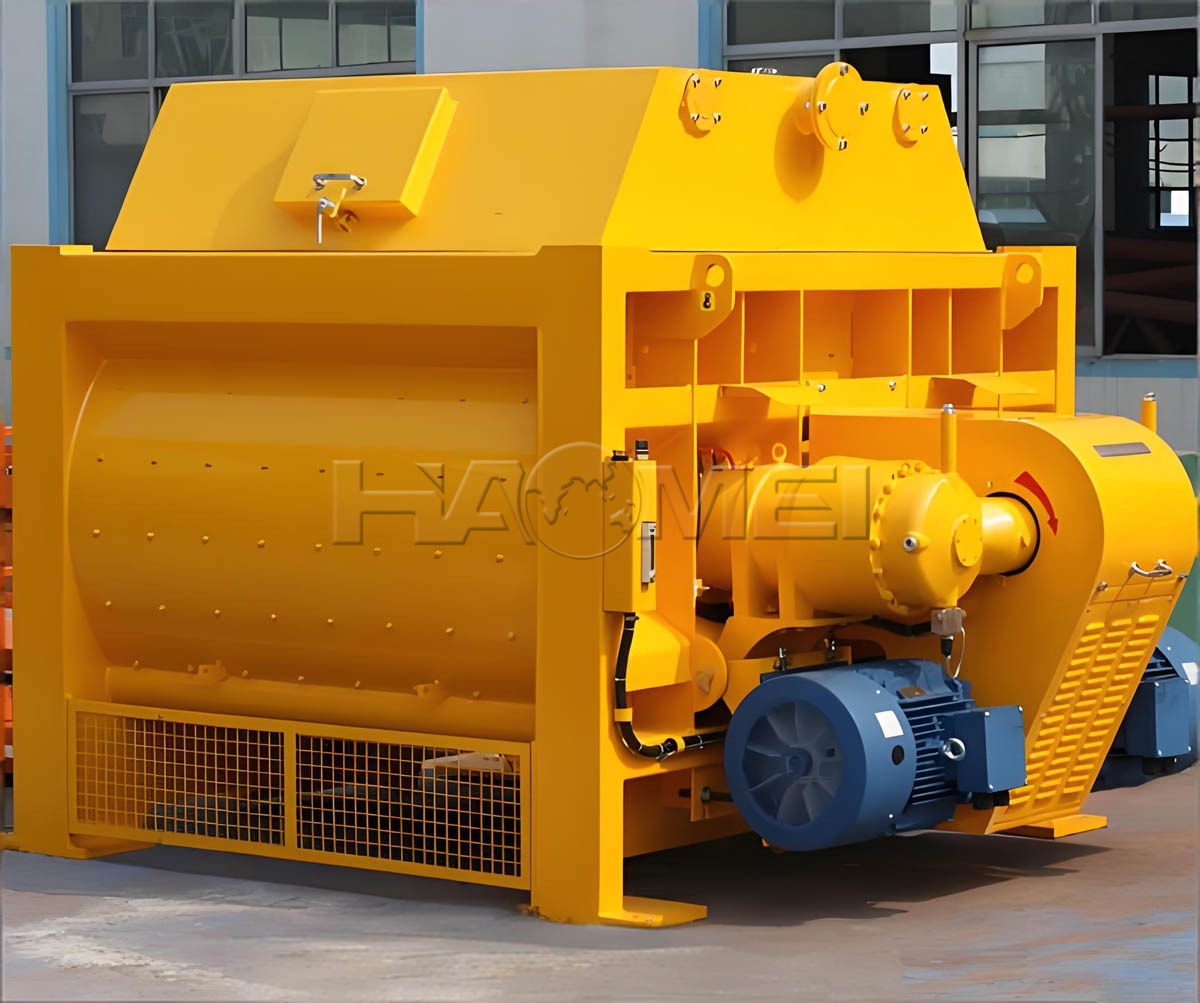
A twin shaft concrete mixer uses two horizontally arranged mixing shafts rotating in opposite directions. Mixing arms and paddles mounted on the shafts move aggregates, cementitious materials, water, and admixtures through overlapping mixing paths inside the mixing chamber.
This forced mixing action is designed to promote material circulation and reduce unmixed areas in the drum. The final mixing result is influenced not only by the mixer itself, but also by aggregate moisture, particle size distribution, feeding sequence, material dosing accuracy, mixing time, and operator control settings.
| Main Component | Primary Function | Selection Consideration |
|---|---|---|
| Mixing tank | Holds materials during the mixing cycle | Liner material and chamber geometry should suit the aggregate type and wear conditions |
| Twin mixing shafts | Drive the forced mixing movement | Shaft sealing and bearing arrangement should be suitable for operating intensity |
| Mixing arms and paddles | Move and blend materials within the chamber | Wear-resistant parts should be accessible for inspection and replacement |
| Drive system | Transmits motor power to the shafts | Motor, gearbox, and coupling configuration should match the intended duty cycle |
| Discharge gate | Releases mixed concrete | Gate design should match truck loading, hopper discharge, or downstream conveying layout |
| Lubrication system | Supports moving component maintenance | Manual or automatic lubrication can be selected according to maintenance practice |
Key Configuration Points Before Purchase
When reviewing a Sicoma concrete mixer configuration, project teams should provide the factory with clear information about the intended application. This allows the mixer body, drive assembly, discharge arrangement, electrical components, and optional systems to be matched more effectively.
Materials and Concrete Mix Design
Aggregate size, sand ratio, slump range, cement type, supplementary materials, and admixture use all affect the required mixing process. Abrasive aggregate or frequent production of low-slump concrete may require increased attention to wear liners, paddle materials, and regular maintenance access.
Plant Capacity and Material Flow
Mixer capacity should be coordinated with aggregate batching equipment, cement conveying, water dosing, admixture dosing, and concrete discharge logistics. A mixer that is oversized or undersized relative to the rest of the plant may affect production continuity.
| Project Requirement | Recommended Evaluation Focus |
|---|---|
| Ready-mix concrete production | Batch cycle coordination, truck loading arrangement, control system connection |
| Precast concrete production | Mix consistency, repeatable batching, low-slump material handling |
| Road and bridge works | Aggregate grading adaptability, site power conditions, maintenance access |
| Block and paver production | Stiff-mix suitability, discharge control, wear-part inspection plan |
| Mobile or compact batching plant | Frame integration, transport dimensions, power supply and control interface |
Electrical and Control Integration
A twin shaft mixer can be supplied for integration with a concrete batching plant control system. The control arrangement should coordinate aggregate feeding, cement weighing, water addition, admixture dosing, mixing timing, discharge signals, and fault protection.
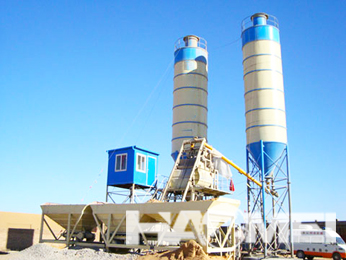
For projects requiring a complete system, the mixer can be paired with aggregate batching equipment, silos, screw conveyors, weighing systems, and a control cabin. The compatible Concrete Mixer range can also be assessed according to plant scale, local installation conditions, and expected material output.
Equipment Structure and Maintenance Considerations
Reliable concrete production depends on routine inspection and planned replacement of wear components. In twin shaft mixers, the mixing paddles, arms, liners, shaft seals, bearings, and discharge gate components require regular attention because they are exposed to abrasive aggregates and repeated operating cycles.
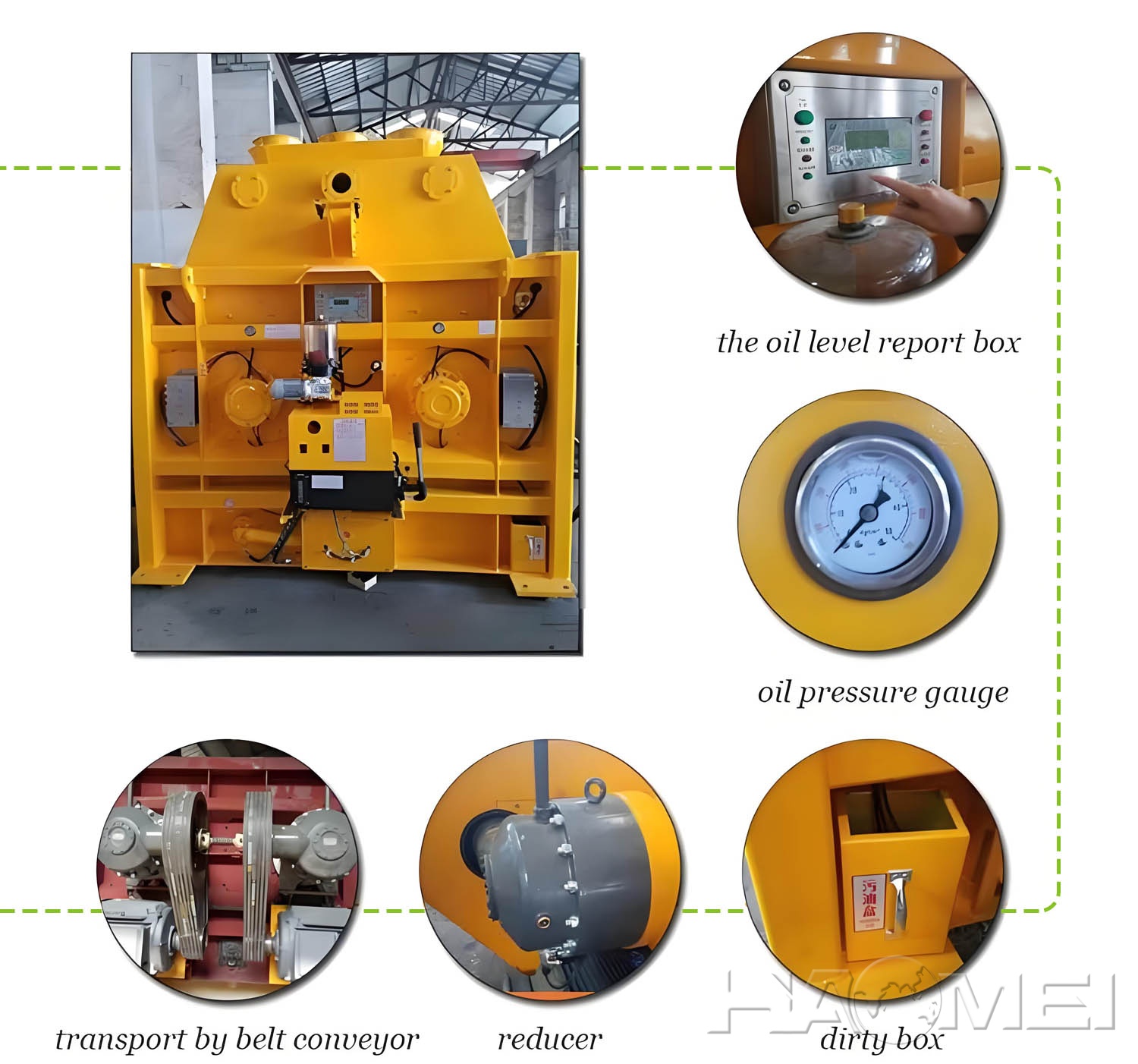
The factory selection process should consider maintenance access from the beginning. Service doors, inspection points, lubrication locations, and replacement space around the mixer affect the practical efficiency of site maintenance.
| Maintenance Item | Routine Check | Operational Purpose |
|---|---|---|
| Mixing paddles and arms | Check wear and fastening condition | Maintains designed material movement inside the chamber |
| Tank liners | Inspect wear level and mounting bolts | Protects the mixer body from aggregate abrasion |
| Shaft seals | Check for leakage and abnormal wear | Helps protect shaft-end assemblies |
| Gearbox and drive system | Monitor lubrication and unusual noise | Supports stable power transmission |
| Discharge gate | Check opening, closing, and sealing condition | Helps ensure controlled concrete discharge |
| Electrical system | Inspect cables, sensors, and safety devices | Supports safe and coordinated operation |
Selecting the Right Mixer Size and Plant Match
A Sicoma twin shaft concrete mixer for sale should be selected based on actual batch volume and production planning, not only on nominal mixer size. The concrete plant's aggregate storage, weighing capacity, loading method, truck dispatch arrangement, and expected daily operating schedule should all be reviewed together.
For medium and large batching plant projects, equipment selection may include models such as a JS2000 Concrete Mixer when the project requires a corresponding capacity class and suitable plant layout. Final model confirmation should be based on the approved technical proposal, concrete formula, local power supply, and installation conditions.
| Selection Stage | Information Needed | Factory Engineering Review |
|---|---|---|
| Material assessment | Aggregate size, moisture, mix proportions, admixtures | Confirms chamber and wear-part suitability |
| Capacity planning | Required output, batch schedule, plant configuration | Matches mixer size with feeding and discharge systems |
| Site review | Foundation, power supply, layout, climate conditions | Confirms installation and electrical configuration |
| Control integration | Automation level, weighing devices, communication needs | Defines control and interlock requirements |
| Service planning | Spare parts strategy and maintenance resources | Recommends wear parts and routine service preparation |
| Series | Model | Discharge Capacity (L) | Feeding Capacity (L) | Mixing Power (kW) | Total Weight (t) | Typical Applications |
| MAO Series | MAO 2250/1500 | 1500 | 2250 | 2×30 | 6.5 | Small and medium-sized commercial concrete plants and precast component factories |
| MAO 3000/2000 | 2000 | 3000 | 2×37 | 7.5 | Large-scale commercial concrete plants and major infrastructure projects | |
| MAO 4500/3000 | 3000 | 4500 | 2×55 | 9.2 | Large-scale water conservancy and mega-scale urban construction projects | |
| MAO 6000/4000 | 4000 | 6000 | 2×75 | 11.8 | Large-scale national projects (such as cross-sea bridges) | |
| MAO 9000/6000 | 6000 | 9000 | 4×55 | 18 | Ultra-large-scale, high-capacity project |
Engineering Applications
Twin shaft forced concrete mixers are commonly used in stationary concrete batching plants and can also be incorporated into compact or project-based production systems. Typical engineering applications include commercial concrete supply, residential construction, municipal works, road construction, bridge projects, precast component production, and industrial facility construction.
For precast and infrastructure applications, consistent material batching and controlled mixing procedures are especially important. For remote project sites, the focus may shift toward equipment transport, installation efficiency, power availability, and access to maintenance resources. Each application requires a configuration review based on the actual operating environment.
Industry Direction: Efficiency, Traceability, and Serviceability
Concrete mixing equipment is increasingly integrated with automated batching controls, material weighing records, production reporting, and remote fault-monitoring functions where project requirements support these features. At the same time, manufacturers continue to focus on practical improvements such as wear-resistant mixing components, more accessible maintenance layouts, and component standardization.
The objective is not simply higher production speed. Stable concrete quality, equipment availability, controlled operating costs, and traceable production processes are equally important for modern concrete plants.
Conclusion
When sourcing a Sicoma twin shaft concrete mixer for sale, buyers should evaluate mixer structure, material characteristics, plant capacity, control integration, discharge requirements, and maintenance conditions as one complete system. A factory-based technical review helps define an appropriate configuration and avoids selecting equipment solely by model name or nominal capacity.
A well-matched twin shaft concrete mixer, supported by correct installation, operator training, and routine maintenance, can serve as a reliable mixing unit within concrete batching and construction material production operations.