
News
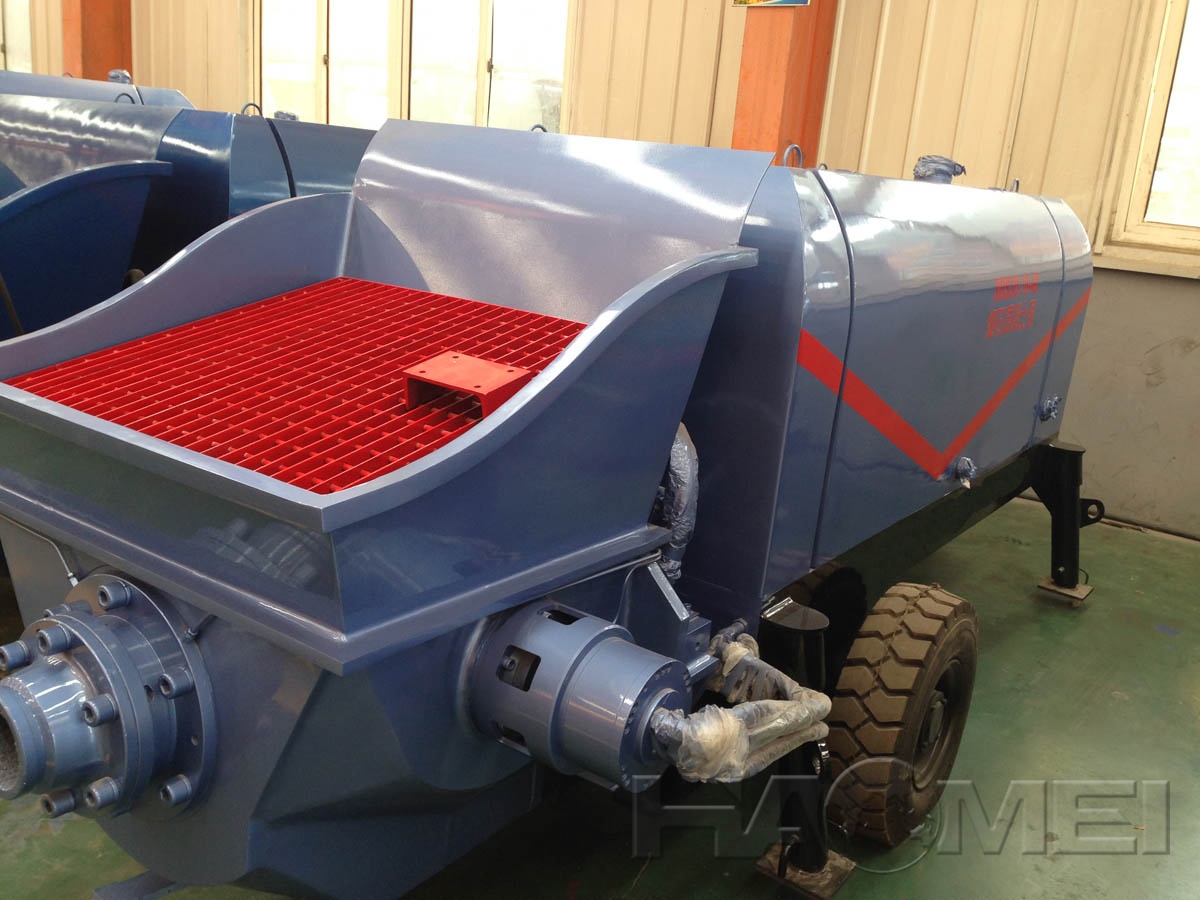
Trailer Concrete Pump For High-Rise Buildings
High-rise building construction places stricter demands on concrete conveying equipment than low-rise or ground-level projects. As building height increases, contractors need stable pressure output, continuous material flow, reliable hydraulic control, and pipeline systems that can adapt to long vertical delivery distances. In this context, the trailer concrete pump remains a practical solution for many high-rise concrete placement tasks.
From the perspective of an equipment manufacturer, selecting a trailer concrete pump for high-rise buildings is not simply a matter of choosing a larger motor or a higher theoretical output. The more important factors are pumping principle, hydraulic system design, valve structure, power configuration, pipeline arrangement, concrete adaptability, and maintenance accessibility. A suitable equipment configuration helps reduce pressure loss, improve pumping continuity, and support safer and more organized site operations.
Why trailer concrete pumps are used in high-rise building projects
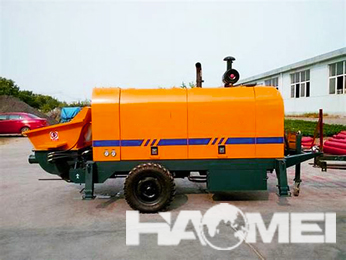
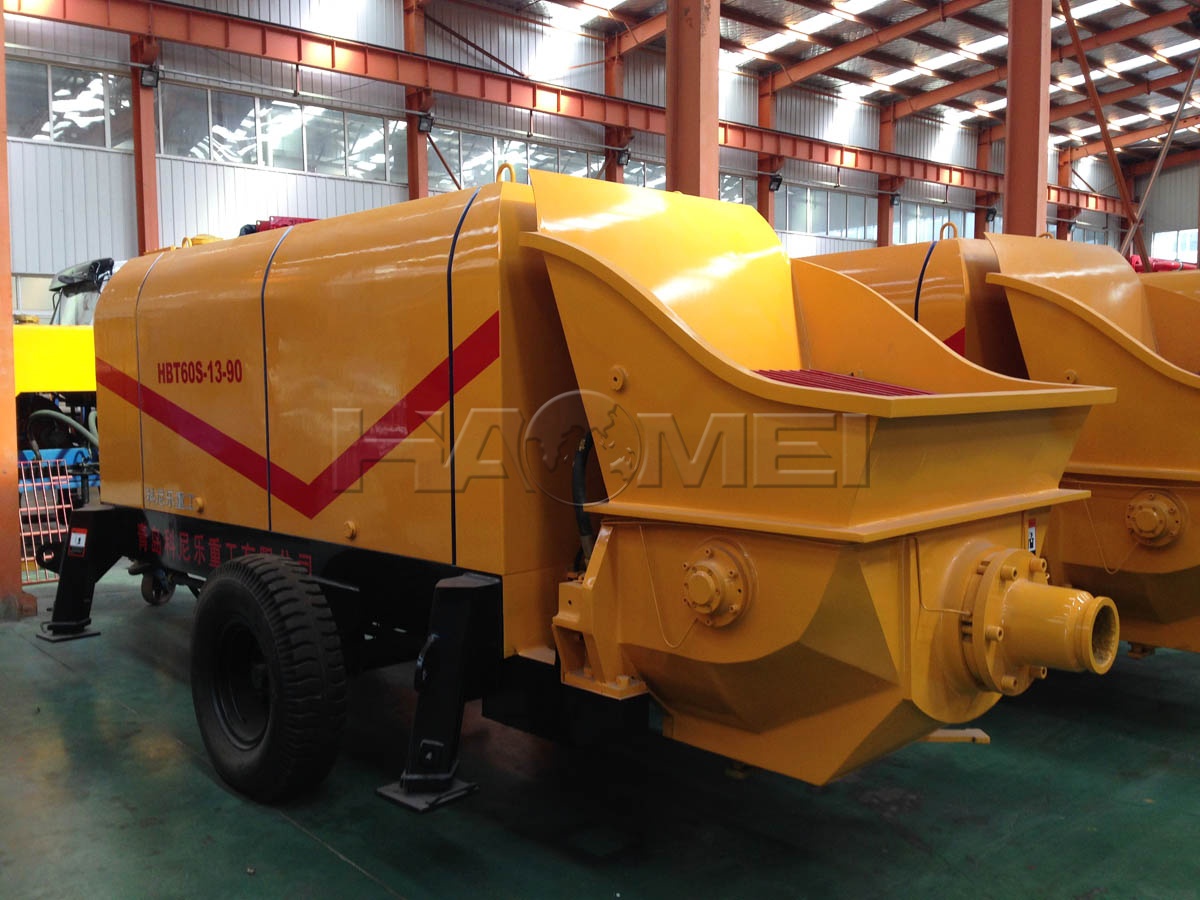
A trailer concrete pump is a ground-based concrete conveying machine that uses hydraulic power to transport concrete through delivery pipelines to designated placing points. In high-rise projects, this type of equipment is commonly selected when the site requires:
Vertical concrete delivery to upper floors
Flexible pipeline layout along the structure
Continuous pouring for walls, columns, slabs, and core tubes
Separation between concrete production and placing areas
Convenient equipment positioning at ground level
Compared with some other placement methods, a Trailer Concrete Pump can be easier to integrate into dense urban projects where working space is limited and the building footprint is relatively compact. The pump remains on the ground, while the delivery line is extended upward with the progress of the structure.
Basic working principle of a trailer concrete pump
The working principle of a trailer concrete pump is based on hydraulic reciprocating pumping. Concrete enters the hopper, passes through the pumping cylinders, and is alternately pushed into the delivery pipeline by concrete pistons. A distribution valve switches the flow path between the two cylinders, making continuous pumping possible.
For high-rise applications, the key process can be summarized as follows:
1. Ready-mixed concrete is discharged into the hopper.
2. The hydraulic system drives the concrete pistons in alternating strokes.
3. The distribution valve directs concrete into the main delivery line.
4. Concrete moves through horizontal and vertical pipelines under pumping pressure.
5. Concrete is discharged at the placing point on upper floors.
The practical effect of this process depends on the coordination of several systems, including:
Main hydraulic pump and control circuit
Concrete cylinders and delivery pistons
S valve or other distribution valve structure
Hopper and agitator system
Lubrication system
Pipeline and clamp connections
Electric control system
Structural features that matter in high-rise pumping
For high-rise building work, equipment structure directly affects pumping stability and service convenience. Manufacturers usually pay attention to the following design areas.
1. Hydraulic system stability
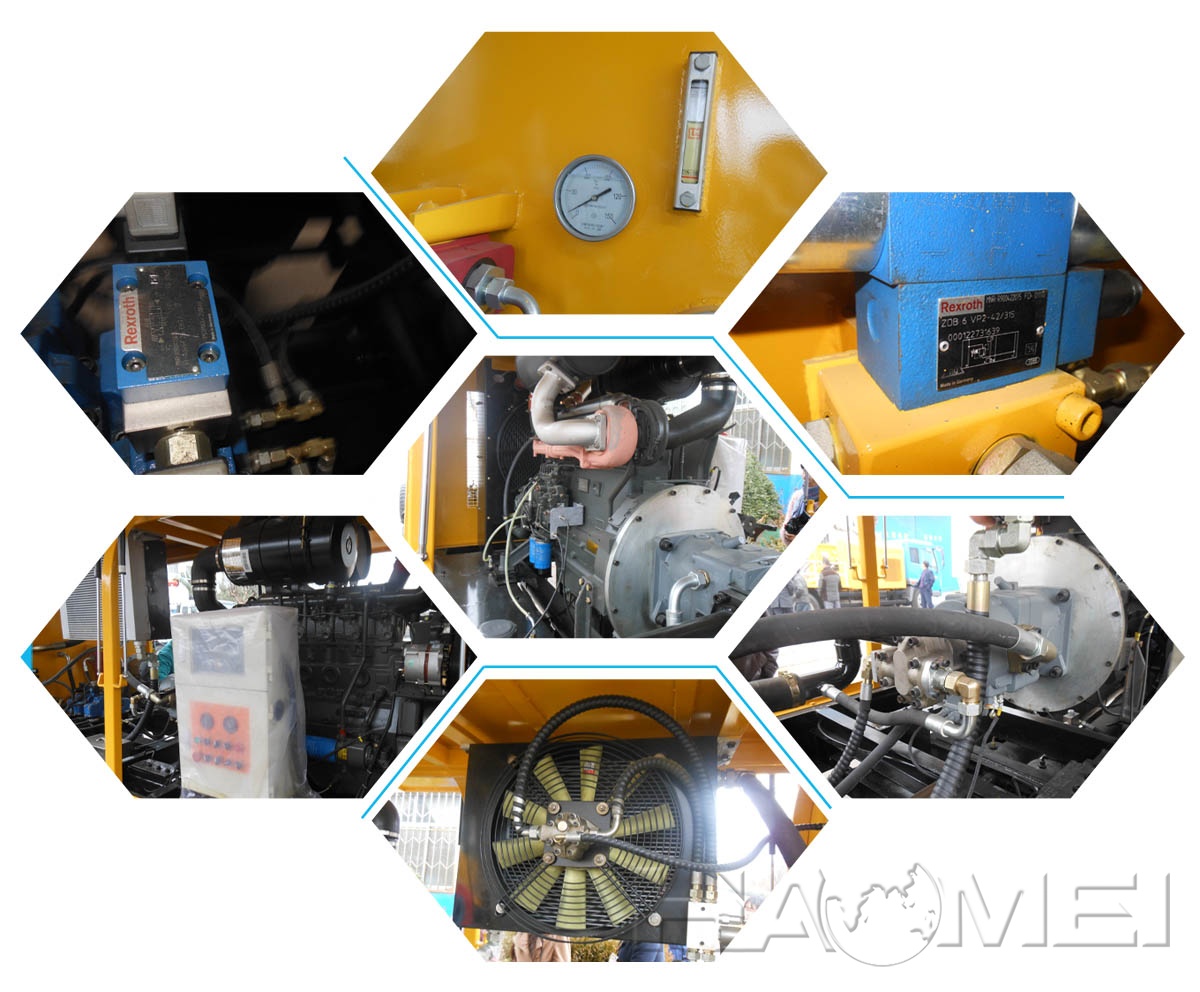
A stable hydraulic system supports uniform reversing, reduced shock, and predictable pressure response. In high-rise pumping, pressure fluctuations can affect pipeline stability and concrete flow continuity. Open and closed hydraulic circuits may be configured differently depending on project requirements, but smooth commutation and heat control are always important.
2. Distribution valve design
The distribution valve is one of the core components of a concrete pump. In medium- and high-pressure trailer pumps, the S valve design is widely used because it is compatible with common aggregate grading and helps maintain sealing performance under demanding operating conditions.
3. Hopper and agitation system
Concrete delivered for high-rise structures often requires stable workability during pumping. A properly designed hopper with an agitator helps prevent segregation, improves feeding consistency, and reduces the chance of blockages at the suction side.
4. Wear-resistant parts
In continuous building construction, wearing parts such as spectacle plates, cutting rings, delivery pistons, and pipeline bends are exposed to abrasive concrete flow. Material selection and manufacturing quality influence maintenance intervals and spare parts planning.
5. Compact trailer layout
On many city projects, site access and equipment placement are restricted. Compact trailer structure, convenient towing, and organized maintenance points help improve on-site deployment efficiency.
Key configuration considerations for high-rise buildings
A high-rise concrete pumping solution should match actual project conditions rather than relying only on nominal output figures. The following factors are typically reviewed during equipment selection.
Project-related factors
| Factor | Why it matters in high-rise pumping |
|---|---|
| Building height | Higher buildings require greater pumping pressure and more careful pipeline design |
| Concrete grade and slump | Concrete workability affects pumpability, pressure loss, and risk of blockage |
| Pouring volume per shift | Determines whether the pump output range matches placement progress |
| Structural element type | Core walls, columns, beams, and slabs may require different pouring rhythms |
| Site layout | Influences pump location, pipeline routing, and truck access |
| Power supply conditions | Helps determine diesel or electric configuration |
Equipment-related factors
| Configuration item | Typical selection focus |
|---|---|
| Theoretical output | Should match practical pouring demand without oversizing unnecessarily |
| Maximum pumping pressure | Important for vertical delivery and long pipeline resistance |
| Power type | Diesel for sites with unstable electricity, electric for projects with sufficient power supply |
| Distribution valve type | Commonly selected based on concrete characteristics and maintenance preference |
| Cylinder diameter and stroke | Affects output rhythm and pressure characteristics |
| Control mode | Manual and remote control options can improve operating convenience |
| Cooling and lubrication | Important for long-duration pumping stability |
In projects requiring balanced output and pressure for mid- to high-rise construction, models such as the HBT60S1413-112R Trailer Concrete Pump are often evaluated according to actual pipeline height, mix design, and pouring schedule.
Common engineering application scenarios
Trailer concrete pumps are used in a range of high-rise and vertical construction environments. Typical scenarios include the following.
Residential towers
Residential high-rise projects usually involve repeated standard-floor pouring. Stable slab, column, and shear wall placement benefits from continuous pumping and predictable delivery rhythm.
Commercial buildings
Commercial towers often combine basement structures, transfer floors, core walls, and large floor areas. This creates varying pumping demand at different stages, requiring flexible pipeline adjustment.
Hotel and office projects
These projects may be located in dense urban areas with narrow staging space. Ground-based trailer pumps can help simplify equipment placement while maintaining vertical delivery capability.
Core tube and shear wall structures
For structures with concentrated vertical concrete demand, trailer pumps are often paired with fixed pipelines and placing equipment to support repeated upward pumping cycles.
Pipeline design and pumping efficiency
In high-rise pumping, pipeline layout is as important as pump selection. Even a correctly sized pump may not perform well if the delivery line is not arranged properly.
Important pipeline considerations include:
Minimizing unnecessary bends and abrupt direction changes
Using suitable pipe diameter for output and aggregate size
Reinforcing vertical pipe fixing points at appropriate intervals
Checking clamp sealing condition before pumping
Designing cleanout access for shutdown and maintenance
Managing horizontal equivalent length in addition to vertical height
The resistance of bends, reducers, elbows, and long horizontal runs should be considered together with vertical distance. In practical engineering, the total conveying resistance is not represented by building height alone.
Concrete adaptability in high-rise delivery
The pump and the concrete mix must work together. Pumpability depends on aggregate grading, cementitious material proportion, slump retention, admixture compatibility, and moisture stability. Inconsistent concrete quality may cause pressure fluctuation, pipe blockage, or irregular discharge.
For high-rise pumping, the following concrete-related points are usually important:
| Concrete factor | Influence on pumping |
|---|---|
| Aggregate size | Must match pipeline diameter and valve passage |
| Slump consistency | Affects flow resistance and pumping continuity |
| Sand ratio | Influences lubrication layer formation in the pipeline |
| Admixture compatibility | Helps maintain workability during transport and pumping |
| Segregation resistance | Reduces risk of blockage in vertical delivery |
| Supply continuity | Avoids long interruptions that can increase restart difficulty |
Manufacturers generally recommend confirming mix suitability through project-based verification before full-scale pumping, especially when concrete strength grade, admixture system, or pumping height changes significantly.
Diesel or electric trailer concrete pump for tall buildings
Power selection depends on project conditions, not only machine preference.
| Power type | Suitable conditions | Main considerations |
|---|---|---|
| Diesel trailer concrete pump | Remote sites, unstable grid supply, early-stage construction | Independent power source and flexible deployment |
| Electric trailer concrete pump | Urban projects, enclosed sites, locations with stable electricity | Lower on-site exhaust emissions and steady power availability |
For some high-rise urban projects, electric configurations are preferred when the site has reliable electrical infrastructure. For projects with frequent relocation or uncertain temporary power arrangements, diesel-powered pumps remain common.
Operation and maintenance points for high-rise projects
High-rise pumping usually involves long pipeline systems and repetitive pouring cycles. Maintenance discipline therefore has a direct effect on jobsite efficiency.
Daily operation focus
Check hydraulic oil, lubrication oil, and coolant status
Inspect pipeline clamps, gaskets, and bends
Confirm hopper screen condition and agitator operation
Verify electrical and control system response
Prime the pipeline correctly before formal pumping
Monitor pressure changes and discharge continuity during operation
Routine maintenance focus
| Maintenance item | Main purpose |
|---|---|
| Hydraulic system inspection | Maintain stable pressure transmission and reduce fault risk |
| Wear part inspection | Prevent unexpected shutdown caused by excessive wear |
| Pipeline cleaning | Reduce hardened concrete buildup and blockage risk |
| Lubrication system check | Protect moving components and sealing areas |
| Electrical system review | Improve control reliability and troubleshooting efficiency |
| Hopper and valve cleaning | Maintain smooth material flow |
Good maintenance practice is especially important for projects with daily vertical pumping and tight floor-cycle schedules.
Industry trend: smarter and more application-oriented pumping equipment
Demand in the high-rise segment is gradually moving beyond basic output requirements. Current market attention is increasingly focused on:
Better adaptability to different concrete mixes
More stable hydraulic reversing and lower system shock
Easier access to maintenance points
Remote monitoring and fault diagnosis support
Improved energy management in electric and diesel systems
More practical configuration matching for urban high-rise projects
From a manufacturing perspective, equipment development is increasingly based on actual engineering conditions rather than only theoretical specification comparison. For example, projects with higher pumping resistance may consider larger-capacity units such as the HBT80S1813-110 Trailer Concrete Pump after reviewing concrete properties, pipeline length, and required placing efficiency.
Conclusion
A trailer concrete pump for high-rise buildings is not defined only by its output class. Its practical value depends on how well the pump structure, hydraulic system, valve design, pipeline arrangement, and concrete adaptability fit the actual project. In high-rise construction, stable pumping performance comes from coordinated system design rather than a single parameter.
For contractors, developers, and project engineers, equipment selection should be based on building height, pipeline resistance, concrete characteristics, power conditions, and maintenance planning. For manufacturers, the focus remains on delivering reliable structure, appropriate configuration options, and equipment that can support real construction requirements in demanding vertical applications.