
News
Trailer Concrete Pump Price 2026 (USD)
Trailer concrete pump price in 2026 is influenced by pumping capacity, hydraulic system configuration, engine or motor selection, emission standards, delivery terms, and project requirements. From a factory manufacturing perspective, a reliable quotation should not only list the equipment price, but also clarify what configuration is included, how the pump will be used on site, and what costs may appear during export and commissioning.
1. 2026 Factory Reference Price Range in USD
The following price ranges are factory reference ranges for common trailer concrete pump configurations in 2026. They are intended for early project budgeting. Final pricing should be confirmed according to the selected model, component brands, local emission requirements, voltage, spare parts package, and Incoterms.
| Trailer concrete pump type | Typical theoretical output | Common power option | 2026 factory reference price range, USD | Typical application |
|---|---|---|---|---|
| Small fine-stone trailer pump | 20-40 m3/h | Electric or diesel | $18,000-$35,000 | Floor heating, secondary structural pouring, small building works |
| Standard construction trailer pump | 40-60 m3/h | Diesel or electric | $35,000-$75,000 | Residential buildings, road works, small bridges |
| High-pressure trailer concrete pump | 60-80 m3/h | Diesel, high-pressure hydraulic system | $70,000-$120,000 | Medium-rise buildings, tunnels, longer pipeline delivery |
| Heavy-duty trailer pump | 80-90 m3/h | Diesel, larger displacement hydraulic system | $110,000-$180,000 | High-rise construction, large infrastructure, continuous pumping operations |
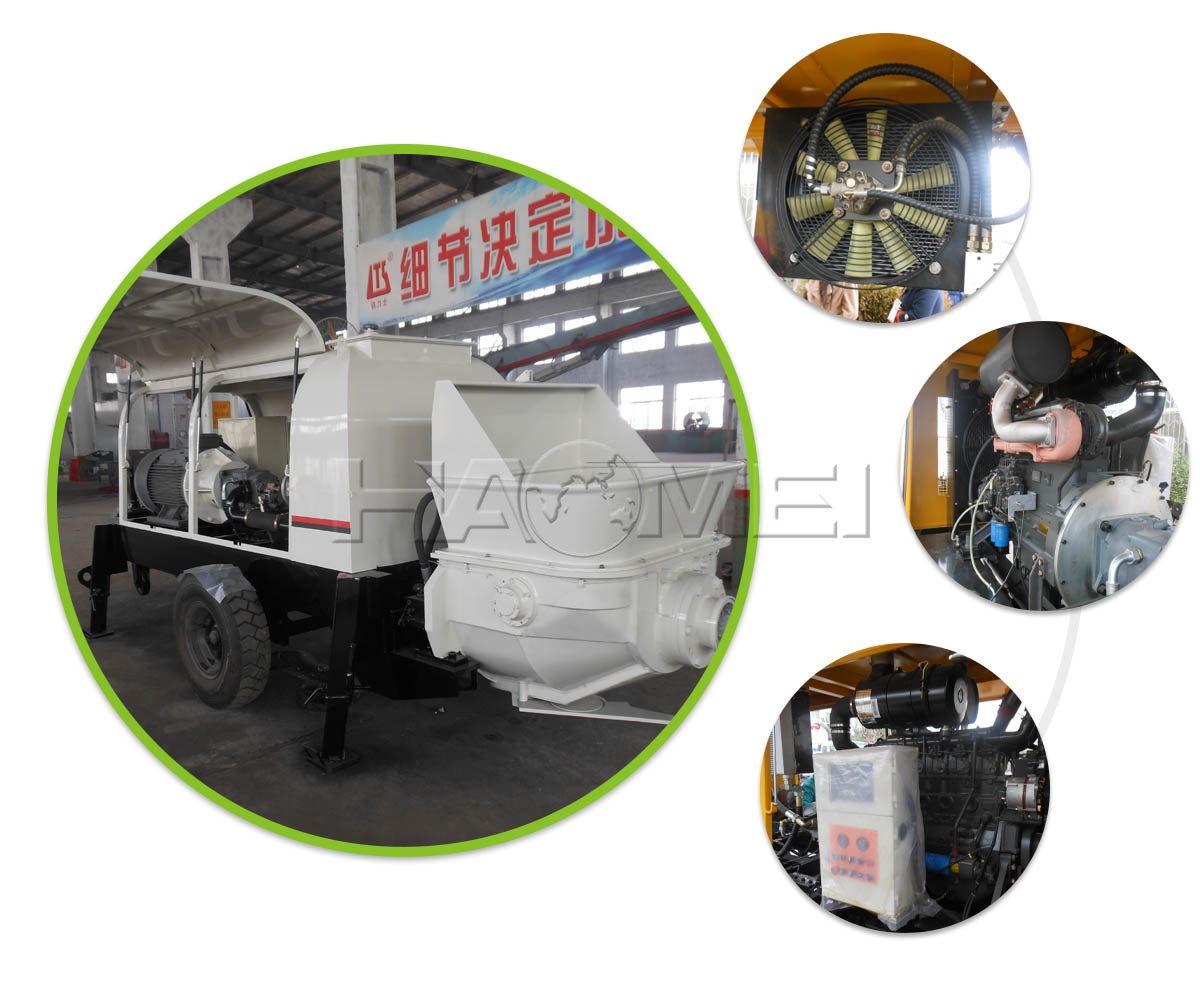
For customers comparing a complete product line, the Trailer Concrete Pump series normally includes diesel and electric configurations, different concrete cylinder sizes, and multiple pressure levels for different construction conditions.
2. What Is Included in a Factory Price?
A trailer concrete pump quotation normally includes the main machine, standard accessories, and basic factory testing. However, export projects often require additional items such as wearing parts, pipelines, remote control, special painting, or local compliance documents.
| Price item | Usually included in standard factory quotation | Notes for buyers |
|---|---|---|
| Main pump unit | Yes | Includes hopper, pumping cylinders, hydraulic system, control cabinet, chassis, and power unit |
| Standard delivery pipe accessories | Sometimes | Quantity and diameter should be confirmed before quotation |
| Wearing parts | Basic set may be included | S-tube, spectacle plate, cutting ring, piston, seals, and delivery cylinder parts are common consumables |
| Remote control | Optional | Useful for one-operator coordination during pouring |
| Export packing | Usually included for FOB quotations | Sea transport packing requirements may vary by destination |
| Commissioning and training | Optional | Can be arranged by video support, local service team, or engineer dispatch depending on project location |
| Freight, insurance, duties, tax | Usually not included in EXW price | CIF or DAP terms require separate calculation |
3. Main Factors Affecting Trailer Concrete Pump Price
The same output rating can result in different prices because the internal configuration may be significantly different. When comparing quotations, the specification sheet should be reviewed together with the price.
| Cost factor | Influence on price | Technical explanation |
|---|---|---|
| Pumping capacity | Medium to high | Larger output usually requires a larger hydraulic system, larger pumping cylinders, and a stronger power unit |
| Pumping pressure | High | Long-distance or high-rise pumping requires higher pressure, stronger delivery cylinders, and optimized hydraulic control |
| Diesel engine or electric motor | Medium | Diesel pumps offer flexible site mobility, while electric pumps suit projects with stable power supply and lower site emissions |
| Emission standard | Medium to high | Engines meeting stricter emission regulations may increase cost |
| Hydraulic components | High | Main pump, valves, cooling system, and seals directly affect stability and maintenance cost |
| Control system | Medium | PLC control, fault diagnosis, remote control, and safety protection improve operation management |
| Wear-resistant parts | Medium | Hopper liner, S-valve, spectacle plate, and cutting ring materials affect service life in abrasive concrete conditions |
| Export configuration | Variable | Voltage, language, documentation, spare parts, packing, and shipping route all affect total landed cost |
4. Equipment Structure and Working Principle
A trailer concrete pump uses hydraulic power to drive concrete pistons. Concrete enters the hopper from a mixer truck or batching plant, then the distribution valve alternately connects the pumping cylinders with the delivery pipeline. Through repeated suction and discharge strokes, concrete is pushed through pipelines to the pouring position.
| Key structure | Function | Configuration points |
|---|---|---|
| Hopper and mixing device | Receives concrete and keeps it workable before pumping | Hopper volume, grate design, and mixing blade strength should match aggregate size |
| S-valve or distribution valve | Switches concrete flow between cylinders and pipeline | Wear resistance and sealing performance are important for pumping efficiency |
| Pumping cylinders | Generate suction and discharge strokes | Cylinder diameter and stroke affect output and pressure |
| Hydraulic system | Provides driving force for pumping and valve switching | Main pump displacement, oil cooling, and pressure control influence stability |
| Power unit | Supplies mechanical or electrical power | Diesel engine is suitable for mobile sites; electric motor is suitable where grid power is reliable |
| Control cabinet | Manages operating logic and safety protection | PLC control, emergency stop, and fault display improve operation safety |
| Trailer chassis | Supports site movement and transport | Tire, axle, outriggers, and towing structure should match site conditions |
5. Diesel vs Electric Trailer Concrete Pump Price
Diesel and electric pumps are both widely used, but their cost structure is different. A diesel trailer pump usually has a higher initial power system cost, while an electric trailer pump may reduce operating cost where electricity is stable and affordable.
| Item | Diesel trailer concrete pump | Electric trailer concrete pump |
|---|---|---|
| Initial price | Usually higher for the same output class | Usually lower if no special voltage customization is required |
| Site flexibility | High, suitable for remote sites | Depends on power supply availability |
| Operating cost | Affected by diesel fuel price and engine maintenance | Affected by local electricity price and cable arrangement |
| Maintenance focus | Engine, fuel system, hydraulic system | Motor, electrical cabinet, hydraulic system |
| Typical use | Roads, bridges, tunnels, rural construction, remote infrastructure | Buildings, precast yards, urban projects with stable power |
6. Application Scenarios and Model Selection
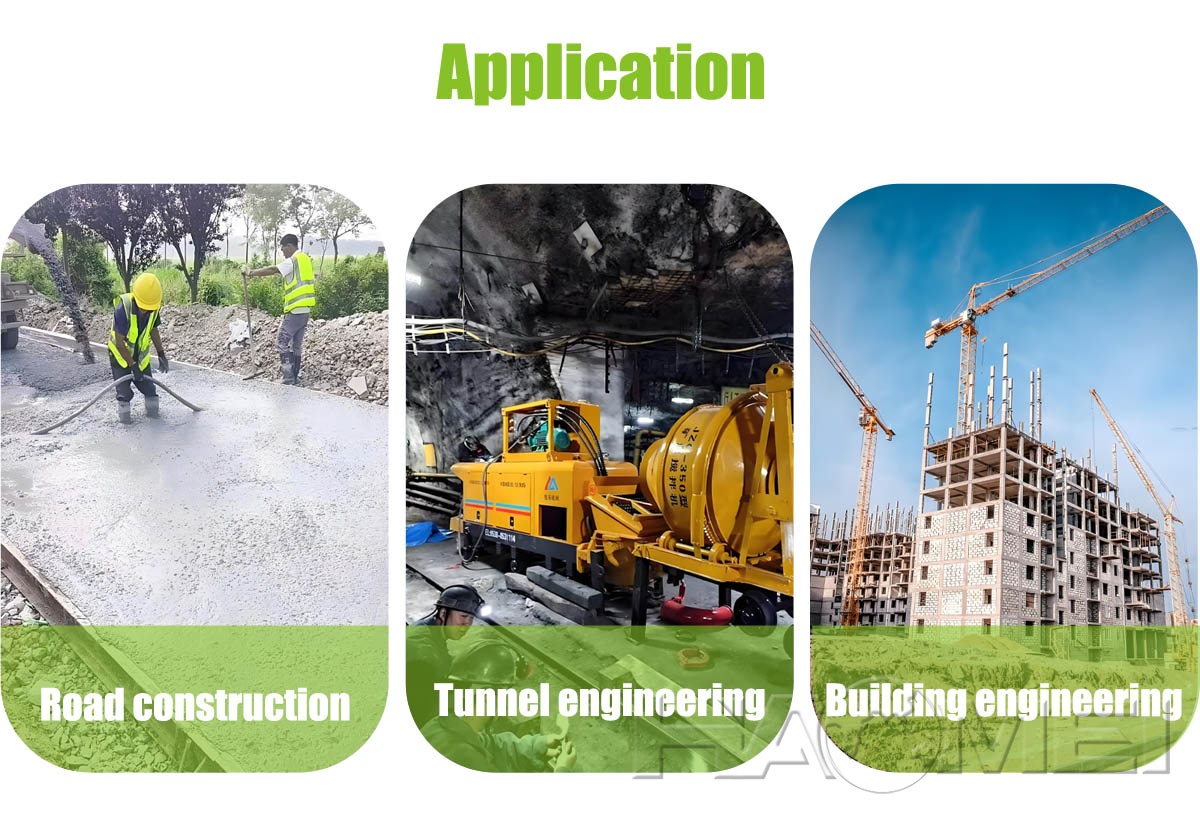
Trailer concrete pumps are selected according to concrete grade, aggregate size, delivery distance, vertical height, and required pouring speed. The most economical choice is not always the lowest price. It is the configuration that can complete the project with stable pumping, acceptable maintenance cost, and suitable site adaptability.
| Project scenario | Recommended configuration focus | Selection note |
|---|---|---|
| Residential building construction | 40-60 m3/h, standard pressure | Suitable for regular floor pouring and moderate pipeline length |
| Road and drainage works | Diesel power, good mobility | Pump should tolerate frequent site transfer and variable concrete supply |
| Tunnel construction | High pressure, stable cooling system | Long horizontal pumping requires attention to pipeline resistance |
| Bridge construction | Medium to high pressure, reliable hydraulic system | Pipeline layout and boom or placing method should be reviewed before quotation |
| High-rise construction | High-pressure system, larger power reserve | Concrete mix design and pipeline cleaning plan are critical |
For projects requiring higher pressure and stronger delivery capacity, models such as the HBT90S1821-200 Trailer Concrete Pump can be evaluated according to pumping height, pipeline layout, and concrete mix characteristics.
7. Additional Costs to Consider in 2026
The purchase price is only one part of the total investment. For accurate budget planning, project owners and contractors should also calculate transportation, customs clearance, spare parts, pipelines, and operator training.
| Additional cost item | Why it matters | Budgeting suggestion |
|---|---|---|
| Delivery pipeline | Required for actual pumping work | Confirm diameter, length, elbows, clamps, and rubber hose quantity |
| Spare parts package | Reduces downtime during construction | Prepare wearing parts according to expected pumping volume and aggregate abrasiveness |
| Shipping and insurance | Affects total landed cost | Compare EXW, FOB, CIF, and DAP terms before order confirmation |
| Import duty and tax | Varies by country or region | Check local HS code, duty rate, and VAT or GST requirements |
| Site commissioning | Helps operators understand correct operation | Include training for pumping, cleaning, lubrication, and fault handling |
| Maintenance tools | Supports daily service | Grease gun, cleaning ball, pipeline tools, and hydraulic oil testing should be considered |
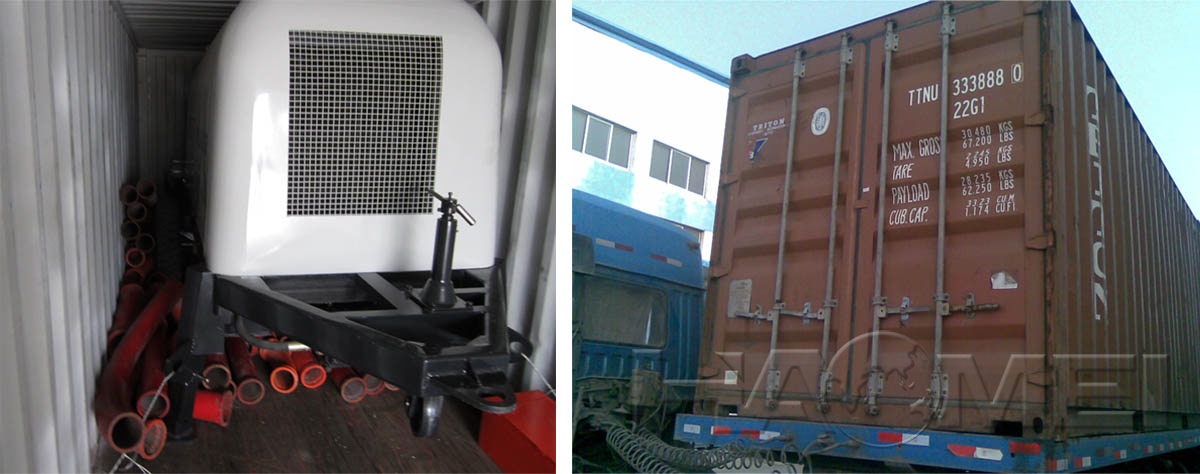
8. How to Request an Accurate 2026 Quotation
A precise trailer concrete pump price requires clear technical information. The following data helps the factory select the proper configuration and avoid under-specification or unnecessary over-configuration.
| Information required | Example details to provide |
|---|---|
| Project type | Building, road, bridge, tunnel, mining, hydropower, precast yard |
| Required output | Target concrete volume per hour and daily pouring schedule |
| Pumping distance | Horizontal distance, vertical height, and number of elbows |
| Concrete specification | Slump, aggregate size, concrete grade, admixture use |
| Power condition | Diesel preference or electric voltage and frequency |
| Local regulations | Engine emission standard, safety certification, documentation requirement |
| Delivery term | EXW, FOB, CIF, or other Incoterms |
| Spare parts requirement | Standard kit or extended maintenance package |
9. Industry Trend: More Attention to Efficiency and Maintainability
In 2026, trailer concrete pump selection is increasingly focused on lifecycle value rather than only purchase price. Contractors are paying closer attention to hydraulic efficiency, energy consumption, simplified maintenance, electronic diagnostics, and the availability of spare parts. For urban construction sites, electric trailer concrete pumps are becoming more common where grid power is reliable. For infrastructure projects, diesel pumps remain important because of their mobility and independence from site power supply.
At the manufacturing level, practical improvements are concentrated on wear-resistant components, stable hydraulic control, easier cleaning, safer operation, and better compatibility with different concrete mixes. These improvements do not eliminate the need for correct operation, but they help reduce downtime and make equipment management more predictable.
10. Conclusion
Trailer concrete pump price in 2026 generally varies according to output capacity, pressure level, power system, hydraulic configuration, export requirements, and after-sales support scope. For budget planning, small trailer pumps may be suitable for secondary structural and light construction work, while high-pressure and heavy-duty models are more appropriate for tunnels, bridges, high-rise buildings, and long-distance pumping.
A professional quotation should combine price, specification, application conditions, delivery terms, and spare parts planning. This approach helps contractors select a pump that fits the project instead of focusing only on the lowest initial cost.