News
Comparison Between Trailer Concrete Pumps and Truck-Mounted Concrete Pumps
In concrete placement projects, the selection of pumping equipment directly affects construction efficiency, site organization, operating cost, and pouring continuity. Among the common solutions used on job sites, trailer concrete pumps and truck-mounted concrete pumps are both widely applied, but they are designed for different operating conditions and project priorities.
From the perspective of equipment manufacturing, the difference between these two types of concrete pumping equipment is not limited to mobility. Their structural layout, power configuration, pipeline arrangement, maintenance approach, and site adaptability all influence final equipment selection. A clear comparison helps contractors, fleet managers, and project engineers match the machine to the actual construction requirement.
1. What Is a Trailer Concrete Pump?
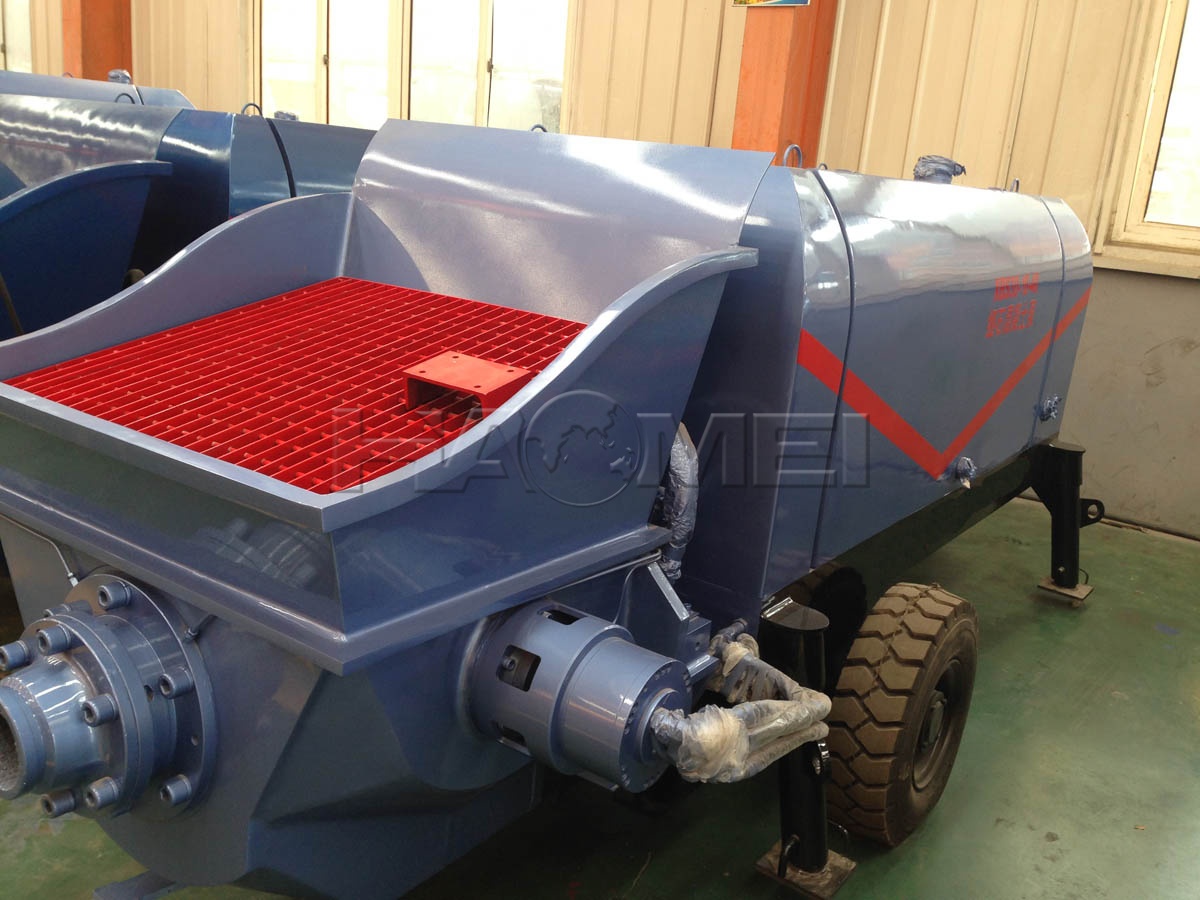
A trailer concrete pump is a concrete delivery machine installed on a towable chassis. It is generally transported to the job site by another vehicle and then connected to delivery pipelines for pumping operations. Its main function is to convey concrete through pipelines to the pouring point under pressure.
In manufacturing practice, a trailer pump usually consists of the following core systems:
Power system, commonly diesel engine or electric motor
Hydraulic system
Concrete pumping system
Hopper and S valve or transfer valve system
Pipeline cleaning and lubrication system
Electrical control system
Towable chassis with axle and tires
For projects requiring flexible pipeline layout or long-distance horizontal and vertical delivery, a Trailer Concrete Pump remains a practical and widely adopted solution.
2. What Is a Truck-Mounted Concrete Pump?
A truck-mounted concrete pump refers to a concrete pump integrated with a truck chassis. Depending on regional usage habits, this term may sometimes describe a line pump mounted on a truck chassis rather than a boom pump. Compared with a trailer pump, the truck-mounted version combines transport and pumping functions in one unit, reducing the need for a separate towing vehicle.
Its main systems usually include:
Truck chassis
Engine and power transmission system
Hydraulic pumping unit
Hopper and valve assembly
Control system
Outrigger or stabilizing structure in some configurations
Pipeline system for concrete discharge
This design improves transfer speed between job sites and is often selected for urban works, short-duration projects, or applications where frequent relocation is required.
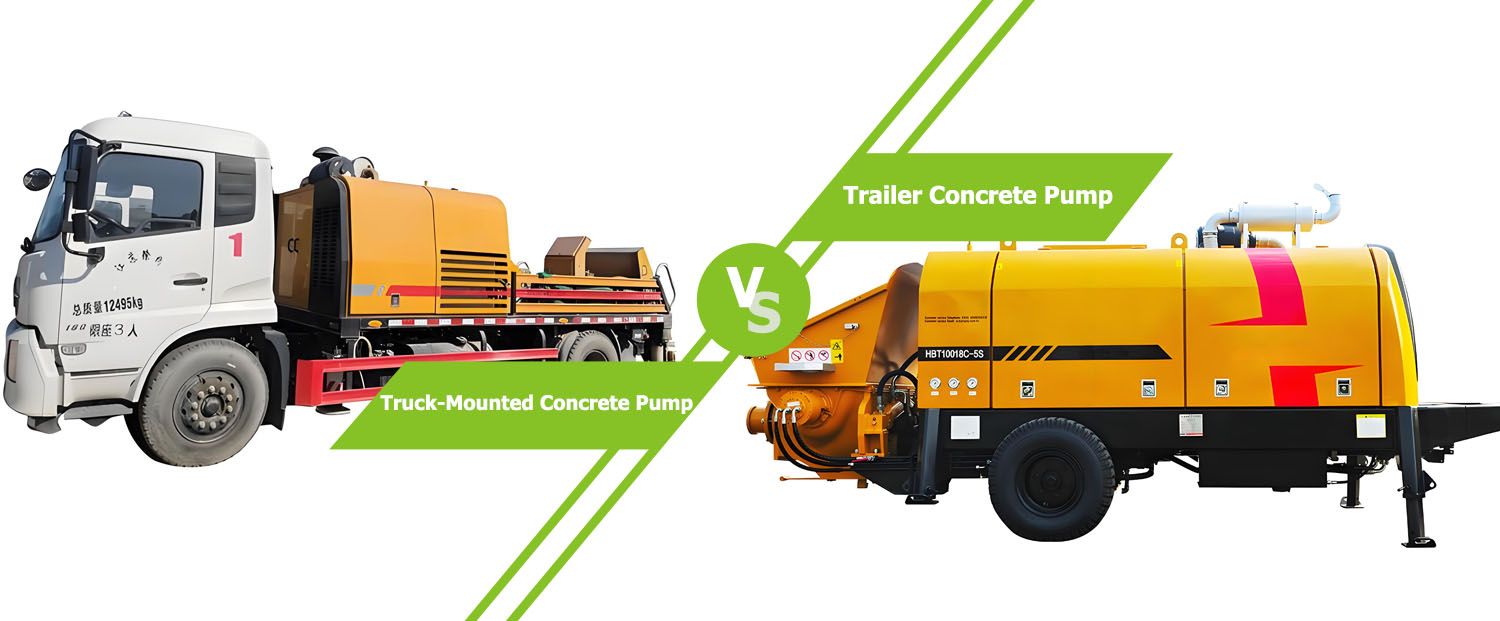
3. Basic Working Principle: Similar Pumping Logic, Different Integration
Although trailer concrete pumps and truck-mounted concrete pumps differ in structure, their pumping principle is broadly similar.
Concrete pumping process
Ready-mixed concrete is discharged into the hopper.
The hydraulic system drives the concrete cylinders and pumping pistons.
The valve system alternates the suction and discharge process.
Concrete is pushed into the delivery pipeline under pressure.
Continuous reciprocating action maintains stable concrete conveying.
The main difference lies in how the system is packaged and deployed:
A trailer pump is a standalone pumping unit that requires external towing and onsite pipeline setup.
A truck-mounted pump integrates mobility and pumping in one machine, allowing quicker site transfer.
4. Structural Comparison
The following table summarizes the main structural differences.
| Item | Trailer Concrete Pump | Truck-Mounted Concrete Pump |
|---|---|---|
| Chassis form | Towable trailer chassis | Integrated truck chassis |
| Transportation | Requires towing vehicle | Self-transporting |
| Equipment layout | Independent pump unit | Pump unit integrated with vehicle |
| Site setup | Fixed after positioning, then connected to pipeline | Faster repositioning between locations |
| Space utilization | Compact pumping body, flexible placement | Larger overall vehicle footprint |
| Maintenance access | Pump system maintenance is relatively direct | Requires both pump and vehicle maintenance |
| Power options | Diesel or electric commonly available | Usually diesel-driven through vehicle-based configuration |
5. Key Differences in Engineering Applications
Equipment selection should be based on project characteristics rather than on a single parameter. The table below shows the practical differences in typical application scenarios.
| Application factor | Trailer Concrete Pump | Truck-Mounted Concrete Pump |
|---|---|---|
| High-rise building pumping | Suitable with proper pipeline design | Suitable when mobility is also needed |
| Rural and remote projects | Suitable, especially where equipment stays longer onsite | May be limited by road access in some areas |
| Frequent site transfer | Less efficient due to towing requirement | More efficient |
| Tunnel, foundation, and infrastructure works | Commonly used for stable long-duration pumping | Used when transfer frequency is high |
| Urban small and medium jobs | Can be used if pipeline deployment is acceptable | Often preferred for faster movement |
| Long stationary pumping periods | Highly suitable | Suitable, but vehicle integration may be underutilized |
In many infrastructure, housing, and foundation projects, trailer pumps are selected because the machine can remain in one operating position while the pipeline is extended according to pouring progress. A model such as the HBT60S1413-112R Trailer Concrete Pump is generally considered where balanced delivery capacity and flexible site deployment are required.
6. Mobility and Site Adaptability
Mobility is one of the most discussed differences between the two machine types, but it should be evaluated in relation to real site conditions.
Trailer concrete pump
Advantages in mobility and adaptability:
Can be positioned independently from the towing vehicle
Suitable for sites with long working cycles
Easier to keep operating in one fixed position
Can work with customized pipeline routing around obstacles
Considerations:
Requires towing arrangement before and after operation
Relocation between multiple daily pouring points is slower
Truck-mounted concrete pump
Advantages in mobility and adaptability:
Faster inter-site transfer
Less dependence on separate towing equipment
Efficient for dispersed projects and short-cycle tasks
Considerations:
Larger integrated size may affect access on narrow or uneven sites
Vehicle chassis service and pump service must both be considered in maintenance planning
7. Configuration Options and Manufacturing Considerations
From a manufacturer's perspective, the most important comparison is not only the machine category, but also whether the configuration matches the concrete characteristics, pumping distance, climate, and maintenance conditions.
Common configuration points for trailer concrete pumps
| Configuration item | Typical options | Selection significance |
|---|---|---|
| Power source | Diesel, electric | Depends on site power supply and emission requirements |
| Hydraulic system | Open loop or closed loop design depending on model | Affects efficiency, control response, and maintenance |
| Valve type | S valve commonly used | Influences sealing, wear resistance, and aggregate passing ability |
| Control method | Manual, wired, or remote-assisted control | Affects operation convenience |
| Delivery capacity class | Different model ranges | Should match actual placing demand, not only peak requirement |
| Wear parts material | High-wear-resistant steel components | Important for service life and maintenance intervals |
Common configuration points for truck-mounted concrete pumps
| Configuration item | Typical options | Selection significance |
|---|---|---|
| Chassis brand/class | Varies by market and transport regulation | Affects road compliance and service network |
| Engine and drive arrangement | Diesel-based | Influences fuel use and road mobility |
| Pumping unit integration | Compact integrated design | Important for stability and service layout |
| Stabilization system | Depending on equipment structure | Supports safe operation during pumping |
| Control system | Centralized vehicle and pump controls | Improves operation coordination |
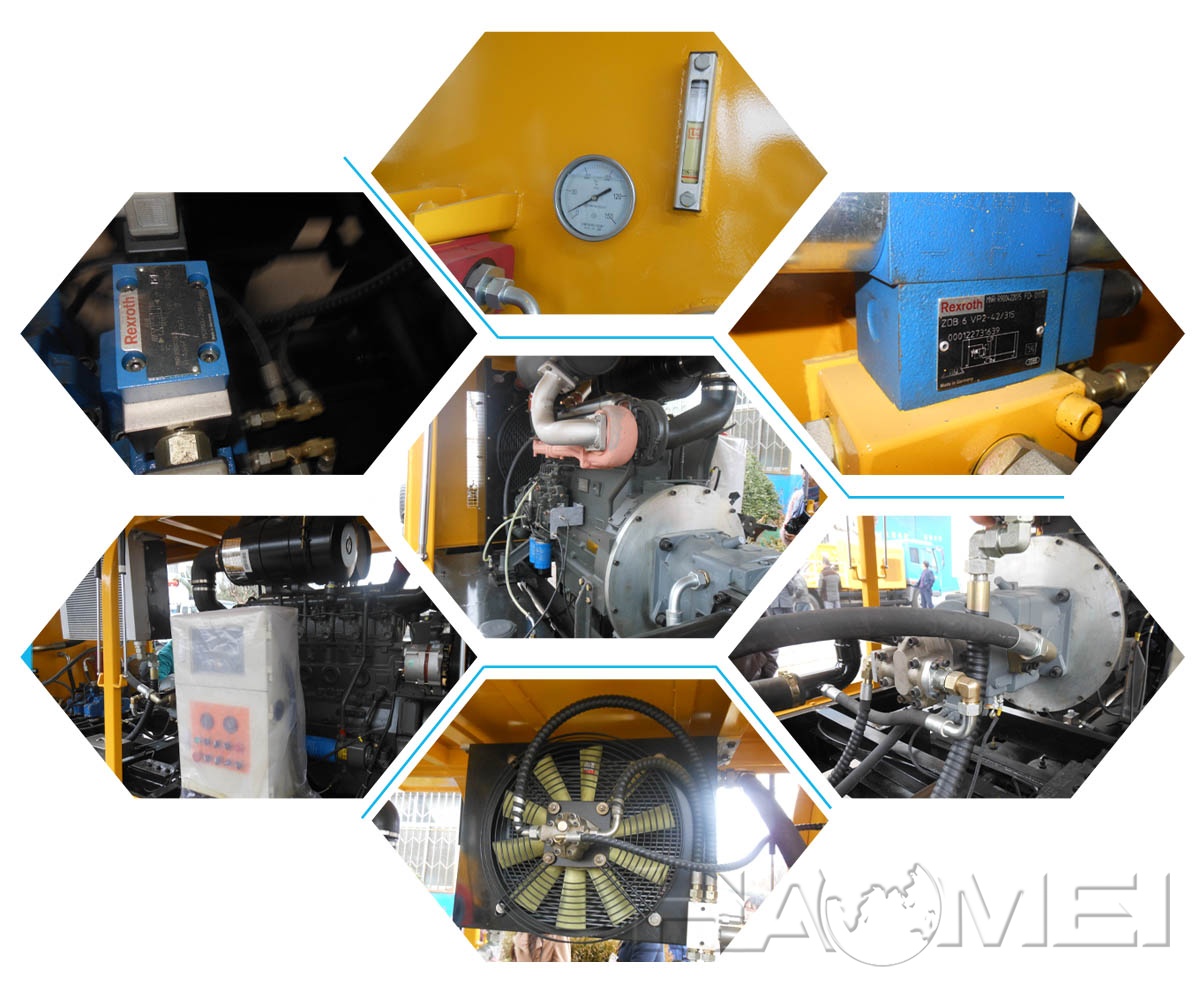
8. Cost Perspective: Purchase Is Only One Part of the Decision
A professional comparison should not reduce equipment choice to initial purchase price alone. Total lifecycle cost is more meaningful in construction equipment evaluation.
| Cost factor | Trailer Concrete Pump | Truck-Mounted Concrete Pump |
|---|---|---|
| Initial equipment investment | Usually lower than integrated truck-mounted units | Usually higher due to chassis integration |
| Transport requirement | Needs towing vehicle | Self-moving |
| Maintenance scope | Pump system focused | Pump system plus truck chassis |
| Utilization efficiency | Strong for fixed-site pumping | Strong for multi-site transfer work |
| Fleet scheduling | Flexible when towing resources are available | Efficient where quick dispatch is required |
For contractors handling repeated stationary pumping tasks, a trailer pump often provides a practical cost-to-application balance. For businesses serving multiple scattered sites in one region, truck-mounted pumps may improve dispatch efficiency.
9. Operation and Maintenance Differences
Reliable pumping depends not only on machine design but also on daily inspection, concrete quality control, and correct operation.
Maintenance focus for trailer concrete pumps
Hopper cleaning after each shift
Lubrication system inspection
Checking hydraulic oil condition and sealing performance
Monitoring wear parts such as delivery cylinders, cutting ring, and spectacle plate
Pipeline cleaning and pressure release procedures
Maintenance focus for truck-mounted concrete pumps
All pump maintenance items listed above
Chassis engine and transmission service
Tire, brake, and roadworthiness inspection
Stabilization or structural component checks where applicable
The maintenance workload of a truck-mounted concrete pump is broader because it combines pumping equipment with road vehicle functions.
10. Which Equipment Is More Suitable?
There is no universal answer. The better choice depends on project type, logistics arrangement, and equipment utilization pattern.
Trailer concrete pump is generally more suitable when:
The project has a relatively long pumping cycle at one location
Pipeline routing is planned in advance
Site access is limited but fixed equipment placement is possible
Lower initial investment and focused pump maintenance are priorities
Electric power is available and an electric pump configuration is preferred
Truck-mounted concrete pump is generally more suitable when:
Frequent relocation between project points is required
Urban projects demand faster deployment and withdrawal
Fleet dispatch efficiency is a major concern
Integrated transport and pumping is preferred
11. Industry Trend: More Refined Selection, More Application-Specific Design
Current market demand shows that users are paying greater attention to application matching rather than simply choosing the largest available model. Several industry trends are shaping pump selection:
| Industry trend | Impact on equipment selection |
|---|---|
| Demand for lower operating cost | Encourages selection based on actual pumping requirement |
| Urbanization and infrastructure renewal | Increases need for flexible and efficient pumping solutions |
| Higher attention to maintenance efficiency | Favors designs with easier service access and durable wear parts |
| Site-specific customization | Promotes more diversified pump configurations |
| Electrification in some regions | Supports wider use of electric trailer concrete pumps where power supply is stable |
For this reason, manufacturers are increasingly focused on modular design, wear-resistant components, hydraulic stability, and convenient maintenance access. In the trailer pump category, models such as the HBT80S1813-110 Trailer Concrete Pump are often evaluated for projects that require a higher output class while still maintaining the practical advantages of a towable pumping unit.
12. Conclusion
Trailer concrete pumps and truck-mounted concrete pumps are both important concrete delivery systems in modern construction. The essential difference is not which machine is universally better, but which one fits the working environment, transport condition, pouring plan, and maintenance resources of the project.
From the manufacturing perspective, trailer concrete pumps offer advantages in independent pumping deployment, flexible pipeline arrangement, and cost control for longer stationary operations. Truck-mounted concrete pumps offer advantages in integrated mobility and faster transfer between dispersed job sites.
A sound equipment decision should be based on project duration, required pumping distance, access conditions, utility availability, and lifecycle maintenance planning. With this approach, concrete pumping equipment can better support stable, efficient, and practical construction operations.