
News
Energy-Efficient LB1500 Asphalt Mixing Plant for Bridge Deck Paving
Bridge deck paving places high requirements on asphalt mixture stability, temperature control, aggregate gradation, and construction continuity. Compared with ordinary road sections, bridge decks are more sensitive to layer thickness, waterproof bonding, vibration response, and surface smoothness. For contractors and project owners, selecting a suitable asphalt mixing plant is not only about production capacity, but also about mixture quality, energy use, site coordination, and long-term maintenance convenience.
As a construction machinery manufacturer, the factory focuses on the structural design, thermal efficiency, metering accuracy, and control logic of asphalt mixing equipment. The LB1500 Asphalt Mixing Plant is commonly selected for medium-scale road works, municipal paving, and bridge deck asphalt paving projects where stable batch production and flexible formula management are required.
Engineering Requirements of Bridge Deck Paving
Bridge deck asphalt paving is usually carried out under strict construction windows. The asphalt mixture must maintain appropriate temperature from discharge to paving, while gradation and asphalt content must remain consistent between batches. Any fluctuation may affect compaction quality, bonding strength, and surface durability.
| Bridge deck paving requirement | Equipment-related focus | Manufacturing consideration |
|---|---|---|
| Stable mixture temperature | Dryer heating, burner control, hot aggregate storage | Improve heat exchange and reduce temperature fluctuation |
| Accurate asphalt-aggregate ratio | Weighing system, asphalt metering, batch control | Use calibrated sensors and logical interlock control |
| Consistent gradation | Cold aggregate feeding, screening, hot bin management | Match screen layers and bin volume with job mix formula |
| Limited site time | Reliable batch cycle and coordinated truck loading | Optimize layout for material flow and maintenance access |
| Environmental compliance | Dust collection, burner combustion, noise reduction | Configure baghouse dust collector and enclosed key points |
Why LB1500 Is Suitable for Bridge Deck Applications
The LB1500 belongs to the batch type Asphalt Mixing Plant category. Batch mixing is widely used where multiple asphalt mixture formulas are required or where precise control of each batch is important. For bridge deck paving, this structure supports formula switching, accurate weighing, and controlled mixing time.
In a typical bridge deck paving project, the plant may need to produce dense-graded asphalt mixture, modified asphalt mixture, or a waterproof bonding layer mixture depending on the design. The LB1500 system can be configured with different asphalt tanks, filler supply systems, dust collection units, and control modules according to project requirements.
Main Structure and Working Principle
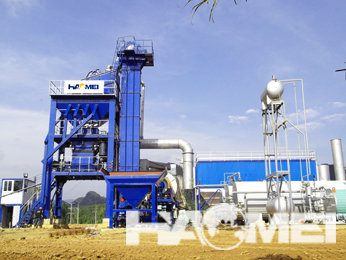
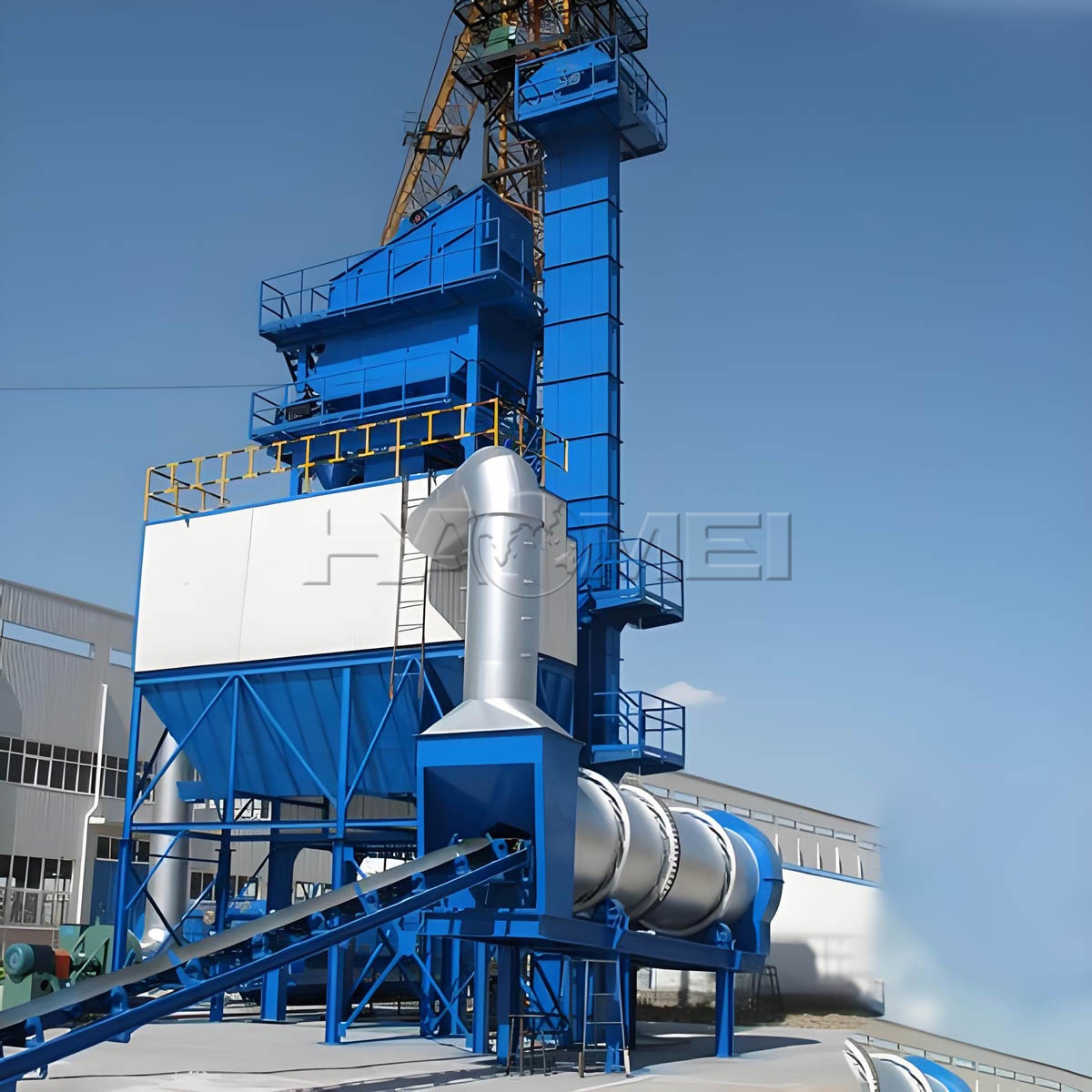
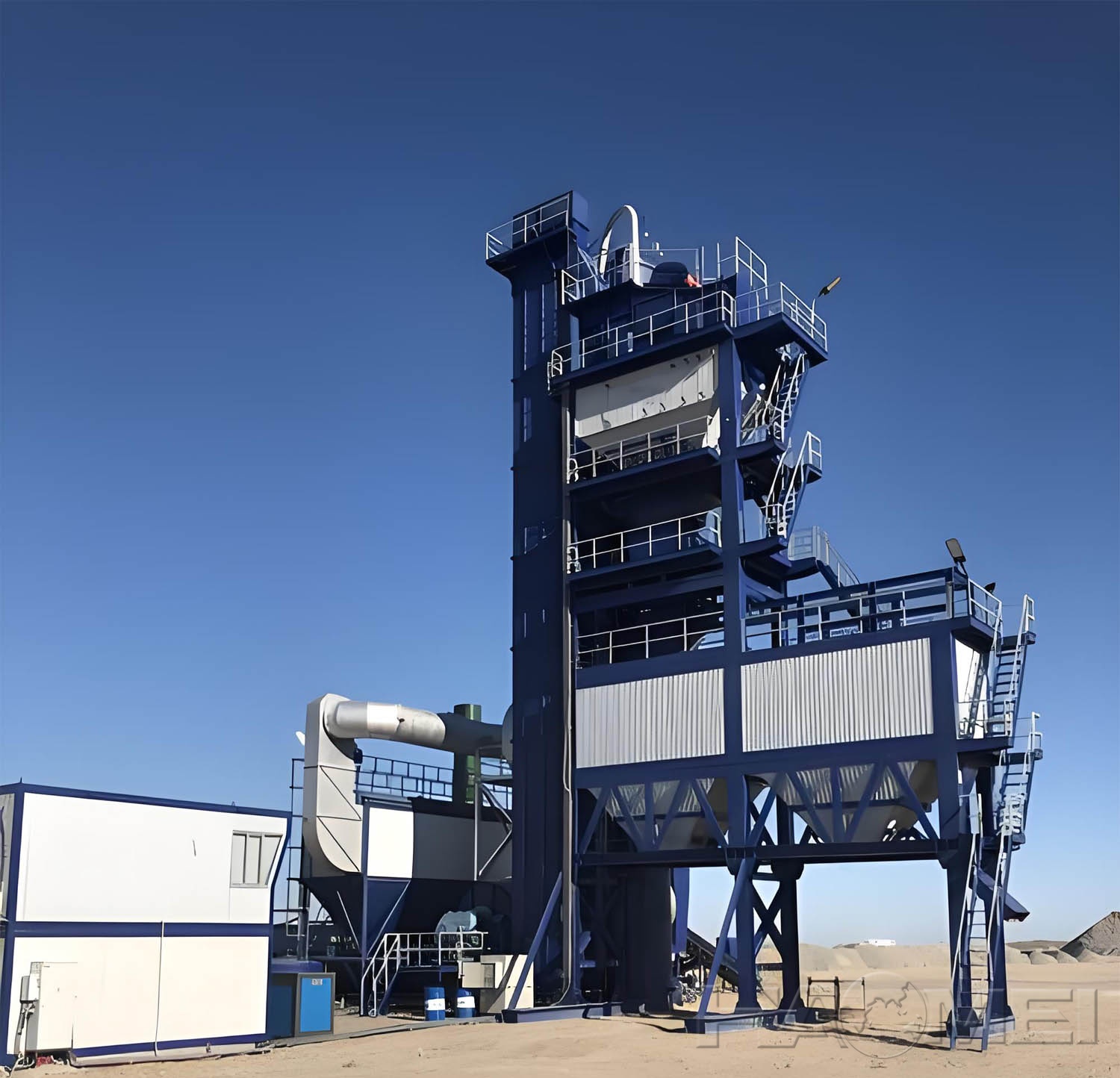
The LB1500 asphalt mixing plant is generally composed of a cold aggregate supply system, drying drum, burner, hot aggregate elevator, vibrating screen, hot aggregate bins, weighing system, mixer, filler system, asphalt supply system, dust collection system, finished material storage, and automatic control system.
| System | Main function | Relevance to energy efficiency and paving quality |
|---|---|---|
| Cold aggregate feeding system | Supplies aggregates by size according to preset ratios | Stable feeding reduces correction loss and improves batching accuracy |
| Drying drum and burner | Heats and dries aggregates before screening | Efficient heat transfer helps control fuel consumption |
| Vibrating screen and hot bins | Separates heated aggregates into required sizes | Supports stable gradation for bridge deck surface quality |
| Weighing system | Measures aggregate, asphalt, and filler | Accurate metering helps maintain mix design consistency |
| Twin-shaft mixer | Mixes aggregate, filler, and asphalt evenly | Adequate mixing improves coating quality and mixture uniformity |
| Baghouse dust collector | Captures dust from drying and screening processes | Supports cleaner operation and material recovery management |
| Control system | Manages production parameters and batch records | Helps operators monitor temperature, timing, and formula settings |
The production process begins with cold aggregates being fed into the drying drum. After heating and drying, aggregates are lifted to the screening system and stored in hot bins by particle size. According to the selected formula, the control system weighs aggregates, asphalt, and filler separately. The materials are then discharged into the mixer for batch mixing. After mixing, the finished hot mix asphalt is discharged into a truck or storage silo for delivery to the bridge deck paving site.
Energy-Efficient Design Considerations
Energy efficiency in an asphalt mixing plant is achieved through system coordination rather than a single component. For bridge deck paving, stable production at the correct temperature is often more valuable than simply increasing output. The LB1500 design can support practical energy-saving operation through the following technical measures.
| Energy-efficient design point | Technical approach | Practical value |
|---|---|---|
| Optimized drying drum | Reasonable flight arrangement and aggregate curtain formation | Improves contact between hot gas and aggregate |
| Burner matching | Burner selected according to fuel type and site condition | Supports stable combustion and temperature control |
| Insulated asphalt pipelines | Heat preservation for asphalt transfer lines | Reduces unnecessary reheating and temperature loss |
| Accurate cold feed control | Variable frequency feeding can be configured | Reduces unstable material flow and repeated adjustment |
| Dust recovery management | Collected dust can be handled according to mix design requirements | Helps manage filler balance and material utilization |
| Intelligent control interface | Production parameters, alarms, and formulas are managed centrally | Reduces operating errors and supports consistent production |
Energy-saving performance is affected by aggregate moisture, fuel quality, ambient temperature, production continuity, and maintenance condition. Therefore, the factory recommends evaluating energy consumption based on actual project conditions and equipment configuration rather than relying on a single theoretical value.
Configuration Options for Different Project Conditions
Bridge projects vary in scale, site distance, mixture type, and environmental requirements. The LB1500 asphalt mixing plant can be configured according to practical construction needs.
| Configuration item | Common option | Selection reference |
|---|---|---|
| Fuel system | Diesel, heavy oil, natural gas, or other applicable fuels | Depends on local fuel supply, cost, and emission rules |
| Asphalt tank | Thermal oil heating, electric heating, or combined heating | Selected according to asphalt type and temperature requirements |
| Finished material storage | Direct discharge or storage silo | Storage silo helps coordinate plant output and truck dispatch |
| Dust collection | Baghouse dust collector | Suitable for projects with stricter environmental requirements |
| Control system | Manual, semi-automatic, or fully automatic operation interface | Automatic control is preferred for formula management and records |
| Additive system | Optional system for fiber, modifier, or special additive | Used when bridge deck mix design requires additional materials |
For bridge deck paving, the configuration should be reviewed together with the paving schedule, truck transportation distance, ambient temperature, and the required paving temperature at the site. This helps reduce waiting time and avoid unnecessary reheating or rejected batches.
Quality Control Points During Production
The asphalt mixing plant is one part of the complete paving process. To obtain stable bridge deck paving quality, plant production, transportation, paving, and compaction should be coordinated.
| Production control item | Recommended attention point | Potential impact on bridge deck paving |
|---|---|---|
| Aggregate moisture | Monitor changes after rain or stockpile variation | Affects fuel consumption and discharge temperature |
| Mixing temperature | Set according to asphalt type and project specification | Influences workability and compaction effect |
| Asphalt metering | Check calibration and valve response regularly | Affects binder content and mixture durability |
| Mixing time | Adjust according to mixture type and coating condition | Helps ensure uniform asphalt coating |
| Truck dispatch | Match plant production with paving speed | Reduces temperature loss during waiting |
| Maintenance inspection | Check screens, mixer liners, filters, and sensors | Maintains continuous and stable production |
Application Planning for Bridge Deck Projects
Before production begins, the plant layout and project logistics should be planned carefully. Bridge deck paving often has limited access routes and strict sequencing, especially in urban bridges, expressway overpasses, and long-span bridge projects.
| Planning factor | Key question | Equipment planning response |
|---|---|---|
| Distance to paving site | How long will transport take from plant to bridge deck? | Select suitable discharge temperature and truck insulation measures |
| Daily paving volume | How much mixture is required during the paving window? | Match batch production with paving and compaction capacity |
| Mix design | Is modified asphalt, SMA, or special waterproof mix required? | Configure asphalt tanks, additive systems, and mixing settings accordingly |
| Site environmental rules | Are dust, noise, and fuel emissions restricted? | Use suitable dust collection, burner, and enclosure options |
| Maintenance access | Can operators inspect key modules safely? | Plan walkways, platforms, and access space during installation |
Industry Trend: Cleaner and More Controlled Asphalt Production
The asphalt paving industry is moving toward cleaner production, lower fuel consumption, digital process control, and better material traceability. For bridge deck paving, these trends are especially relevant because the pavement layer is thin, quality requirements are high, and repair costs are significant once defects occur.
Modern asphalt mixing plants are increasingly designed with automatic control systems, improved dust collection, energy-aware heating systems, and optional data recording functions. These features help project teams manage production more transparently and support continuous quality improvement.
Manufacturer Perspective on Equipment Selection
For bridge deck paving projects, the LB1500 asphalt mixing plant should be evaluated based on the complete production chain, including aggregate preparation, asphalt heating, batching accuracy, mixing uniformity, truck dispatch, and maintenance capability. A well-matched configuration can support stable production, reasonable energy use, and consistent asphalt mixture quality.
The factory recommends confirming the project mix design, site layout, fuel conditions, environmental requirements, and expected production rhythm before finalizing the equipment configuration. With proper planning, the Energy-Efficient LB1500 Asphalt Mixing Plant can provide a practical solution for bridge deck paving and other medium-scale asphalt construction applications.