
News
Sicoma Concrete Mixers, Suitable for Rapid Concrete Preparation and Construction Projects
Rapid concrete preparation is an important requirement for ready-mix production, precast work, road construction, municipal projects, and on-site batching applications. The mixer is the core unit that combines cement, aggregates, water, and admixtures into a workable and consistent concrete mixture.
As a construction machinery manufacturer, the factory evaluates mixer selection around material characteristics, required batch capacity, production rhythm, maintenance access, and integration with the batching plant. A Sicoma concrete mixer is commonly considered for projects requiring intensive mixing action and stable batch-to-batch operation.
Twin-Shaft Mixing Principle for Faster Material Circulation
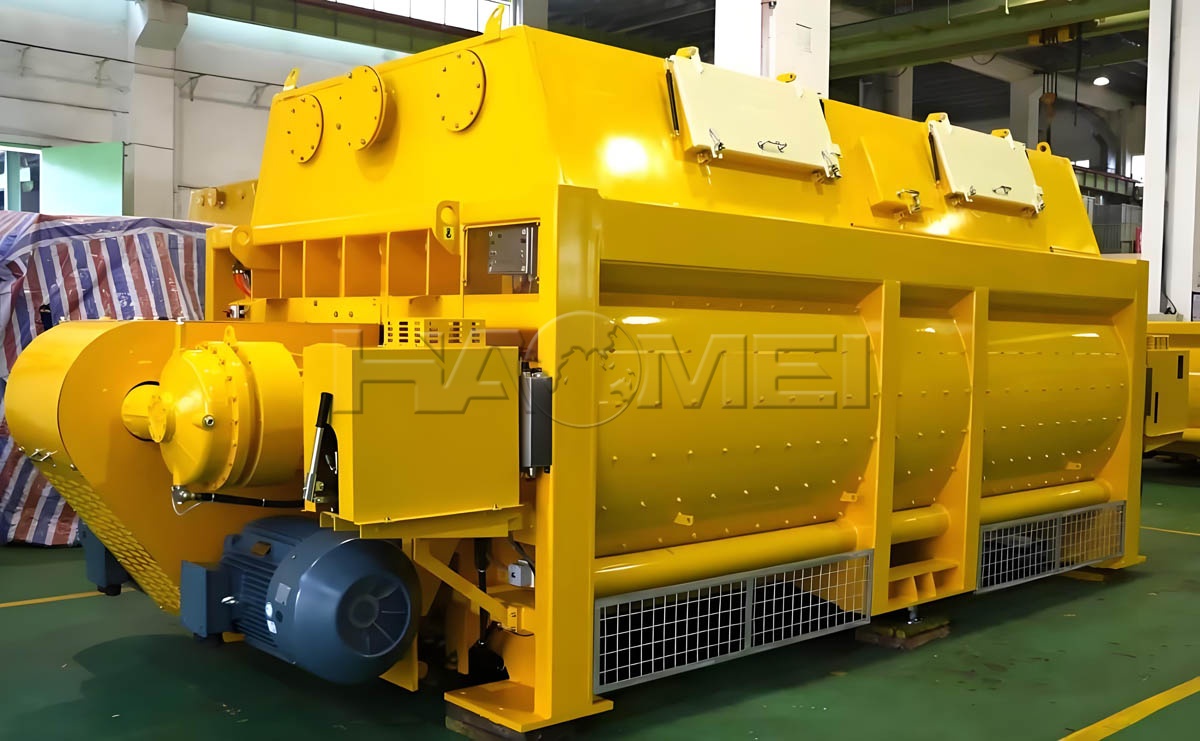
Sicoma concrete mixers are generally designed around a twin-shaft forced mixing structure. Two horizontal mixing shafts rotate in opposite directions inside the mixing chamber. Mixing arms and blades move aggregates, cementitious materials, water, and admixtures through overlapping mixing paths.
This forced mixing process helps reduce material dead zones and encourages more complete circulation of the batch. Compared with gravity-based mixing methods, twin-shaft mixing is suitable for concrete mixtures containing coarse aggregates, lower-slump mixes, and formulations that require controlled blending of multiple materials.
The practical objective is not simply a shorter mixing cycle. For construction projects, the more important consideration is achieving an appropriate balance between mixing efficiency, concrete uniformity, discharge continuity, and wear-part service management.
Main Structural Components and Their Functions
A well-configured concrete mixer depends on the coordinated operation of its mechanical, hydraulic or pneumatic, electrical, and wear-protection systems.
| Component | Primary Function | Engineering Consideration |
|---|---|---|
| Mixing drum | Provides the enclosed chamber for material blending | Internal lining should be selected according to aggregate abrasiveness and expected duty cycle |
| Twin mixing shafts | Drive forced material movement through the chamber | Shaft alignment and sealing condition affect long-term operating stability |
| Mixing arms and blades | Lift, shear, and redistribute concrete materials | Blade arrangement and wear adjustment influence mixing performance |
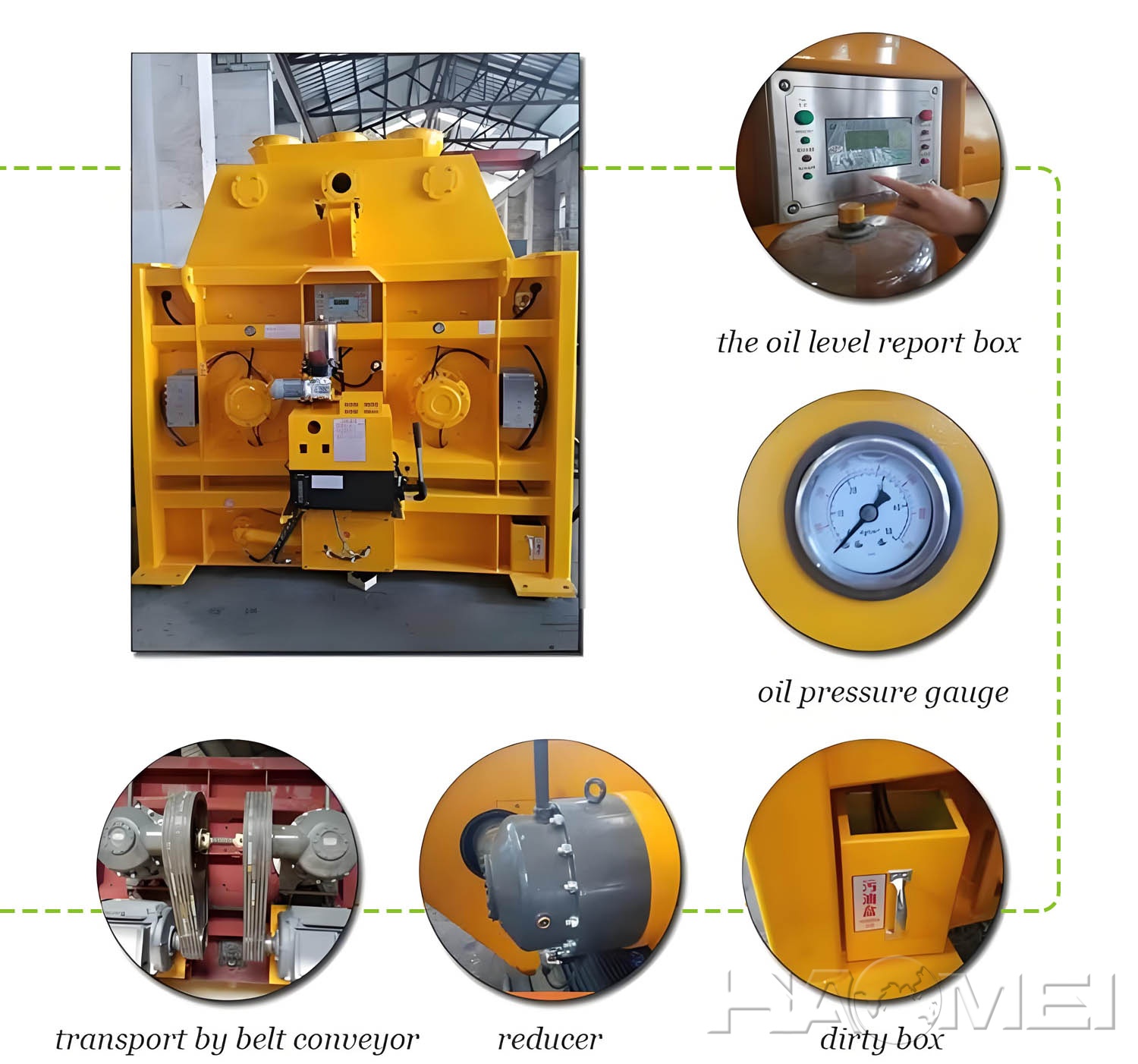
| Drive system | Transmits power to the mixing shafts | Motor, gearbox, coupling, and lubrication layout should match production requirements |
| Discharge gate | Releases finished concrete from the mixer | Gate sealing and opening control affect discharge efficiency and residual material control |
| Lubrication system | Supplies grease or lubricant to designated moving parts | Automatic or centralized lubrication can simplify routine maintenance |
| Control system | Coordinates batching, mixing, discharge, and safety interlocks | Control compatibility is important when connecting to a batching plant |
Configuration Selection for Construction Applications
Different projects require different mixer capacities and equipment arrangements. Selection should be based on the actual concrete demand, aggregate grading, transportation method, project schedule, and available site space rather than capacity alone.
| Application Scenario | Typical Mixing Requirement | Recommended Configuration Focus |
|---|---|---|
| Commercial concrete production | Repeated batch cycles and continuous supply coordination | Batching plant integration, reliable discharge system, wear-resistant liners, automated control |
| Precast concrete production | Consistent mix quality for repeated component production | Accurate material dosing, stable mixing action, admixture feeding compatibility |
| Road and bridge projects | On-site concrete supply with changing work schedules | Flexible plant layout, durable wear parts, convenient maintenance access |
| Municipal construction | Moderate-volume concrete for distributed work areas | Compact batching arrangement, straightforward operation, reliable aggregate feeding |
| Hydropower and infrastructure works | Aggregate-heavy mixes and demanding site conditions | Strong mixing system, robust lining protection, appropriate sealing and lubrication |
| Temporary site batching | Fast equipment installation and relocation needs | Modular plant matching, transport-friendly layout, simplified commissioning |
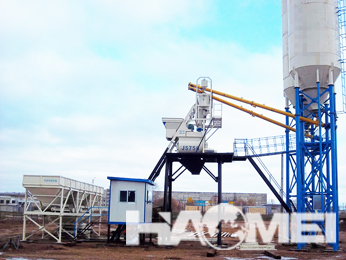
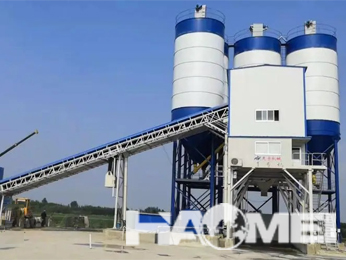
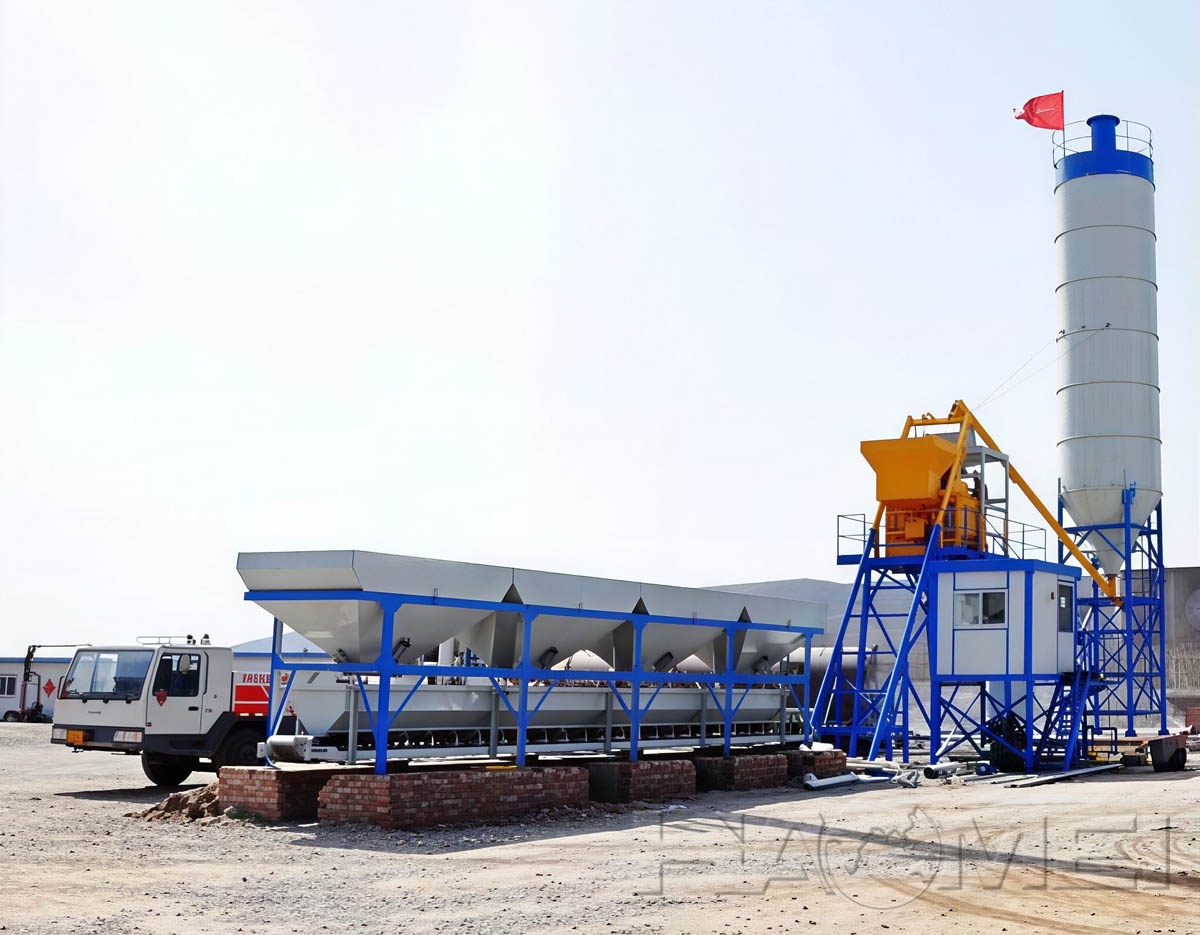
For projects that need a complete mixing solution, a Sicoma Concrete Mixer can be integrated with aggregate batching equipment, cement silos, screw conveyors, weighing systems, and an automated control platform. The final arrangement should be confirmed according to the project process flow and local operating conditions.
Integration with Concrete Batching Plants
A mixer performs most effectively when it is properly matched with the upstream and downstream systems of a concrete batching plant. Aggregate batching accuracy, cement feeding continuity, water measurement, admixture dosing, and discharge coordination all influence the final mixing result.
Key integration points include:
Matching aggregate batch size with the mixer charging capacity.
Coordinating weighing and feeding sequences to avoid unnecessary waiting time.
Setting mixing time according to the concrete mix design and material condition.
Connecting the mixer discharge gate with the receiving hopper, transit mixer, skip, or concrete conveying system.
Using control interlocks to support safe charging, mixing, discharge, and cleaning procedures.
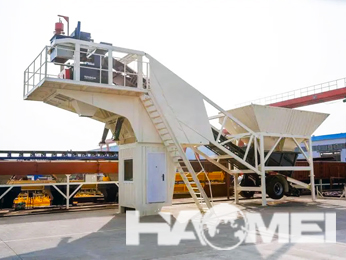
For smaller or medium-scale batching requirements, a Concrete Mixer should be selected together with the batching machine and material handling equipment, rather than as an isolated machine. This approach helps create a more coordinated production process.
Maintenance Practices That Support Reliable Operation
Rapid concrete preparation depends on planned maintenance as much as mixer design. Concrete contains abrasive aggregates and cementitious materials that can accelerate wear when cleaning and inspection are delayed.
| Maintenance Item | Routine Check | Purpose |
|---|---|---|
| Mixing blades and arms | Inspect wear condition and fastening status | Maintains effective material movement and prevents loose components |
| Drum liners | Check abrasion and attachment condition | Protects the mixing chamber structure from aggregate wear |
| Shaft end seals | Monitor for leakage or abnormal wear | Helps protect bearings and reduce material intrusion |
| Gearbox and drive components | Check lubrication and abnormal noise | Supports stable power transmission |
| Discharge gate | Inspect opening, closing, and sealing performance | Helps ensure smooth concrete discharge |
| Lubrication points | Follow the specified lubrication schedule | Reduces friction and supports component service life |
| Electrical controls | Check wiring, sensors, and safety interlocks | Supports consistent operation and equipment safety |
After each production shift, residual concrete should be cleaned from the drum, discharge area, and related contact surfaces in accordance with the equipment operating procedure. Cleaning should be completed with attention to personnel safety, lockout procedures, and the manufacturer's maintenance requirements.
Practical Considerations for Rapid Concrete Preparation
When a project requires fast concrete supply, the mixer should be assessed as part of the total production system. Mixer output can be affected by aggregate moisture variation, feeding delays, material bridging, poor calibration, unsuitable mix proportions, or insufficient maintenance.
Factory engineering recommendations generally focus on the following points:
Confirm the concrete mix design before selecting the mixer model and plant configuration.
Match the mixer batch volume with the planned production schedule and transport capacity.
Select wear-resistant components according to aggregate hardness and production frequency.
Provide sufficient maintenance space around the mixer, drive unit, and discharge section.
Establish operating procedures for charging sequence, mixing duration, discharge, cleaning, and inspection.
Train operators to recognize abnormal vibration, noise, leakage, or discharge issues early.
Industry Direction: Automated and Maintainable Mixing Systems
Concrete production equipment is increasingly expected to offer more than basic mixing capability. Current project requirements emphasize automation, traceability, maintenance efficiency, energy management, and adaptability to different concrete formulations.
For Sicoma concrete mixers and other twin-shaft forced mixers, this trend encourages improvements in control integration, lubrication management, wear-part accessibility, condition monitoring, and batching plant communication. Equipment selection should therefore consider both current project demand and future operational requirements.
Conclusion
Sicoma concrete mixers are suitable for rapid concrete preparation where projects require forced mixing action, stable material circulation, and practical integration with batching systems. The appropriate mixer configuration should be determined by the concrete mix design, production demand, aggregate characteristics, maintenance plan, and site layout.
From a manufacturing perspective, reliable concrete production is achieved through the combined performance of the mixer structure, batching accuracy, control system, wear protection, and disciplined maintenance. A properly configured twin-shaft concrete mixer can provide a dependable foundation for construction projects that require organized and efficient concrete supply.