
News
Js1000 Vs Sicoma Twin Shaft Mixer Comparison
Selecting a twin shaft concrete mixer for a concrete batching plant is usually less about brand preference and more about engineering fit: targeted concrete grades, aggregate characteristics, plant layout, maintenance strategy, and local parts support. From a manufacturing standpoint, JS1000 and Sicoma-type twin shaft mixers share the same core working principle (forced-action twin-shaft mixing) but can differ in structural execution, configuration options, and integration details that matter in real production.
This article provides an objective js1000 vs sicoma twin shaft mixer comparison focused on equipment structure, working principles, configuration choices, and common project scenarios. The intent is to support specification and procurement decisions without overstating performance or drawing unfair conclusions.
1) What "JS1000" and "Sicoma twin shaft" mean in engineering terms
JS1000 (model-based definition)
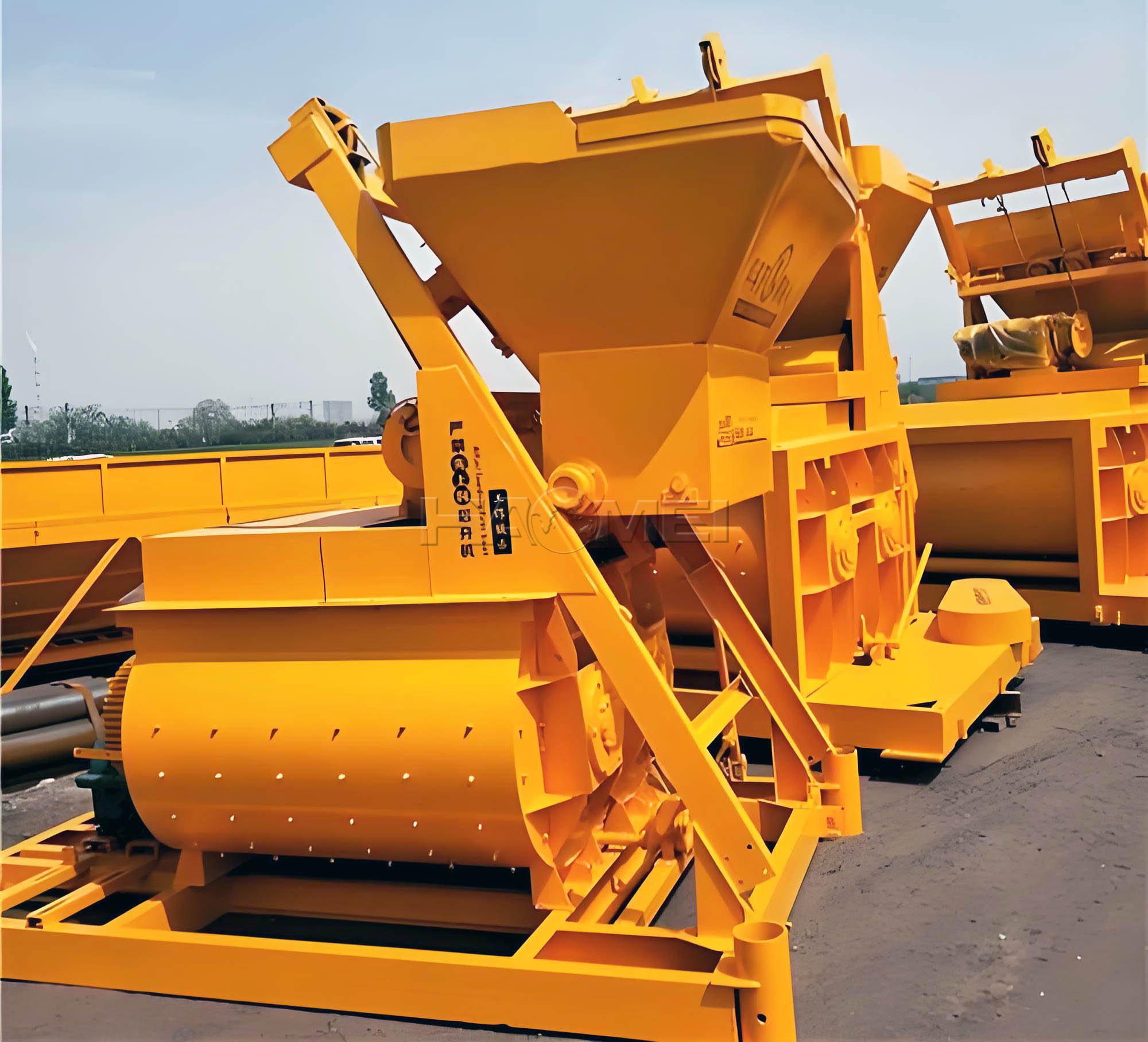
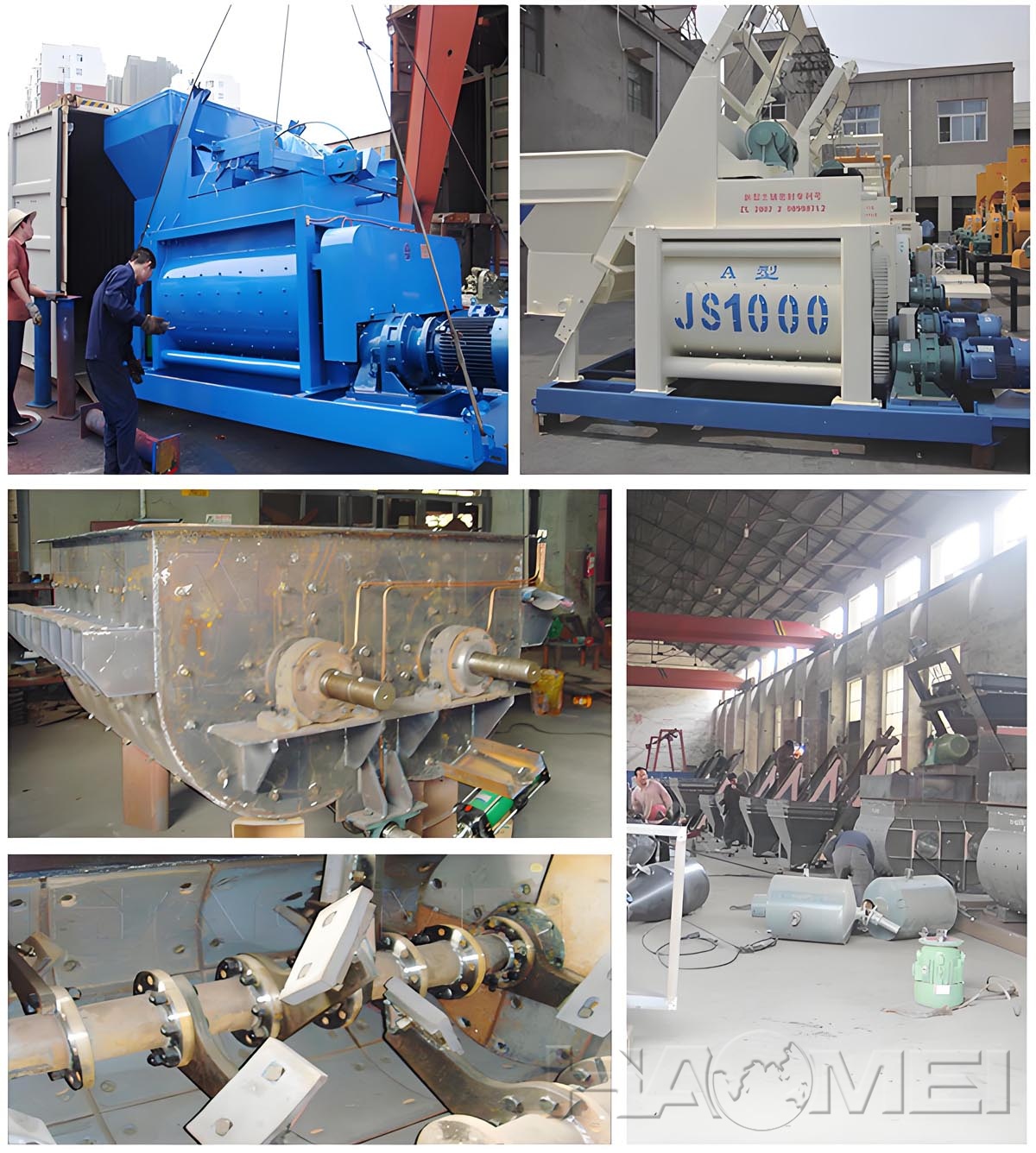
The JS1000 concrete mixer is a forced mixing equipment with a theoretical output of 60 cubic meters per hour, also known as a "1 cubic meter mixer". As the core unit of the HZS50/HZS60 batching plant, it features uniform mixing, high efficiency, and stable performance. It is suitable for mixing dry-hard, plastic, and lightweight aggregate concrete and is widely used in various large-scale construction projects and precast concrete plants.As with any model designation, actual configuration depends on:
Reducer type and drive layout
Liner and paddle material selection
Discharge gate actuation method
Sealing structure and lubrication approach
Control system interface and sensors
For project configuration reference, see JS1000 Concrete Mixer.
Sicoma twin shaft (brand / series definition)
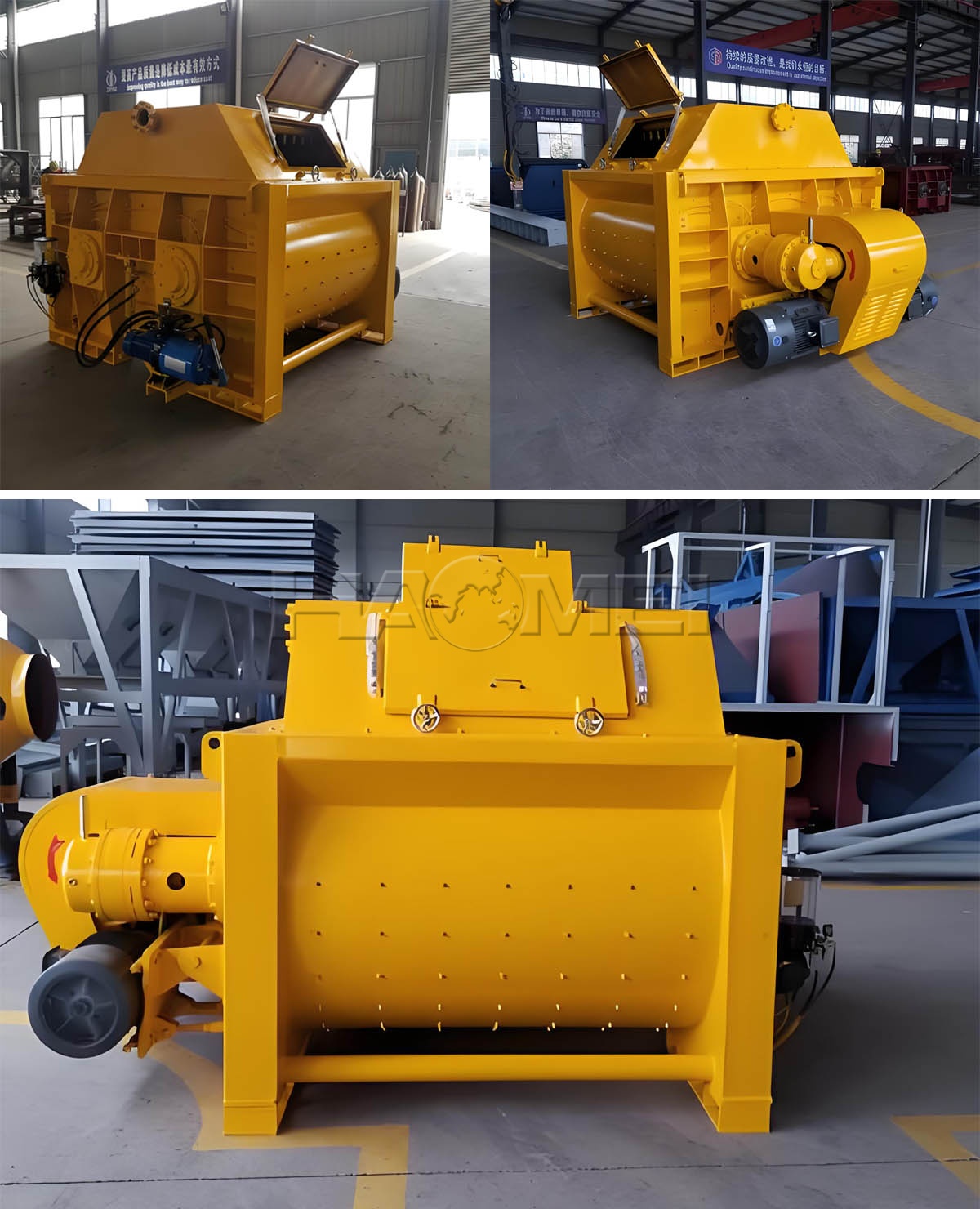
Sicoma concrete mixers are renowned for their high efficiency, high uniformity, and exceptional durability, and are often used as the core equipment in large-scale concrete batching plants. This mixer consists of two horizontally arranged mixing shafts rotating at high speed, generating high-intensity convection. It is primarily used for mixing powdered and granular materials, featuring fast mixing speed, high uniformity, and strong wear resistance, making it a mainstream mixer brand in engineering construction.
2) Working principle: the common foundation
Both JS1000 and Sicoma twin shaft mixers use two synchronized shafts with mixing arms and paddles that generate:
Counter-rotating material flow for strong convection
Shear and dispersion for cement paste distribution
Three-dimensional mixing trajectories to reduce dead zones
In typical batching plant operation, mixing uniformity depends not only on mixer design but also on:
Aggregate moisture stability and batching accuracy
Admixture dosing and injection position
Mixing time settings and discharge timing
Mixer condition (liner/paddle wear, shaft seal status)
3) Structure and key assemblies that influence long-term operation
Even with similar principles, structural execution affects maintenance cycles, downtime planning, and parts management.
3.1 Mixing chamber and liners
Key aspects engineers evaluate:
Liner segmentation and fastening (ease of replacement, risk of bolt loosening)
Material options (high-chromium wear-resistant liners, alloy steel choices)
Chamber geometry (flow guidance and cleaning access)
3.2 Mixing arms, paddles, and adjustment
Twin shaft mixers typically allow paddle angle/position adjustment to tune:
Aggressive mixing for stiff mixes
Reduced wear and power peaks for certain aggregate profiles
From a manufacturing and service perspective, the adjustment method and repeatability matter because incorrect paddle clearance can increase wear and mixing instability.
3.3 Shaft-end sealing and bearing protection
Shaft-end sealing is one of the most critical reliability points in twin shaft mixers, especially in:
High-slump concrete with increased paste migration
Fine sand mixes that accelerate abrasion
Long daily duty cycles
Typical design considerations include:
Multi-stage sealing (mechanical + air or grease labyrinth depending on configuration)
Seal accessibility for inspection
Lubrication routing and monitoring capability
3.4 Discharge gate and anti-leak measures
Discharge behavior affects not only cycle time but also mixer cleanliness and residual build-up. Common configuration choices:
Hydraulic vs pneumatic discharge actuation
Gate liner and sealing strip materials
Discharge opening geometry for fast, controlled emptying
4) Configuration options: where projects often differentiate
Instead of treating "JS1000 vs Sicoma" as a simple ranking, plant design teams often compare configuration readiness for the intended application.
Common options evaluated during specification
| Option Category | Typical Choices | Engineering Relevance |
|---|---|---|
| Wear parts | High-chromium liners, alloy paddles, reinforced arms | Lifecycle cost, downtime planning |
| Drive system | Dual motor + reducer arrangements (varies by design) | Torque stability, maintenance accessibility |
| Discharge actuation | Hydraulic or pneumatic | Response speed, site air/hydraulic infrastructure |
| Sealing & lubrication | Grease lubrication, optional air sealing depending on design | Bearing protection, seal life |
| Monitoring | Temperature, pressure, gate position sensors (depending on control scheme) | Predictive maintenance and fault tracing |
5) Engineering application scenarios: choosing by production needs
5.1 Commercial concrete batching plants
For continuous daily production, priorities commonly include:
Stable mixing across different recipes
Fast wear-part replacement procedures
Strong integration with batching control and moisture correction
A JS1000-class mixer is often applied in medium-capacity lines where plant layout and maintenance resources favor standardized components.
5.2 Precast and high-consistency mixes
Precast production often emphasizes:
Short, repeatable mixing cycles
Consistency for low-slump or zero-slump mixes
Clean discharge to avoid cross-contamination
In these scenarios, attention should be placed on paddle arrangement, discharge gate sealing, and repeatable batching accuracy rather than model name alone.
5.3 Infrastructure projects (roads, bridges, municipal works)
Infrastructure concreting may face:
Variable aggregate sources
Changing moisture and gradation
Demanding production schedules
Mixers with robust sealing, abrasion resistance, and straightforward maintenance access typically perform better in long project runs, regardless of brand.
6) Practical comparison table (non-exaggerated, specification-oriented)
The table below summarizes typical decision checkpoints used in factory-side technical reviews. Actual values and features depend on the exact mixer variant and ordered configuration.
| Comparison Item | JS1000 Twin Shaft Mixer (Model Class) | Sicoma Twin Shaft Mixer (Series Class) | What to Verify in RFQ/Contract |
|---|---|---|---|
| Definition basis | Model designation commonly used in many batching plants | Brand/series designation used in many global projects | Confirm exact model code, discharge capacity class, and configuration |
| Mixing principle | Twin shaft forced-action | Twin shaft forced-action | Confirm shaft speed, paddle arrangement, and mixing trajectory design |
| Wear protection | Liner + paddle wear system (configurable) | Liner + paddle wear system (configurable) | Specify wear material grade, thickness, and replacement method |
| Shaft-end sealing | Multi-stage sealing solutions by configuration | Multi-stage sealing solutions by configuration | Clarify sealing type, lubrication method, and maintenance intervals |
| Discharge system | Hydraulic/pneumatic options depending on build | Hydraulic/pneumatic options depending on build | Confirm actuator type, gate sealing, and manual emergency discharge |
| Controls integration | Interfaces with batching plant PLC/control system | Interfaces with batching plant PLC/control system | Define I/O list, sensor scope, and communication protocol requirements |
| Parts strategy | Standardized supply based on ordered BOM | Standardized supply based on ordered BOM | Confirm spare parts list, lead time, and interchangeability expectations |
7) Industry trends affecting mixer selection
7.1 Higher attention to lifecycle cost
End users increasingly evaluate:
Wear part consumption per production period
Seal service life and failure modes
Planned maintenance time and accessibility
7.2 More automation and monitoring
Plants are trending toward:
Mixer temperature and lubrication monitoring
Gate position feedback and alarm logic
Data logging for quality traceability
7.3 Faster changeover and cleaning requirements
With more frequent recipe switching, mixers are expected to support:
Reduced residual material
Easier inspection access
Practical wash and maintenance procedures
8) Recommendation framework for project specification
A reliable procurement approach is to specify the mixer by measurable requirements and configuration scope:
Concrete type and slump range (including stiff mixes if applicable)
Aggregate characteristics (hardness, gradation, sand ratio)
Daily operating hours and duty cycle
Wear-part material requirements and minimum spare parts package
Shaft-end sealing structure and lubrication/air system availability on site
Control system integration (PLC brand, signals, interlocks)
Maintenance access constraints (platform layout, safety requirements)
Conclusion
A technically sound js1000 vs sicoma twin shaft mixer comparison should focus on configuration, sealing and wear strategy, integration scope, and the intended production scenario rather than labels alone. When the mixer is specified by application requirements and verified by a clear bill of materials and interface list, both JS1000-class and Sicoma-series twin shaft mixers can be engineered to meet stable batching plant production needs.