
News
Hot Products
20T 40T 60T 80T Asphalt Mixing Plant for Sale
Small and medium-capacity asphalt mixing plants are widely used in municipal road maintenance, rural highway construction, industrial park paving, parking area construction, and staged asphalt supply projects. For buyers evaluating a 20T, 40T, 60T, or 80T asphalt mixing plant for sale, the key point is not only the nominal output, but also whether the plant structure, heating system, dust removal configuration, control system, and site layout match the actual engineering conditions.
As an equipment manufacturer, the following guide explains common capacity categories, working principles, configuration options, and application scenarios to support more practical model selection.
Performance Advantages of Small and Medium-Sized Asphalt Mixing Plants
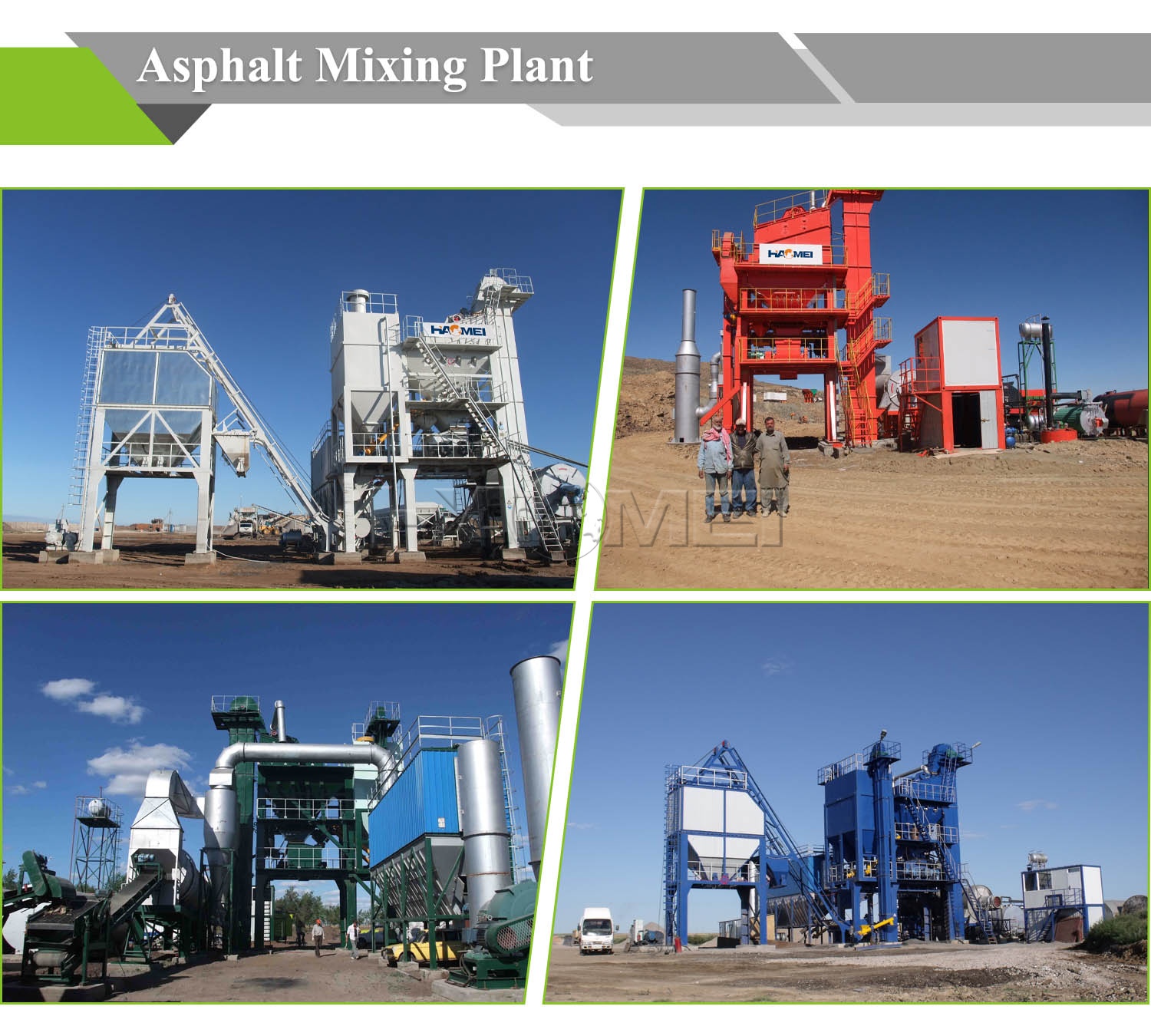
1. Convenient Relocation and Installation: Featuring modular designs or trailer-mounted chassis, these plants are pre-assembled and tested at the factory for rapid on-site assembly, significantly reducing costs associated with dismantling, reassembly, and foundation construction.
2. High Site Adaptability: A compact footprint meets the requirements of confined construction spaces, saving approximately 40% in land usage and reducing initial land rental expenses.
3. High Production Flexibility: Rapid startup and easy mix-design switching make them ideal for the intermittent mixing needs of small and medium-sized projects, avoiding the energy waste associated with running large-scale equipment under no-load conditions.
4. Energy Efficiency and Environmental Compliance: Equipped with variable-frequency burners and high-efficiency baghouse dust collection systems, they ensure strict control over dust emissions and noise, meeting modern urban environmental standards.
5. Controllable O&M Costs: The equipment features a simple structure, requires lower skill levels for routine maintenance, and offers more economical options for parts replacement and servicing.
Capacity Categories and Typical Applications
The capacity labels 20T, 40T, 60T, and 80T usually refer to nominal production classes under standard operating conditions. Actual output may vary according to aggregate moisture content, raw material gradation, fuel type, discharge temperature requirements, operator management, and local environmental requirements.
| Capacity Category | Common Plant Type | Suitable Project Scenarios | Selection Notes |
|---|---|---|---|
| 20T/h class | Compact drum asphalt mixing plant | Road repair, small municipal works, township roads, temporary paving | Suitable where mobility, low site occupation, and simple operation are important |
| 40T/h class | Drum or compact continuous plant | County roads, maintenance yards, small commercial asphalt supply | Offers higher continuity while keeping transportation and installation relatively convenient |
| 60T/h class | Continuous or small batch configuration | Municipal roads, industrial roads, medium paving projects | Often selected when stable daily output and better aggregate control are required |
| 80T/h class | Medium continuous or batch plant | Larger municipal projects, commercial mixing stations, regional road construction | Requires more attention to site layout, storage capacity, dust collection, and power supply |
For projects needing continuous production and a compact layout, a Asphalt Mixing Plant in the 20T to 80T range can provide a practical balance between investment scale and output demand.
Main Structure of a 20T-80T Asphalt Mixing Plant
Although different models use different layouts, a complete asphalt mixing plant generally includes aggregate feeding, drying and heating, asphalt supply, filler supply, mixing or continuous coating, finished material storage, dust collection, and electric control systems.
| System | Main Components | Function in Production |
|---|---|---|
| Cold aggregate feeding system | Aggregate bins, belt feeders, collecting belt conveyor | Stores and proportionally feeds different sizes of aggregates |
| Drying and heating system | Drying drum, burner, drive device, insulation structure | Removes moisture and heats aggregates to the required mixing temperature |
| Asphalt supply system | Asphalt tank, heating device, asphalt pump, pipeline | Stores, heats, and meters asphalt binder for mixing |
| Filler supply system | Filler silo, screw conveyor, weighing or feeding device | Adds mineral powder or recovered dust according to the mix design |
| Mixing or coating system | Drum mixing section or twin-shaft mixer | Combines heated aggregate, asphalt, and filler into asphalt mixture |
| Dust collection system | Primary collector, baghouse or water dust removal device | Reduces dust emissions and helps maintain a cleaner working environment |
| Control system | Electrical cabinet, sensors, operation interface | Coordinates feeding, heating, metering, mixing, alarm, and production control |
Working Principle
A typical asphalt mixing plant begins with cold aggregates being loaded into separate feeding bins. The aggregates are conveyed to the drying drum, where the burner heats them and removes surface moisture. After heating, asphalt binder and filler are added according to the selected process.
In a drum-type plant, aggregate heating and asphalt coating are completed continuously in the drum. This structure is simple, compact, and suitable for steady production of common asphalt mixtures. In a batch-type plant, heated aggregates are screened, weighed, and mixed by batch, which provides more flexible recipe adjustment and is often used when different mix designs are frequently required.
The finished asphalt mixture is discharged directly to a transport truck or into a finished product silo, depending on the selected configuration.
Drum Type and Batch Type: How to Choose
For 20T and 40T capacity classes, drum asphalt mixing plants are commonly selected because they are compact, relatively easy to install, and suitable for continuous production. For example, the DHB40 Drum Asphalt Mixing plant is typically considered for small and medium road projects where stable output and simplified plant operation are required.
For 60T and 80T classes, both drum and batch structures may be considered. The final choice depends on the asphalt mixture type, number of recipes, environmental requirements, site space, and expected working schedule.
| Comparison Item | Drum Asphalt Mixing Plant | Batch Asphalt Mixing Plant |
|---|---|---|
| Production mode | Continuous production | Batch-by-batch production |
| Layout | Generally compact | Usually requires more structure and height |
| Recipe flexibility | Suitable for stable mix designs | More convenient for frequent mix changes |
| Operation focus | Continuous feeding and temperature control | Accurate weighing, screening, and batch control |
| Common capacity selection | Often used in 20T, 40T, 60T, and 80T classes | Often used from medium to large capacity ranges |
Configuration Options to Consider Before Purchase
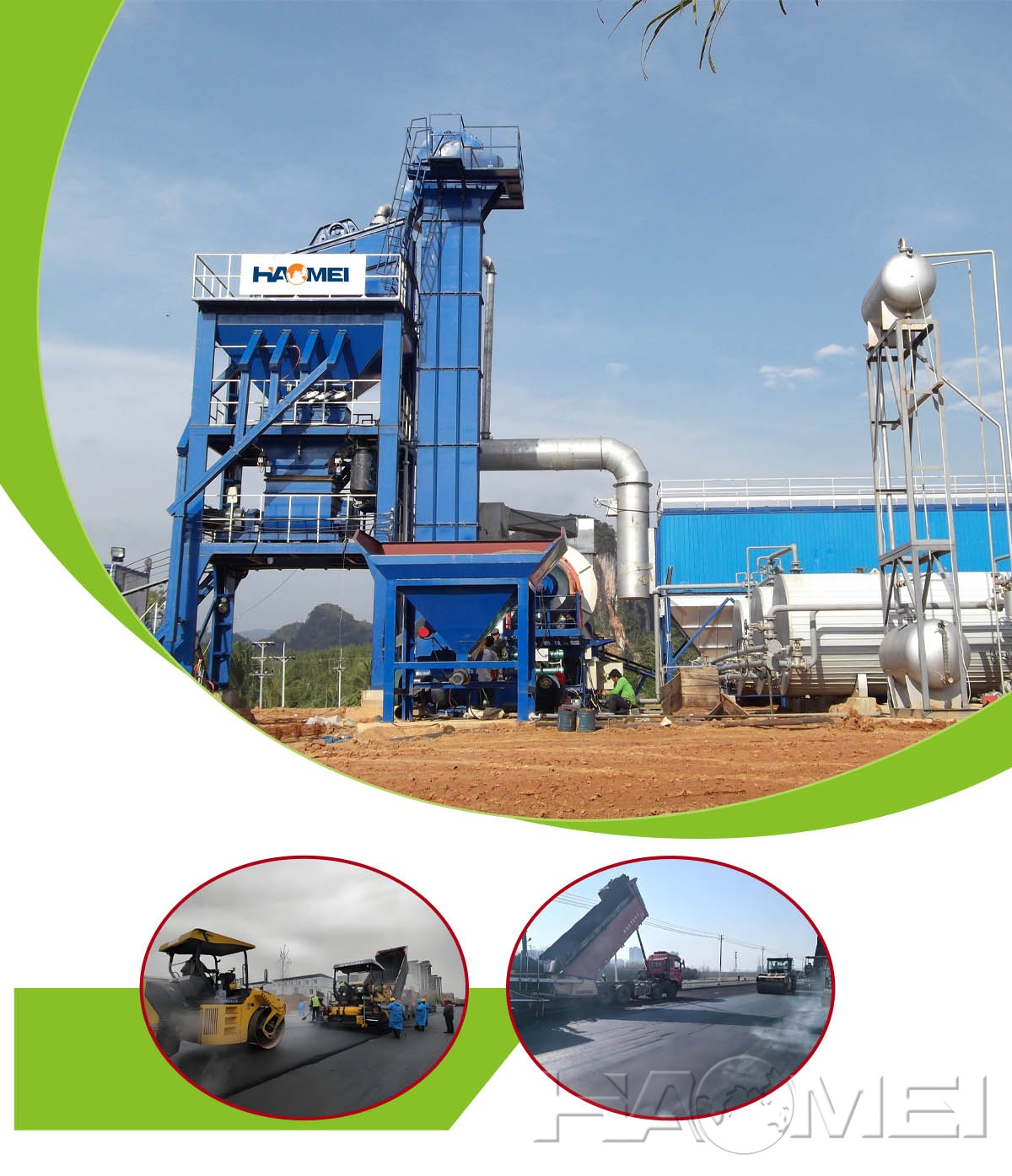
Different construction conditions require different plant configurations. A reliable asphalt mixing plant for sale should be selected according to raw material conditions, fuel availability, environmental requirements, and local installation conditions.
| Configuration Item | Available Considerations | Practical Selection Advice |
|---|---|---|
| Burner fuel | Diesel, heavy oil, natural gas, or other suitable fuel | Choose according to local fuel supply, cost, and emission requirements |
| Dust removal | Cyclone collector, baghouse dust collector, or combined system | Baghouse systems are often selected where stricter dust control is required |
| Asphalt tank | Direct heating, thermal oil heating, horizontal or vertical tank | Match tank volume with daily asphalt consumption and heating method |
| Finished material storage | Direct discharge or finished product silo | A silo helps coordinate truck loading and continuous production |
| Control mode | Manual, semi-automatic, or PLC-based control | Higher automation improves process consistency and monitoring convenience |
| Mobility | Stationary, modular, or mobile arrangement | Mobile layouts are useful for temporary projects or frequent relocation |
| Additive system | Optional according to mixture requirements | Consider only when the project mix design requires additives or modified asphalt |
Engineering Application Scenarios
Small and medium asphalt mixing plants are often selected for projects where the construction site is dispersed, the production period is limited, or asphalt supply from a large commercial station is not convenient.
Typical applications include:
Rural road construction and maintenance
Municipal road repair and resurfacing
Industrial park and factory road paving
Parking lots, yards, and access roads
Bridge deck approach roads and auxiliary roads
Temporary asphalt supply for staged construction projects
For these scenarios, plant stability, transportation convenience, fuel adaptability, dust control, and maintenance accessibility are often more important than pursuing the largest possible capacity.
Key Factors Affecting Actual Output
When comparing 20T, 40T, 60T, and 80T asphalt mixing plant options, nominal capacity should be understood as a reference. Practical output is affected by multiple operating conditions.
| Factor | Influence on Production |
|---|---|
| Aggregate moisture | Higher moisture requires more drying time and fuel consumption |
| Aggregate gradation | Stable gradation supports smoother feeding and mixing control |
| Discharge temperature | Higher temperature requirements may reduce effective output |
| Fuel quality | Stable fuel supply helps maintain drying drum temperature |
| Site power supply | Adequate and stable power is necessary for continuous operation |
| Operator management | Proper calibration, maintenance, and process monitoring support stable production |
| Environmental configuration | Dust removal and emission systems should match local regulations |
Industry Trends for Small and Medium Asphalt Plants
Current asphalt plant development is moving toward more modular structures, cleaner emissions, improved automation, and easier maintenance. In the 20T to 80T range, customers increasingly focus on:
Compact layouts for limited construction sites
Modular installation to shorten site preparation time
Improved dust collection and cleaner working environments
More stable temperature control and asphalt metering
Intelligent electrical control and fault monitoring
Fuel-saving operation through better burner and drum matching
Easier transport for projects requiring relocation
These trends reflect the practical needs of contractors and project owners: controlled investment, dependable production, and compliance with construction and environmental standards.
Manufacturer Notes for Model Selection
Before purchasing a 20T, 40T, 60T, or 80T asphalt mixing plant, the following information should be confirmed with the manufacturer:
| Required Information | Why It Matters |
|---|---|
| Planned hourly and daily output | Helps determine suitable capacity class and storage configuration |
| Asphalt mixture type | Affects plant type, metering system, and optional devices |
| Aggregate moisture and size range | Influences drying drum, burner, and feeding system selection |
| Fuel type available on site | Determines burner model and pipeline configuration |
| Local emission requirements | Determines dust collector and environmental protection design |
| Site dimensions and foundation conditions | Affects layout, installation method, and material flow direction |
| Transportation distance to paving site | Helps decide whether finished material storage is needed |
Conclusion
A 20T, 40T, 60T, or 80T asphalt mixing plant for sale should be selected based on real project requirements rather than capacity alone. Drum plants are often suitable for compact, continuous, and economical production, while batch plants provide stronger recipe flexibility for projects with multiple mix designs.
From equipment structure to working principle and configuration options, each system should match the construction environment, raw materials, fuel conditions, and environmental standards. A properly selected asphalt mixing plant can support stable asphalt supply for small and medium road construction, maintenance, and municipal engineering projects.