
News
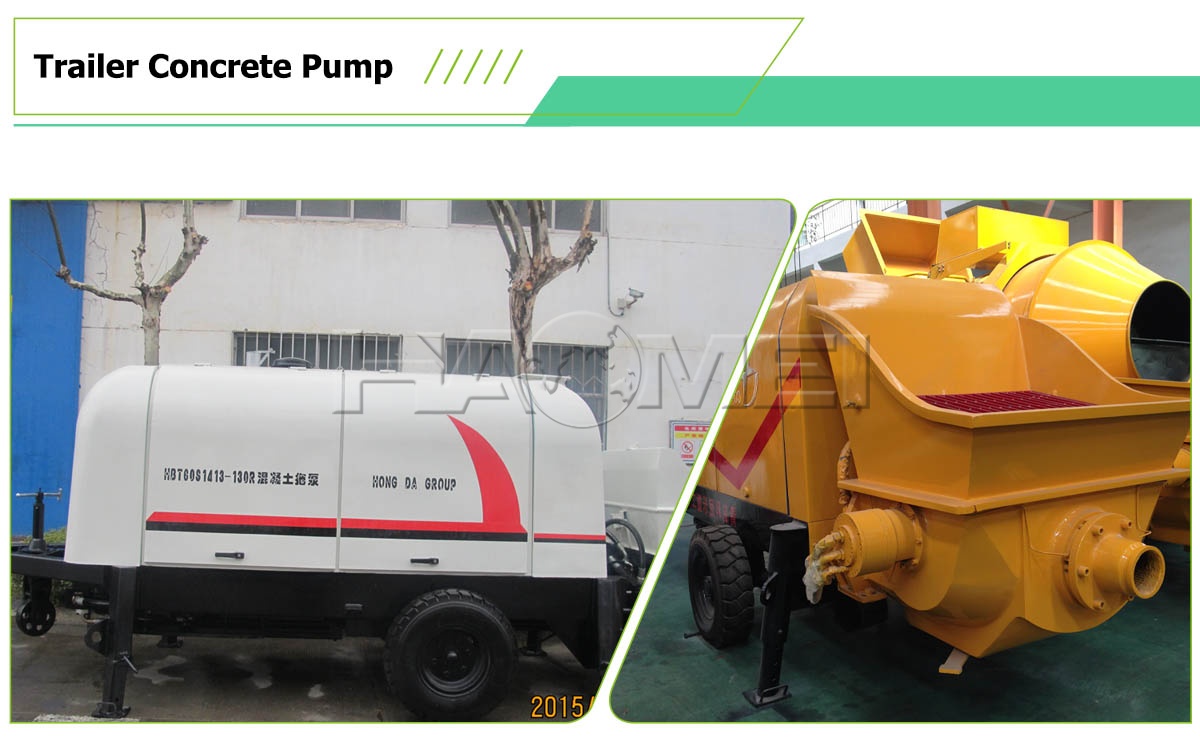

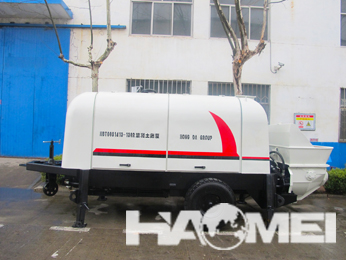
Details of the Concrete Conveying Distance of Trailer Concrete Pumps
In concrete construction, the conveying distance of a trailer concrete pump is one of the most frequently discussed technical points during equipment selection and jobsite planning. From a manufacturing perspective, conveying distance is not determined by a single parameter. It is the result of the pump's hydraulic output, concrete properties, pipeline configuration, delivery height, and site management conditions working together.
For contractors, project managers, and equipment planners, understanding how conveying distance is evaluated helps improve matching between equipment and application. It also reduces the risk of pipe blockage, unstable discharge, excessive wear, and avoidable downtime.
1. What does concrete conveying distance mean?
For a trailer concrete pump, conveying distance usually refers to the practical range over which concrete can be transported through delivery pipes under specific working conditions. In engineering discussions, this is generally considered from two directions:
Horizontal pumping distance: the length concrete can be conveyed across the ground or along a structure.
Vertical pumping height: the height concrete can be pumped upward in building, bridge, tunnel, or shaft construction.
In actual projects, the two are often combined. For example, a pumping line may include long horizontal sections, vertical risers, bends, reducers, and flexible hose connections. Therefore, real conveying distance should always be judged by the equivalent resistance of the whole pipeline system, not by pipeline length alone.
2. Why conveying distance cannot be judged by a single number
In equipment catalogs, users often look first at theoretical pumping pressure, theoretical output, or nominal pumping distance. However, in manufacturing and field application, these values are only reference conditions. The practical conveying distance of a Trailer Concrete Pump depends on several interacting variables.
Main influencing factors
| Factor | Technical meaning | Impact on conveying distance |
|---|---|---|
| Pumping pressure | Maximum pressure the hydraulic system can provide to push concrete | Higher pressure generally supports longer horizontal distance or greater vertical height |
| Concrete output | Delivery volume per hour | Higher output may increase resistance if the pipeline and mix are not matched properly |
| Concrete slump and workability | Flow condition and cohesion of the concrete mix | Poor workability increases pipeline resistance and blockage risk |
| Aggregate size and grading | Particle distribution in the concrete | Oversized or poorly graded aggregate raises pumping difficulty |
| Pipeline diameter and wall condition | Internal flow channel and wear state of pipes | Smaller or worn pipes increase friction loss |
| Number of bends and elbows | Changes in pipeline direction | Each bend adds local resistance and affects pumping stability |
| Vertical rise | Height difference between pump and discharge point | Greater height requires more pumping pressure |
| Temperature and jobsite management | Environmental and operational conditions | Hot weather, delays, and poor lubrication reduce pumping efficiency |
This is why one project may achieve stable pumping over a long line, while another project with a similar nominal distance experiences high resistance or repeated blockage.
3. Equipment factors that directly affect trailer concrete pump conveying distance
From the factory side, several structural and configuration features have a direct influence on conveying performance.
3.1 Main hydraulic system
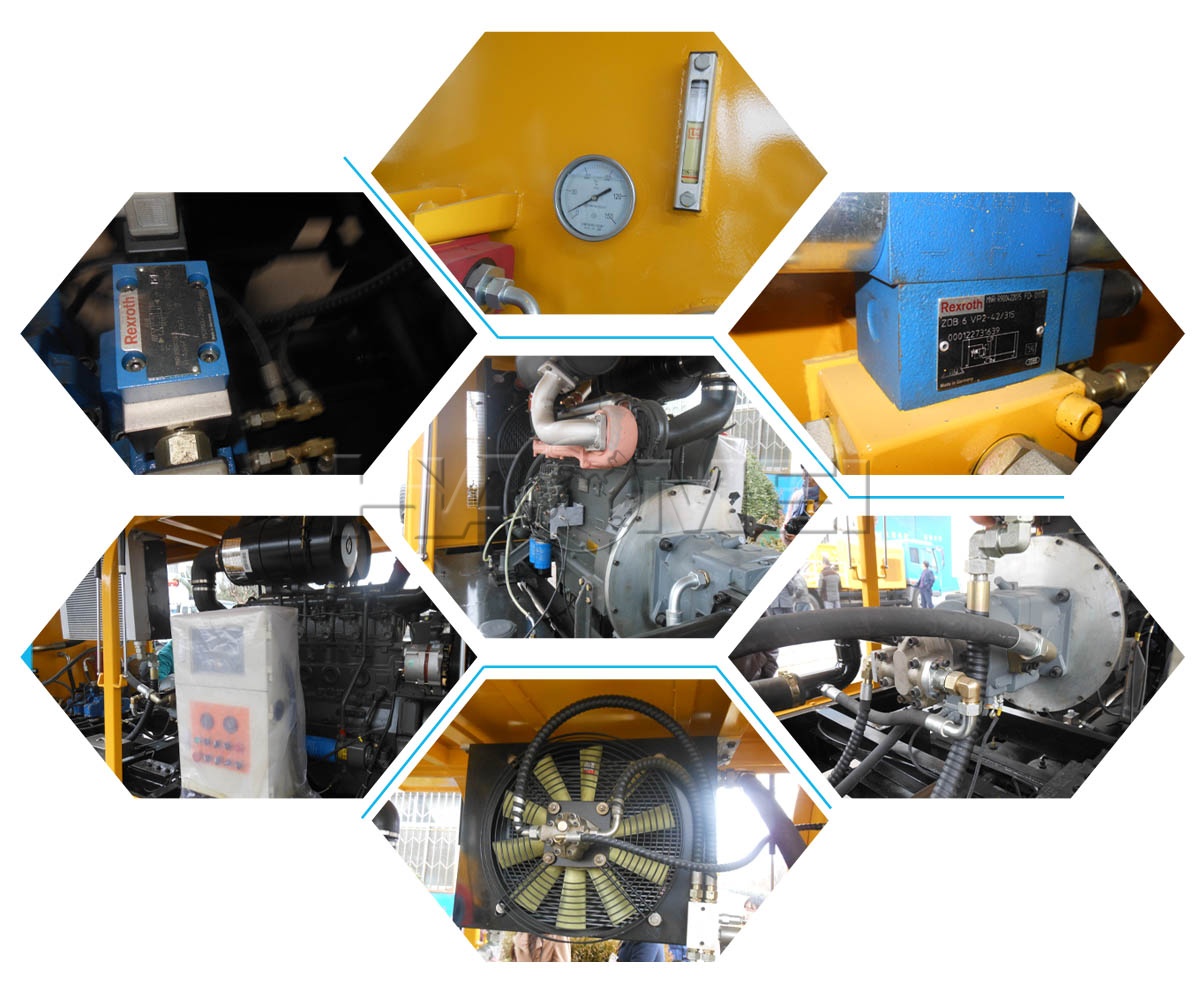
The hydraulic system is the power core of a trailer concrete pump. Stable pressure output, fast commutation response, and efficient heat control all affect whether the pump can maintain continuous concrete flow over distance.
A properly matched hydraulic system helps:
maintain stable pumping pressure
reduce pressure fluctuation in long pipelines
improve reversing reliability of the concrete cylinders
support continuous operation under demanding site conditions
3.2 Valve structure and material flow path
The valve type determines how concrete changes direction inside the pump and enters the delivery line. In trailer concrete pumps, the valve structure must balance sealing performance, wear resistance, and pumping adaptability.
A smoother and more stable material flow path helps reduce pressure loss and supports better long-distance pumping performance, especially when handling concrete with moderate slump and standard aggregate grading.
3.3 Power system configuration
Trailer concrete pumps may use diesel or electric power depending on the project environment. The power system must be matched with hydraulic demand, expected output, and site utilities.
| Configuration item | Typical consideration | Relation to conveying distance |
|---|---|---|
| Diesel engine drive | Suitable for remote or mobile sites | Supports operation where grid power is unavailable |
| Electric motor drive | Suitable for sites with stable electricity | Helps maintain consistent operation with lower local emissions |
| Rated power matching | Balance between hydraulic load and pumping demand | Insufficient power may limit stable long-distance pumping |
| Cooling system | Controls oil temperature during continuous work | Stable temperature supports long pipeline operation |
3.4 Pipeline matching
Even a pump with strong pressure capability can underperform if the delivery pipe layout is not properly matched. Pipe diameter, reducer arrangement, bend radius, clamp sealing, and pipe wear all influence effective conveying distance.
For this reason, when evaluating a model such as the HBT80S1813-110 Trailer Concrete Pump, the pump specification should be considered together with the full pipeline design rather than as an isolated machine parameter.
4. Concrete mix design and its effect on pumping distance
From the manufacturing and technical service perspective, many pumping problems that appear to be equipment-related are actually caused by unsuitable concrete mix design.
Key mix factors
| Mix factor | Practical requirement for pumping | Influence on long-distance conveying |
|---|---|---|
| Slump | Should be suitable for the pipeline and placing method | Too low increases resistance, too high may cause segregation |
| Cementitious content | Needs adequate paste volume | Proper paste improves lubrication in the pipe |
| Sand ratio | Must be balanced with coarse aggregate content | An unsuitable sand ratio may reduce pumpability |
| Aggregate size | Must match pipe diameter and pump capacity | Oversized stone increases blockage risk |
| Aggregate shape | Preferably controlled for better flow | Angular particles increase friction |
| Admixture compatibility | Should support retention and workability | Poor compatibility may cause slump loss during pumping |
In practice, long-distance or high-rise pumping usually requires more attention to workability retention, aggregate grading, and the stability of the mortar layer formed inside the pipe. Without these conditions, increasing pump pressure alone is not a reliable solution.
5. How pipeline layout changes the effective conveying distance
The same trailer concrete pump may perform very differently under different pipe arrangements. The reason is simple: concrete does not only travel through length, it travels through resistance.
Pipeline elements that increase resistance
excessive 90-degree bends
sudden diameter changes
unnecessary flexible hose sections
poor pipe support causing vibration
worn pipes with rough inner walls
leaking clamps that interrupt pressure stability
Recommended layout principles
| Layout principle | Technical purpose |
|---|---|
| Keep the line as straight as possible | Reduce friction and local resistance |
| Minimize sharp bends | Improve flow continuity |
| Use suitable pipe diameter throughout the line | Avoid pressure concentration points |
| Arrange pipe supports firmly | Reduce movement and mechanical stress |
| Check pipe wear regularly | Maintain stable internal flow conditions |
| Prime the pipeline correctly before pumping | Build a lubricating layer before concrete enters |
These measures are especially important in projects with long horizontal pumping routes, high vertical rises, or frequent pours.
6. Common engineering scenarios for trailer concrete pump conveying distance
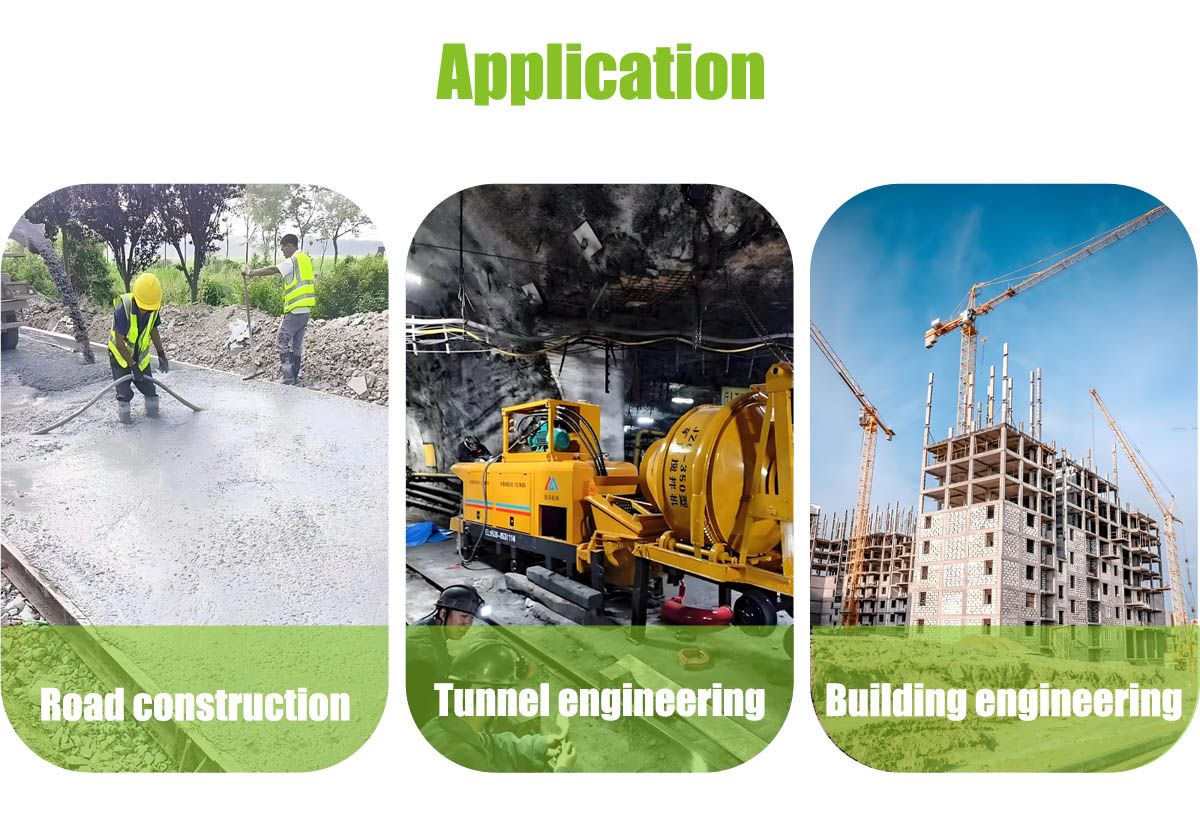
Trailer concrete pumps are used in a wide range of projects, and each scenario places different demands on conveying distance and pumping stability.
6.1 Building construction
In residential, commercial, and industrial building projects, the pump often needs to handle both horizontal and vertical conveying. As floors increase, pumping pressure reserve and line arrangement become more important.
6.2 Bridge and road works
Bridge decks, abutments, and cast-in-place structural members often require long horizontal pipe runs, sometimes combined with elevation changes. In these cases, stable discharge and bend management are critical.
6.3 Tunnel and underground projects
Tunnel lining, secondary structure pouring, and underground chamber construction commonly involve confined layouts and complex line routing. The effective conveying distance may be limited more by pipeline geometry than by nominal pump capacity.
6.4 Rural and small-to-medium infrastructure projects
On distributed projects where mobility and flexible deployment matter, trailer pumps remain a practical solution. The selected model should match actual pour volume, access conditions, and expected pipeline length rather than only peak output requirements.
7. How manufacturers evaluate conveying distance in equipment selection
From a factory technical standpoint, conveying distance assessment should be based on a combination of project data rather than a single expected number.
Basic project information needed for selection
| Project item | Why it matters |
|---|---|
| Required concrete output | Determines pump size and cycle demand |
| Maximum vertical height | Affects pressure reserve requirement |
| Maximum horizontal length | Influences friction loss assessment |
| Pipe diameter and number of bends | Helps estimate equivalent delivery resistance |
| Concrete grade and aggregate size | Determines pumpability and wear tendency |
| Power supply condition | Decides diesel or electric configuration |
| Daily working duration | Affects cooling and continuous-duty requirements |
Where project conditions involve longer lines or more complex routing, users should compare not only output class but also pressure capability, valve adaptability, and service access for wear parts.
For projects with higher delivery demand and more demanding pipeline conditions, models such as the HBT90S1821-200 Trailer Concrete Pump are typically evaluated based on system matching, not output alone.
8. Practical issues that may shorten actual conveying distance
Even when the machine selection is basically correct, field issues can still reduce effective pumping distance.
Common causes
| Site issue | Typical result |
|---|---|
| Concrete waiting too long before pumping | Slump loss and rising pipe resistance |
| Inadequate pipeline priming | Early blockage or unstable discharge |
| Poor communication between batching and pumping teams | Interrupted flow and pressure fluctuation |
| Irregular cleaning after pouring | Residual buildup and later blockage |
| Delayed replacement of worn wear parts | Declining pumping efficiency |
| Unstable fuel, electricity, or maintenance condition | Reduced reliability during continuous operation |
From a manufacturing service perspective, stable pumping distance depends as much on process control as on machine specification.
9. Industry trend: from nominal distance to system-based pumping efficiency
Current industry demand is gradually shifting from simply asking how far a pump can deliver concrete to asking whether the entire pumping system can operate efficiently, continuously, and predictably.
This trend is reflected in several areas:
closer matching of pump pressure and jobsite pipeline design
greater attention to concrete pumpability and mix consistency
wider use of monitoring for hydraulic and operating status
stronger demand for wear-resistant components and easier maintenance
project planning based on total pouring efficiency rather than isolated equipment figures
As a result, the conveying distance of a trailer concrete pump is now understood more accurately as a system performance outcome, not just a catalog parameter.
10. Conclusion
The concrete conveying distance of a trailer concrete pump is determined by equipment capability, concrete characteristics, pipeline design, and site execution together. In practical engineering, there is no universal distance figure that applies to all projects.
A sound evaluation should consider:
pumping pressure and output matching
concrete mix pumpability
horizontal length and vertical height together
number of bends and overall pipeline resistance
jobsite organization, priming, cleaning, and maintenance
From the manufacturer perspective, the most effective approach is to select the pump model according to actual project conditions and to assess the complete pumping system in advance. This helps improve delivery stability, reduce blockage risk, and support more predictable concrete placement performance.
For website users comparing trailer concrete pump solutions, the key point is clear: conveying distance should always be discussed together with application conditions, not as an isolated number.