
News

Leading Sicoma Concrete Mixer Models in Construction
Sicoma Mixers in Modern Concrete Production
Concrete production projects require mixing equipment that matches the material recipe, output schedule, aggregate characteristics, and plant layout. In batching plants, ready-mix operations, precast yards, and infrastructure projects, the mixer is the point where weighed cementitious materials, water, aggregates, and admixtures become a uniform concrete mix.
A Sicoma concrete mixer is commonly specified where a twin-shaft forced mixing process is required. From an equipment manufacturing perspective, model selection should be based on the required batch volume, concrete type, discharge arrangement, maintenance access, and compatibility with the batching plant control system rather than on nominal capacity alone.
Why Twin-Shaft Mixing Is Widely Used
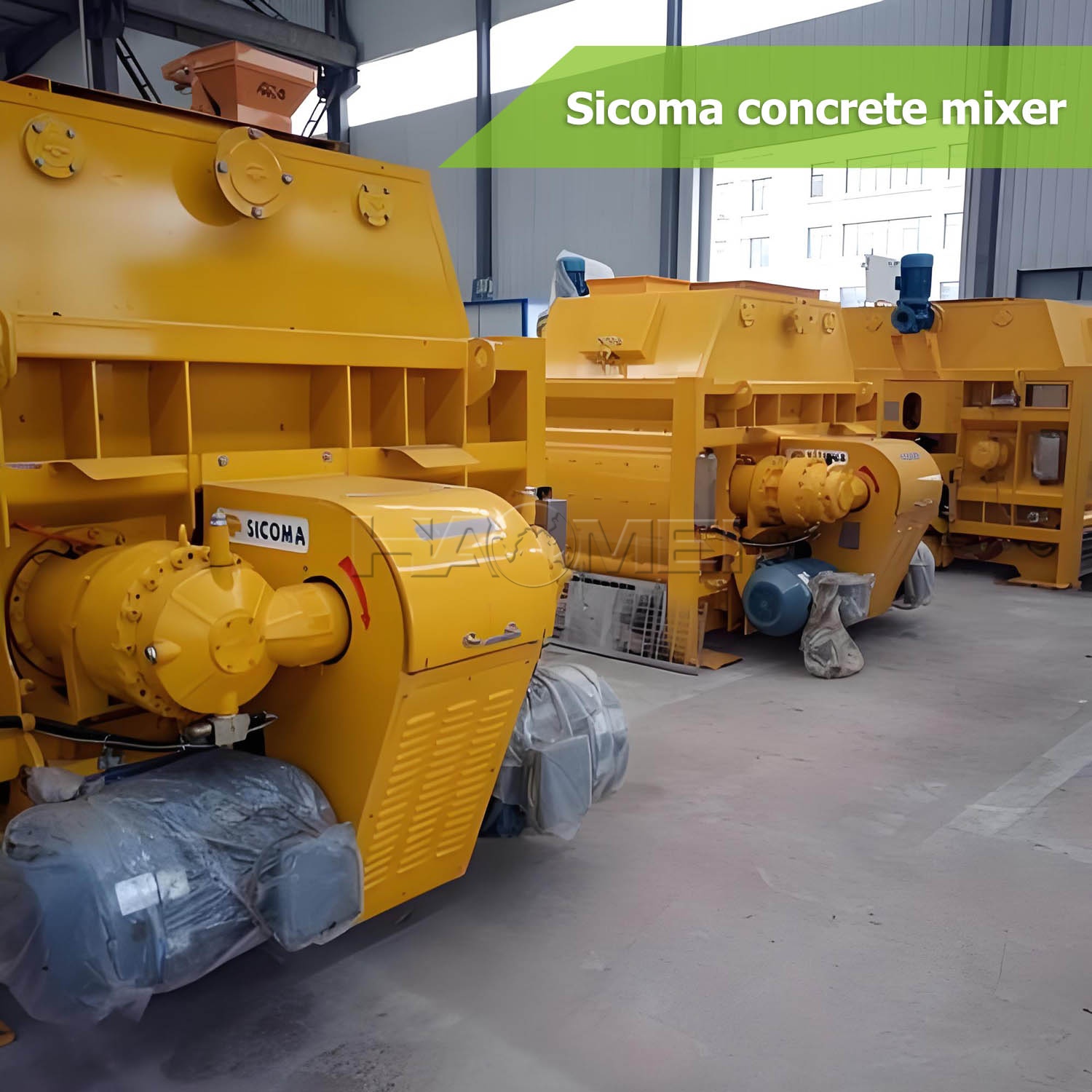
The Sicoma twin shaft concrete mixer uses two horizontal mixing shafts fitted with arms and paddles. During operation, the shafts rotate in opposite directions to create intersecting material flow paths within the mixing chamber. Aggregates and binder materials are continuously lifted, folded, and redistributed, helping the batch develop a consistent texture before discharge.
This mixing principle is suitable for many conventional and demanding concrete recipes, including commercial ready-mix concrete, precast concrete, pavement concrete, and mixes containing supplementary cementitious materials or admixtures. Actual mixing results remain dependent on aggregate grading, moisture control, charging sequence, mixing time, and the specific mix design.
Performance Advantages of Sicoma Concrete Mixers
1.High mixing uniformity: Features a twin-shaft forced mixing design that ensures thorough material blending, making it ideal for high-quality concrete production.
2.High mixing efficiency: Equipped with a powerful drive system and optimized mixing blade design to reduce cycle times per batch.
3.Strong adaptability: Suitable for various types of concrete, including standard, dry-hard, and high-performance concrete.
4.Robust and durable structure: Key components feature wear-resistant designs, making the mixer suitable for high-frequency, continuous production.
5.Rapid discharge: An efficient discharge mechanism minimizes waiting times and boosts overall production efficiency.
6.Easy maintenance: Wear parts—such as mixing blades and liners—are designed for easy inspection and replacement, simplifying maintenance.
7.Wide range of applications: Suitable for use in commercial concrete plants, as well as road, bridge, precast component, and large-scale engineering projects.
Main Structural Elements
| Component | Primary Function | Selection or Maintenance Consideration |
|---|---|---|
| Mixing tank | Contains materials during charging and mixing | Wear-resistant liners should match aggregate abrasiveness and production duty |
| Twin mixing shafts | Generate counter-rotating mixing action | Shaft alignment and sealing condition affect stable operation |
| Mixing arms and paddles | Move, lift, and shear materials | Replaceable wear parts simplify scheduled servicing |
| Drive system | Transfers motor power to the shafts | Motor, gearbox, and coupling configuration should suit the required duty cycle |
| Discharge gate | Releases mixed concrete into a truck, hopper, or transfer system | Gate design should match the downstream receiving arrangement |
| Lubrication system | Supports bearing and sealing service life | Automatic lubrication can support consistent maintenance routines |
Leading Sicoma Concrete Mixer Types for Construction Applications
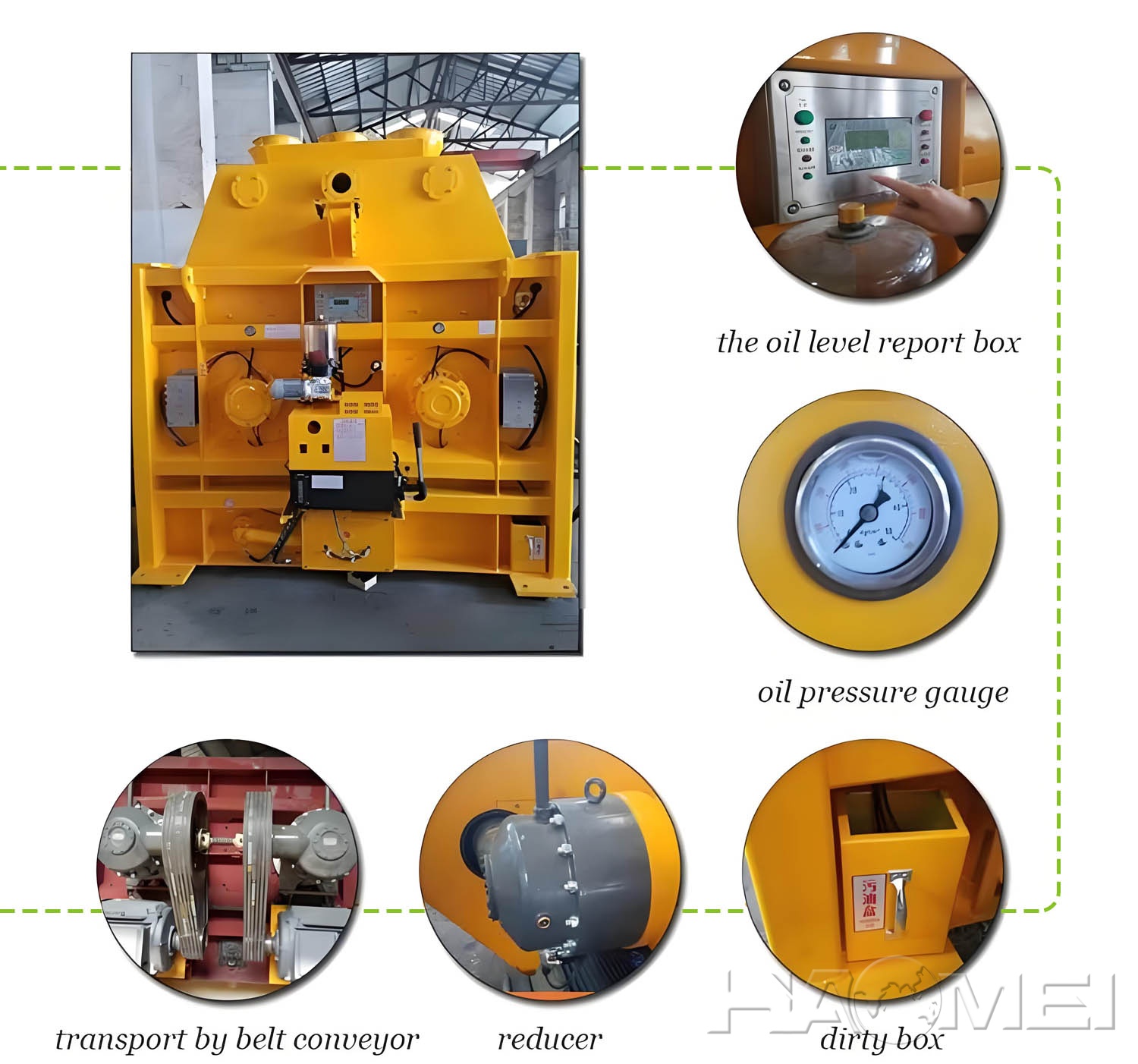
Sicoma mixer selection is generally organized around mixer series, usable batch range, and the intended production process. The MAO series twin-shaft mixer is widely recognized in concrete batching and precast applications because its forced mixing structure can be integrated into stationary, modular, and specialized plant configurations.
The following table outlines common application-oriented categories. Final model and configuration should be confirmed against project throughput calculations, local electrical requirements, aggregate size, and concrete recipe testing.
| Mixer Category | Typical Construction Use | Key Equipment Focus |
|---|---|---|
| Compact twin-shaft mixer | Small batching lines, block yards, local construction supply | Practical plant integration, accessible maintenance, flexible aggregate batching |
| Medium-capacity twin-shaft mixer | Commercial ready-mix plants and general civil works | Balanced batch scheduling, truck loading coordination, stable routine production |
| Large twin-shaft mixer | High-output batching facilities, infrastructure packages, large precast plants | High-volume material charging, robust wear protection, plant-level automation integration |
| Precast-oriented mixer configuration | Structural precast, pipe, paving, and concrete product production | Repeatable recipe control, compatibility with low-slump or specialized mixes, clean discharge |
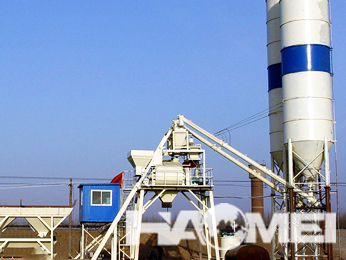
For projects that require a dedicated twin-shaft mixing solution, a Sicoma Concrete Mixer can be configured as part of a complete batching plant package, including aggregate storage, weighing systems, screw conveyors, cement silos, control systems, and concrete delivery arrangements.
Selecting a Mixer by Engineering Requirement
A mixer should not be selected only by the rated output of a batching plant. The effective production rate is influenced by the complete operating cycle: aggregate feeding, weighing, charging, mixing, discharge, truck positioning, and control-system coordination. Material handling capacity upstream and concrete receiving capacity downstream should be assessed at the same time.
| Project Factor | Questions for Equipment Planning | Influence on Mixer Configuration |
|---|---|---|
| Required concrete output | How many batches are needed per hour and per shift? | Determines appropriate batch size and plant cycle design |
| Concrete mix type | Is the mix conventional, low-slump, high-strength, or aggregate-intensive? | Influences paddle arrangement, wear protection, and mixing procedure |
| Aggregate characteristics | What are the maximum aggregate size, hardness, and moisture variation? | Affects liner selection, wear-part planning, and moisture correction requirements |
| Installation environment | Is the plant fixed, relocatable, enclosed, or exposed to severe weather? | Guides structural layout, enclosure, electrical protection, and access design |
| Maintenance resources | Are routine inspections and replacement parts readily available on site? | Supports decisions on lubrication, service platforms, and spare-parts packages |
| Automation level | Is the project using manual, semi-automatic, or automatic batching control? | Determines sensor, control cabinet, dosing, and data-management requirements |
Configuration Options That Affect Plant Performance
Manufacturers typically evaluate mixer configuration together with the entire production line. A suitable mixer body alone cannot compensate for inaccurate weighing, inconsistent aggregate moisture, or restricted discharge flow.
Important configuration options include:
Wear liners and mixing tools: Liner materials and replaceable paddles should be selected for the expected aggregate abrasiveness and operating hours.
Discharge arrangement: The gate and hopper layout should support clean transfer to transit mixers, belt conveyors, buckets, or precast molds.
Lubrication and sealing: Centralized or automatic lubrication systems can help standardize routine maintenance for bearings and seals.
Water and admixture dosing: Accurate water control and properly positioned admixture injection are important for repeatable concrete workability.
Plant controls: Integration with batching plant software supports recipe management, material weighing, production records, and alarm monitoring.
Inspection access: Platforms, guards, access doors, and lockout procedures should be considered during plant design, not added as an afterthought.
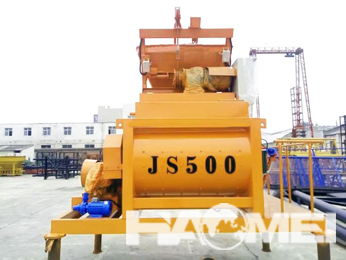
For smaller and medium-scale production lines, a JS1000 Concrete Mixer may also be considered where the plant design, batch requirement, and local service plan align with a JS series twin-shaft mixer configuration.
Application Scenarios
Ready-Mix Concrete Plants
Ready-mix plants need reliable batch sequencing and efficient coordination between mixing, dispatching, and truck loading. The mixer should be matched with aggregate bins, belt or skip feeding systems, cement conveying equipment, and a control platform capable of managing changing daily order schedules.
Precast Concrete Production
Precast operations often emphasize repeatability, mold-filling consistency, and controlled production cycles. Depending on the product, the plant may process low-slump, high-strength, colored, or fiber-modified concrete. Mixer configuration, discharge height, and downstream transfer equipment should be planned around the production line layout.
Roads, Bridges, and Infrastructure Projects
Infrastructure concrete may involve larger daily volumes, extended operating periods, and strict material-control requirements. Stationary or modular batching plants using twin-shaft mixers can be arranged near the project site to reduce transport distance and support scheduled concrete placement.
Concrete Products and Block Manufacturing
Concrete product facilities may require carefully controlled moisture and repeatable batch proportions. The mixer, batching machine, and material dosing system should be coordinated to support the requirements of the specific block, paver, pipe, or other concrete product process.

Maintenance Priorities for Twin-Shaft Mixers
Preventive maintenance is essential for preserving mixing quality and avoiding unplanned downtime. Maintenance intervals should follow the equipment manual, actual operating conditions, and site safety procedures.
| Inspection Area | Routine Attention Point | Purpose |
|---|---|---|
| Mixing paddles and arms | Check wear condition, fastening, and clearance | Maintains intended material movement inside the tank |
| Tank liners | Inspect for abrasion and localized wear | Protects the mixing chamber structure |
| Shaft seals and bearings | Monitor lubrication and signs of leakage or abnormal noise | Supports reliable shaft operation |
| Drive components | Check gearbox condition, couplings, and motor operation | Helps identify developing mechanical issues |
| Discharge gate | Verify opening, closing, and sealing performance | Supports complete and controlled discharge |
| Electrical controls | Inspect sensors, cables, interlocks, and alarms | Improves safe and stable automated operation |
Industry Direction: Efficient, Maintainable, and Connected Mixing Systems
The concrete equipment sector continues to focus on better process control, reduced material waste, easier maintenance, and integration with digital plant management. For mixer manufacturers and plant operators, this means designing equipment with practical access, durable wear components, reliable control interfaces, and compatibility with automated batching systems.
Environmental requirements are also influencing plant design. Dust collection at cement handling points, controlled wash-water management, material storage arrangements, and optimized production scheduling are increasingly considered alongside mixer selection.
Conclusion
Leading Sicoma concrete mixer models serve a broad range of construction applications through twin-shaft forced mixing technology and adaptable plant integration. The most suitable configuration depends on the concrete recipe, required batch cycle, aggregate properties, production environment, and maintenance capability.
A properly matched mixer and batching system can support consistent concrete production when combined with accurate weighing, effective material handling, trained operation, and scheduled maintenance. Equipment selection should therefore begin with an engineering review of the complete concrete production process rather than a comparison of mixer size alone.