

News
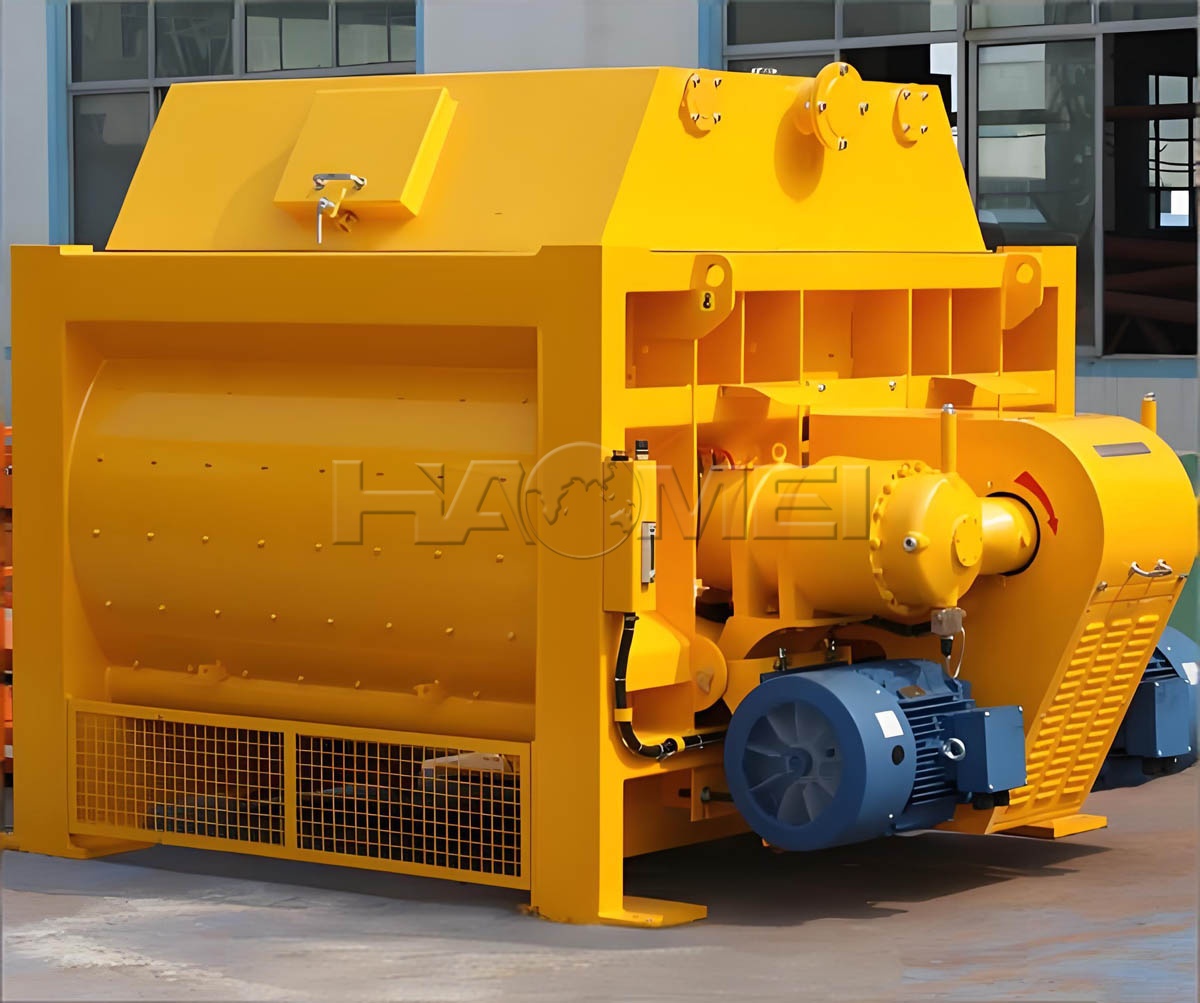
SICOMA MAO 3.0 / 3.5 / 4.0 / 4.5 Twin-Shaft Concrete Mixer
Large-capacity concrete production requires more than a larger mixing vessel. Ready-mix plants, precast yards, road projects, and infrastructure contractors need stable material flow, repeatable mix quality, practical wear protection, and maintenance access that fits the operating schedule. The SICOMA MAO 3.0 / 3.5 / 4.0 / 4.5 twin-shaft concrete mixer range is commonly considered for these high-output applications.
As a concrete equipment manufacturer, equipment selection is approached as a system-engineering task. Mixer size, aggregate grading, concrete recipe, batching cycle, discharge arrangement, plant layout, and maintenance conditions should be evaluated together. A mixer is most effective when its mechanical configuration is matched to the actual production process.
Why Large Twin-Shaft Mixers Are Used in Concrete Production
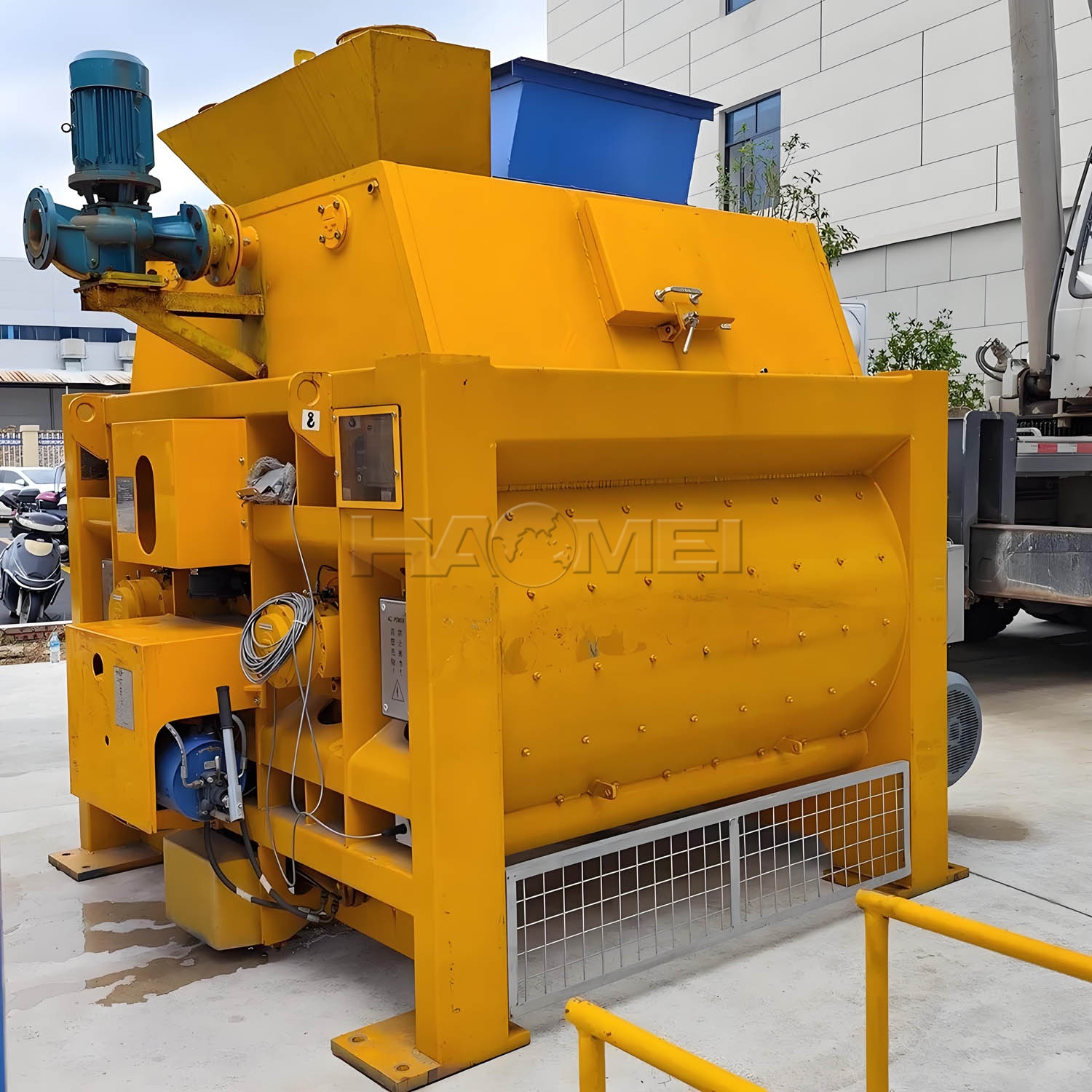
Twin-shaft forced mixers use two horizontal shafts fitted with mixing arms and paddles. During operation, the shafts rotate in opposite directions, moving aggregates, cementitious materials, water, and admixtures through overlapping mixing zones. This movement supports intensive material exchange throughout the mixing chamber.
For medium- and large-volume concrete production, the twin-shaft structure is often selected because it can handle conventional ready-mix concrete, dry or semi-dry concrete, high-strength formulations, and mixtures containing supplementary cementitious materials, subject to recipe validation and plant process control.
| Production Requirement | Mixer-Related Consideration | Engineering Objective |
|---|---|---|
| High-volume ready-mix supply | Batch volume, charging sequence, discharge coordination | Maintain stable production rhythm |
| Precast concrete production | Mix uniformity, moisture control, repeatable batching | Support consistent element quality |
| Road and bridge projects | Aggregate size, workability range, continuous supply | Match project-specific concrete recipes |
| Dry or low-slump concrete | Mixing resistance, liner wear, drive capacity | Maintain reliable mechanical operation |
| Central mixing plants | Integration with aggregate batching and control systems | Reduce process interruptions |
MAO 3.0 / 3.5 / 4.0 / 4.5 Series Positioning
The MAO 3.0, 3.5, 4.0, and 4.5 models are generally positioned for batching plants and production lines requiring substantial batch capacity. Exact usable output depends on concrete density, aggregate shape and grading, mix design, moisture condition, batching accuracy, and the selected operating process. Therefore, final capacity planning should rely on project-specific technical confirmation rather than model designation alone.
| Model Range | Typical Application Focus | Selection Factors |
|---|---|---|
| MAO 3.0 | Medium-to-large commercial concrete plants and infrastructure supply | Required hourly output, truck loading schedule, available installation space |
| MAO 3.5 | Larger ready-mix operations and continuous project supply | Aggregate feeding capacity, discharge timing, plant control logic |
| MAO 4.0 | High-volume batching plants and centralized production facilities | Foundation design, power supply, material storage and conveying capacity |
| MAO 4.5 | Large-scale production projects with demanding supply coordination | Full plant throughput, downstream transport capacity, maintenance planning |
The mixer should not be selected in isolation. A large SICOMA MAO concrete mixer may require corresponding upgrades to aggregate storage, belt conveyors, weighing systems, cement handling, water dosing, admixture dosing, and truck or transfer equipment. If upstream feeding or downstream discharge is undersized, the advantages of a larger mixer may not be fully utilized.
Performance Advantages of SICOMA Twin-Shaft Concrete Mixers
1. Efficient Twin-Shaft Mixing: Two counter-rotating mixing shafts create intense material circulation and convection, ensuring rapid and uniform concrete mixing.
2. Superior Mixing Quality: Optimized layout of mixing arms and blades makes the equipment suitable for dry-hard, plastic, and high-slump (highly flowable) concrete.
3. Excellent Wear Resistance: Equipped with high-hardness, wear-resistant liners and mixing blades, extending the service life of the equipment.
4. Stable Power Transmission: Features a high-performance planetary gear reduction system that ensures synchronized operation of both shafts and provides high load-bearing capacity.
5. Reliable Sealing: Employs a multi-layered shaft-end sealing structure, effectively minimizing the leakage of cement slurry and dust.
6. Easy Maintenance: Includes an automatic lubrication system and a modular design, reducing the workload for routine maintenance.
7. Wide Range of Applications: Suitable for commercial concrete batching plants, precast component production, ready-mix concrete, and large-scale infrastructure projects.
Main Structure and Working Principle
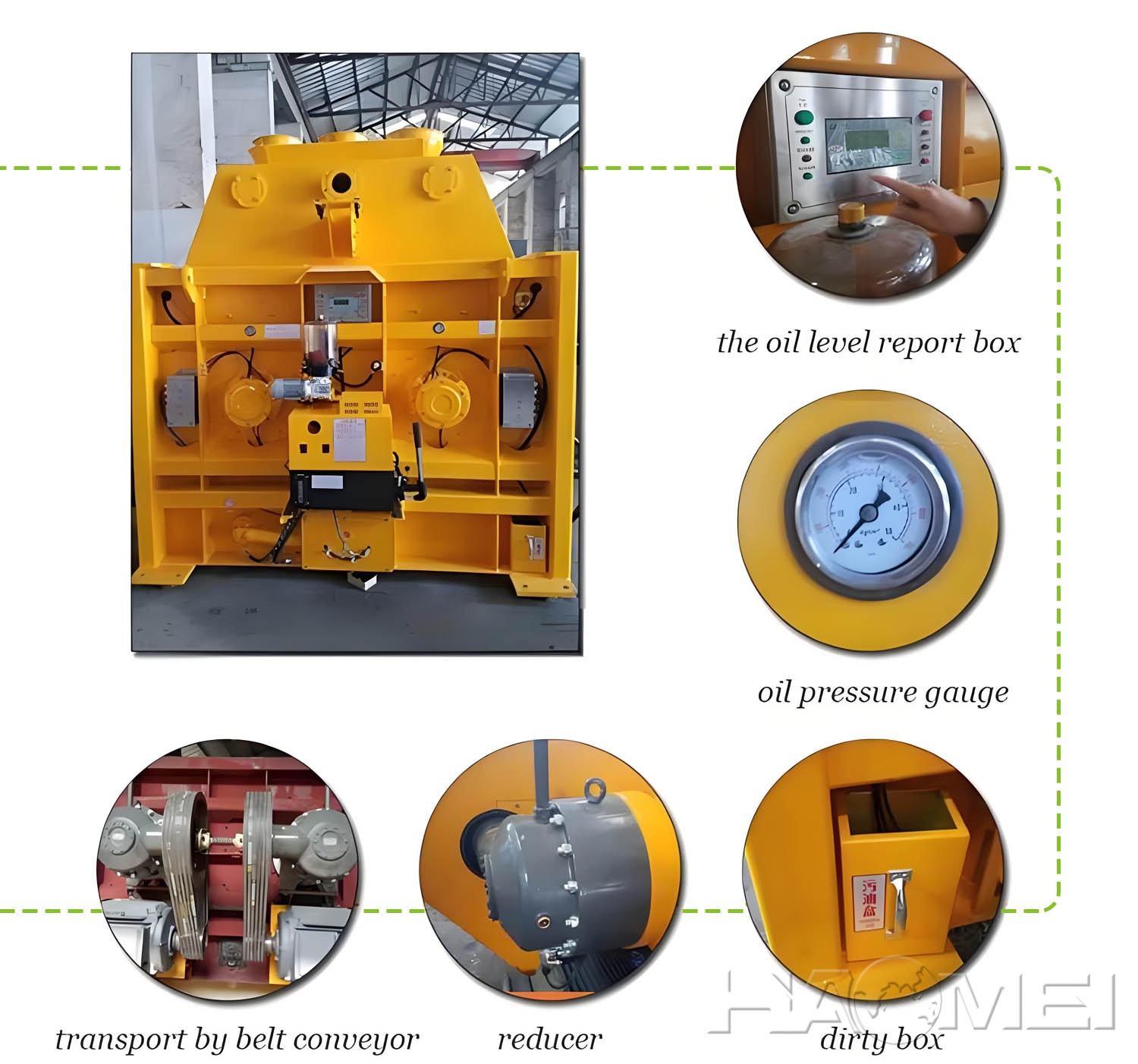
A twin-shaft concrete mixer is built around a reinforced mixing chamber, two synchronized mixing shafts, a transmission assembly, mixing arms, paddles, replaceable wear liners, a discharge mechanism, and supporting electrical or hydraulic control components. The structural layout is intended to withstand repeated loading cycles while allowing wear parts to be inspected and replaced during scheduled maintenance.
| Component | Function in the Mixing Process | Maintenance Focus |
|---|---|---|
| Mixing chamber | Contains materials during charging, mixing, and discharge | Check liner condition, buildup, and sealing areas |
| Twin shafts | Create counter-rotating material movement | Monitor shaft alignment, bearings, and seals |
| Mixing arms and paddles | Lift, shear, disperse, and circulate materials | Inspect wear condition and adjustment requirements |
| Drive system | Transfers power to the mixing shafts | Check lubrication, gearbox condition, and coupling alignment |
| Wear liners | Protect the chamber structure from abrasive aggregates | Replace according to wear inspection results |
| Discharge gate | Releases finished concrete into the receiving system | Verify opening action, sealing, and material discharge path |
| Control interface | Coordinates mixing time and production signals | Confirm interlocks, alarms, and recipe parameters |
During the mixing cycle, weighed aggregates and powder materials are introduced according to the plant's batching sequence. Water and admixtures are added based on the selected process and recipe requirements. The counter-rotating shafts move materials through intersecting paths, helping distribute mortar around aggregate particles. Once the programmed mixing time is completed and quality checks are satisfied, the discharge gate opens to release the batch.
Configuration Options for Different Plant Requirements
The basic mixer structure can be adapted through configuration choices. These choices should be made based on the concrete type, local material characteristics, plant automation level, environmental conditions, and maintenance resources.
| Configuration Area | Available Engineering Direction | Application Value |
|---|---|---|
| Wear protection | Standard or enhanced liners, paddles, and arm protection | Addresses abrasive aggregate conditions |
| Discharge system | Discharge arrangement matched to skip, conveyor, or truck loading layout | Supports smooth transfer of finished concrete |
| Sealing arrangement | Shaft-end sealing designed for the operating environment | Helps manage slurry leakage and protect bearing areas |
| Lubrication | Manual or centralized lubrication solutions | Supports planned maintenance routines |
| Moisture measurement | Optional moisture-related process monitoring | Supports water adjustment in variable aggregate conditions |
| Control integration | Connection with batching plant PLC and recipe management | Enables coordinated automated production |
| Cleaning support | Washout and cleaning arrangements suited to site procedures | Helps reduce hardened concrete buildup |
For projects requiring a broader equipment comparison, the Sicoma Concrete Mixer product range can be reviewed alongside plant capacity, concrete recipes, and installation constraints.
Engineering Applications
SICOMA MAO 3.0-4.5 twin-shaft mixers can be incorporated into stationary batching plants serving commercial concrete supply, infrastructure construction, precast operations, and large industrial projects. Application suitability should be determined by the complete production chain, not solely by mixer volume.
| Application Scenario | Typical Concrete Demand | Key Equipment Coordination |
|---|---|---|
| Commercial ready-mix plant | Multiple grades and changing dispatch schedules | Fast batch sequencing, truck loading coordination, recipe control |
| Precast component factory | Repeatable mix properties and planned production cycles | Accurate weighing, moisture management, structured quality control |
| Highway and bridge project | Continuous supply during major pours | Reliable aggregate feeding, site logistics, standby planning |
| Hydropower or civil infrastructure project | Project-specific aggregate and binder combinations | Material testing, wear protection review, process adaptation |
| Concrete product production line | Stable batches for blocks, pipes, or related products | Compatibility with downstream molding or forming equipment |

Selection Considerations Before Installation
Before selecting a MAO 3.0, 3.5, 4.0, or 4.5 mixer, the project team should evaluate the following technical inputs. These parameters help determine whether the mixer, batching plant, and material-handling system are properly balanced.
| Evaluation Item | Questions for Project Planning |
|---|---|
| Required production volume | What hourly and daily output is required under realistic operating conditions? |
| Concrete mix design | What are the aggregate sizes, water-cement ratio, slump range, and admixture requirements? |
| Aggregate characteristics | Are the aggregates highly abrasive, irregularly shaped, wet, or difficult to handle? |
| Plant layout | Is there sufficient room for maintenance access, loading, discharge, and material conveyance? |
| Power and utilities | Does the site provide stable power, water supply, and drainage capacity? |
| Maintenance resources | Are trained personnel, spare parts, lubrication procedures, and inspection schedules available? |
| Installation conditions | Are foundation design, lifting access, and transport dimensions suitable for the selected equipment? |
For plants with lower batch-volume requirements or different production layouts, other Concrete Mixer configurations may provide a more suitable match.
Maintenance and Operational Management
Mixer reliability is closely related to routine inspection and correct operating procedures. Abrasive aggregates, hardened concrete buildup, inadequate lubrication, and delayed replacement of wear parts can affect mixing performance and service life. Maintenance planning should therefore be integrated into plant management from the beginning of the project.
| Maintenance Area | Recommended Management Practice |
|---|---|
| Mixing chamber cleaning | Remove residual concrete according to the plant's approved cleaning procedure after production cycles |
| Wear parts inspection | Check paddles, arms, liners, and discharge components at scheduled intervals |
| Shaft-end condition | Monitor seals and bearing areas for abnormal leakage, temperature, or noise |
| Lubrication management | Follow the lubricant type, interval, and quantity specified for the installed configuration |
| Drive system checks | Inspect gearbox, motor, couplings, and fasteners during planned shutdowns |
| Electrical controls | Test safety interlocks, emergency stops, alarms, and sensor signals regularly |
| Spare parts planning | Maintain an appropriate inventory of critical wear and sealing parts for the operating environment |
Industry Direction: Integrated and Data-Supported Concrete Production
Concrete production is increasingly influenced by stricter quality requirements, material variability, labor availability, energy management, and environmental compliance. In this environment, large twin-shaft mixers are becoming part of more integrated batching systems rather than stand-alone machines.
| Industry Trend | Effect on Mixer and Plant Planning |
|---|---|
| Automated batching | Requires dependable communication between weighing, mixing, and discharge stages |
| Variable raw materials | Increases the importance of moisture monitoring and recipe adjustment |
| Sustainable concrete mixes | May require validation of mixing sequences for supplementary cementitious materials and recycled aggregates |
| Predictive maintenance | Encourages routine monitoring of wear, drive condition, and lubrication status |
| Modular plant design | Supports project-specific combinations of mixers, storage systems, and conveying equipment |
| Quality traceability | Links production records with batch data, materials, and project requirements |
Conclusion
The SICOMA MAO 3.0 / 3.5 / 4.0 / 4.5 twin-shaft concrete mixer range is suited to concrete production systems that require substantial batch capacity and coordinated plant operation. Selecting the appropriate model involves more than comparing nominal mixer size. The concrete recipe, aggregate properties, production target, material-handling capacity, control system, installation conditions, and maintenance strategy all influence final performance.
A properly configured twin-shaft mixer, integrated with compatible batching and conveying equipment, can support stable concrete production for commercial, precast, and infrastructure applications. Technical review before purchase and disciplined maintenance after commissioning remain essential for long-term operation.