
News
Sicoma MAO Concrete Mixer
The Sicoma MAO concrete mixer is a twin-shaft forced mixer widely specified for concrete batching plants that require consistent mixing performance across conventional, commercial, and infrastructure-oriented concrete production. From an equipment manufacturing perspective, mixer selection should be based on aggregate characteristics, concrete mix design, required batch capacity, production rhythm, maintenance access, and the interface requirements of the complete batching plant.
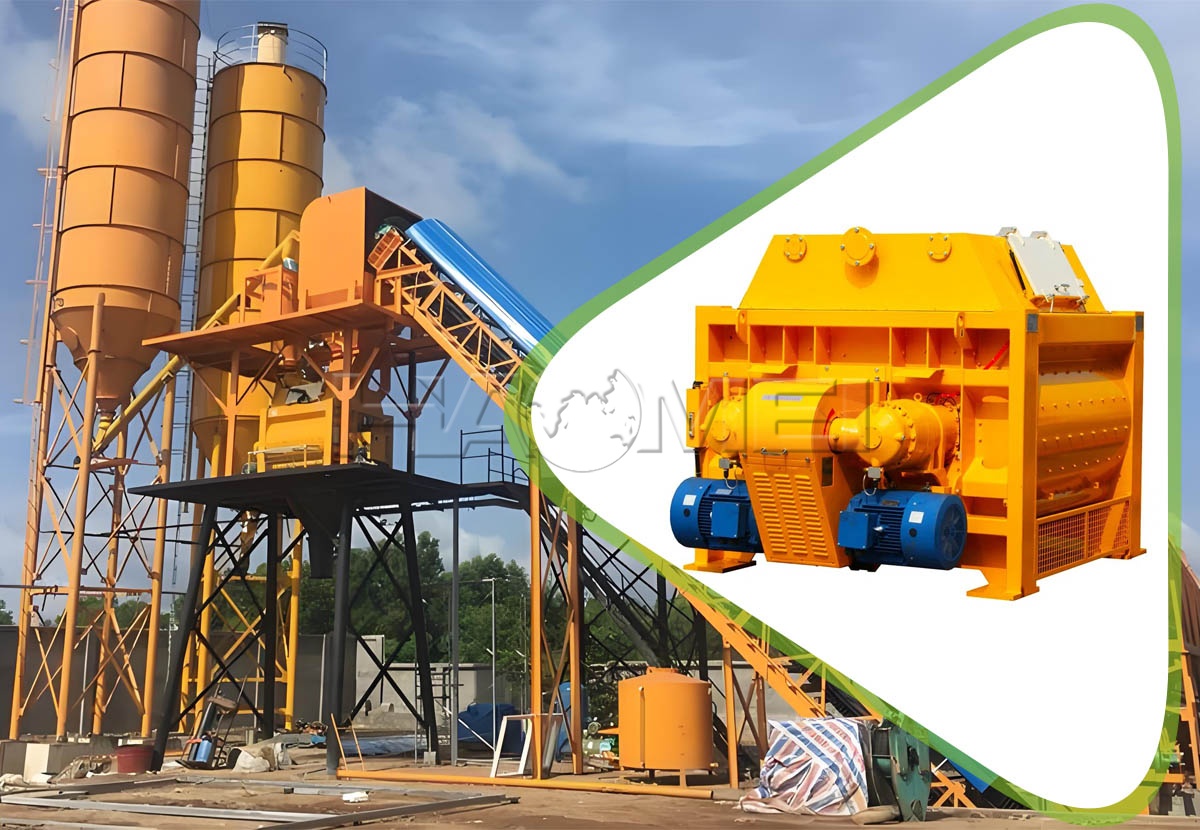
A Sicoma MAO concrete mixer is commonly integrated as the central mixing unit in stationary batching plants, modular plants, precast concrete lines, and selected dry-to-wet processing systems. Its twin-shaft mixing principle is intended to create intensive material movement inside the mixing chamber, supporting the uniform distribution of cement, water, admixtures, fine aggregate, and coarse aggregate.
Twin-Shaft Mixing Principle
The MAO mixer configuration uses two horizontal mixing shafts fitted with mixing arms and blades. During operation, the shafts rotate in coordinated directions, moving materials through overlapping mixing zones. This movement helps reduce localized material accumulation and supports a more uniform mix when the batching sequence, moisture control, and mixing time are properly managed.
The actual mixing result does not depend on the mixer alone. Aggregate grading, moisture variation, cement type, admixture compatibility, loading order, and control-system accuracy all influence concrete consistency. For this reason, a mixer should be evaluated as part of the full concrete batching plant rather than as an isolated machine.
| Main Assembly | Primary Function | Selection Consideration |
|---|---|---|
| Mixing chamber | Contains the concrete mixing process | Chamber lining should suit aggregate abrasiveness and production duty |
| Twin mixing shafts | Drive material circulation in overlapping zones | Shaft sealing and bearing arrangement affect long-term maintenance |
| Mixing arms and blades | Move, shear, and fold materials | Blade layout should match the selected mixer model and material characteristics |
| Drive system | Transfers power to the shafts | Motor and gearbox configuration should match the duty cycle and power supply |
| Discharge door | Releases mixed concrete | Opening method and sealing should match downstream transport equipment |
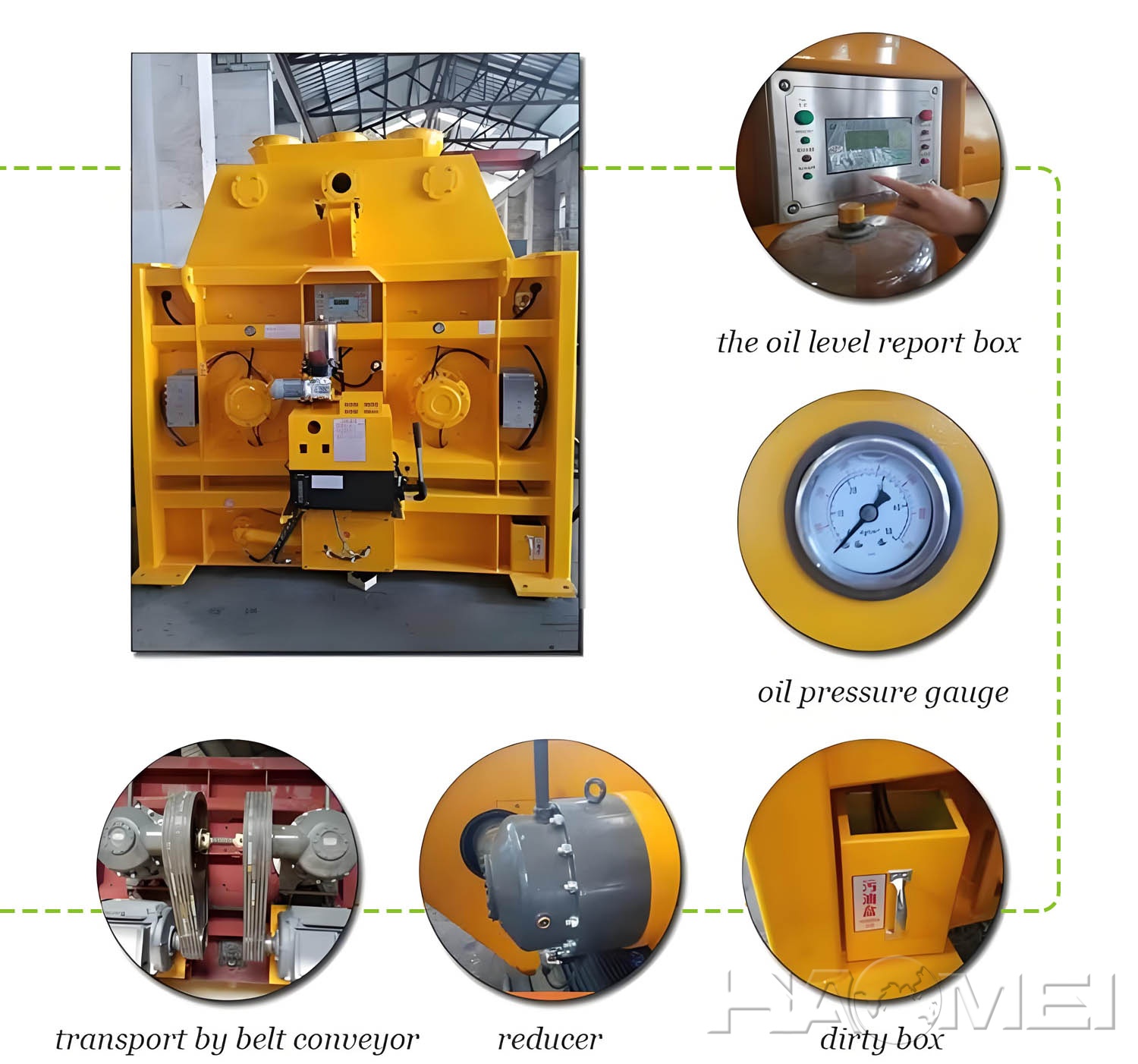
| Lubrication system | Supports bearing and sealing maintenance | Automatic lubrication can simplify scheduled servicing |
Typical Engineering Applications
Sicoma MAO concrete mixers are used where forced mixing is required for plastic, semi-dry, and selected low-slump concrete applications. The suitable configuration varies according to the project type and the material handling arrangement.
| Application Scenario | Typical Material Requirement | Equipment Integration Focus |
|---|---|---|
| Ready-mix concrete plant | Stable output across multiple mix designs | Aggregate batching accuracy, moisture correction, truck loading arrangement |
| Precast concrete production | Repeatable consistency and controlled discharge | High-frequency operation, mixer cleaning access, automation interface |
| Road and bridge works | Reliable production for project-specific concrete grades | Site layout, aggregate storage, transport coordination |
| Municipal infrastructure | Flexible production for varied concrete demands | Compact plant arrangement and simple maintenance access |
| Block and paver production | Suitable mixing for lower-slump material systems | Material feed sequence and discharge connection to forming equipment |
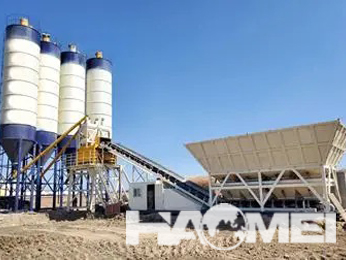
For projects requiring compact batching equipment, the mixer can be paired with aggregate batching machines, cement silos, screw conveyors, weighing systems, and a centralized control platform. The complete system should be sized according to actual hourly demand, transport capacity, and expected peak production periods.

Configuration Considerations for a Sicoma MAO Concrete Mixer
When specifying a Sicoma MAO concrete mixer, the manufacturer should confirm the selected model, nominal batch volume, installed power, discharge arrangement, and optional equipment against the final project requirements. Technical parameters may differ by model and regional electrical standards, so final values should always follow the approved equipment quotation, drawing, and technical documentation.
| Configuration Item | Available Consideration | Practical Purpose |
|---|---|---|
| Wear liners | Standard or enhanced wear-resistant lining options | Helps address abrasion from hard or angular aggregates |
| Mixing blades | Material and layout selected for the mixer model | Supports mixing action and planned wear-part replacement |
| Shaft seals | Standard sealing or enhanced protection arrangement | Reduces the risk of material ingress in demanding conditions |
| Discharge system | Hydraulic or pneumatic arrangement where applicable | Matches plant control logic and discharge cycle requirements |
| Cleaning arrangement | Water pipe, washout connection, or access provisions | Supports routine cleaning after production shifts |
| Control interface | Integration with plant automation system | Coordinates batching, mixing time, discharge, and production records |
| Moisture-related control | Optional aggregate moisture measurement at plant level | Helps improve water adjustment when aggregate moisture fluctuates |
A Sicoma Concrete Mixer should be selected with attention to the entire material flow. Aggregate should enter the mixer without excessive segregation, powder feeding should be stable, and water and admixture dosing should be coordinated with the selected mixing sequence. Poor upstream batching accuracy cannot be fully corrected by extending mixing time.
Wear Parts and Maintenance Planning
Concrete mixers operate under abrasive conditions. Aggregate hardness, sand content, concrete strength grade, operating frequency, and cleaning practice can all affect the service life of liners, blades, arms, seals, and discharge components. A planned inspection schedule is more effective than waiting for visible wear to affect production quality.
| Maintenance Area | Recommended Inspection Focus | Operational Benefit |
|---|---|---|
| Mixing blades and arms | Wear level, fastening condition, clearance | Maintains intended material movement inside the chamber |
| Chamber liners | Abrasion, cracking, loose fasteners | Protects the mixer body and supports predictable maintenance planning |
| Shaft seals | Leakage, lubrication condition, material buildup | Helps protect shaft-end components |
| Gearboxes and motors | Oil condition, temperature trend, mounting condition | Supports stable drive performance |
| Discharge door | Opening movement, sealing, limit switches | Reduces discharge interruptions and material leakage |
| Cleaning system | Water supply, nozzle condition, drainage | Helps prevent hardened concrete buildup |
Daily cleaning after production is essential. Residual concrete can harden around the discharge door, mixing blades, and liner joints, increasing cleaning time and placing additional load on mechanical components. Maintenance personnel should follow site safety procedures, isolate the power supply before entering or servicing the mixer, and use the equipment manual as the governing reference for inspections.
Integration With Concrete Batching Plant Systems
A twin-shaft mixer is only one section of the batching process. The productivity and concrete quality of a plant depend on coordinated operation among aggregate storage, weighing equipment, powder conveying, liquid dosing, mixer loading, discharge, and dispatch management.
For facilities using standard forced mixers in different capacities, a Concrete Mixer configuration should be reviewed together with the plant layout, truck or bucket loading height, foundation arrangement, electrical supply, and local maintenance resources. This approach helps ensure that the selected mixer can be serviced efficiently throughout its operating life.
Selection Guidance
The following checklist can support preliminary mixer selection before final technical confirmation.
| Selection Factor | Questions for Project Review |
|---|---|
| Concrete output requirement | What is the required production rhythm during normal and peak demand periods? |
| Mix design range | Will the plant produce conventional, low-slump, high-strength, or multiple concrete grades? |
| Aggregate condition | Are aggregates hard, angular, wet, recycled, or highly variable in grading? |
| Plant location | Does the site require a stationary installation, modular arrangement, or restricted footprint? |
| Service access | Is there sufficient space for liner replacement, shaft-end inspection, and cleaning? |
| Automation level | Does the project require recipe management, production reporting, and moisture-related adjustment? |
| Downstream equipment | Will concrete discharge into transit mixers, buckets, conveyors, or precast production equipment? |
Industry Development Direction
Concrete production is increasingly focused on material efficiency, quality traceability, reduced cleaning waste, and preventive maintenance. Mixer technology is therefore being evaluated not only by nominal capacity, but also by its compatibility with automated batching controls, moisture management, wear monitoring, and efficient service access.
For concrete producers, the practical objective is a balanced system: a properly configured Sicoma MAO concrete mixer, accurate weighing equipment, stable material supply, and a maintenance plan suited to the actual production environment. Final equipment selection should be confirmed through project-specific technical communication, including concrete recipes, aggregate samples where necessary, site conditions, electrical standards, and required plant output.