
News

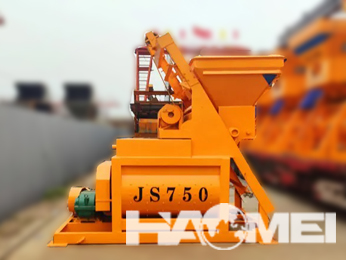
Sicoma Concrete Mixer Spare Parts Supplier
Concrete batching plants depend on the stable operation of the mixer, especially when producing commercial concrete, precast elements, road materials, or concrete for infrastructure projects. As a construction machinery manufacturer, spare-parts support for Sicoma concrete mixers should be based on accurate equipment identification, material selection, dimensional control, and practical maintenance requirements rather than a simple parts-name match.
A suitable Sicoma concrete mixer spare parts supplier should be able to confirm the mixer model, shaft arrangement, drive configuration, mixing chamber dimensions, and existing component drawings or samples before production or delivery. This process helps reduce the risk of incorrect installation, premature wear, leakage, or interruption to batching plant operations.
Why Spare Parts Selection Requires Technical Verification
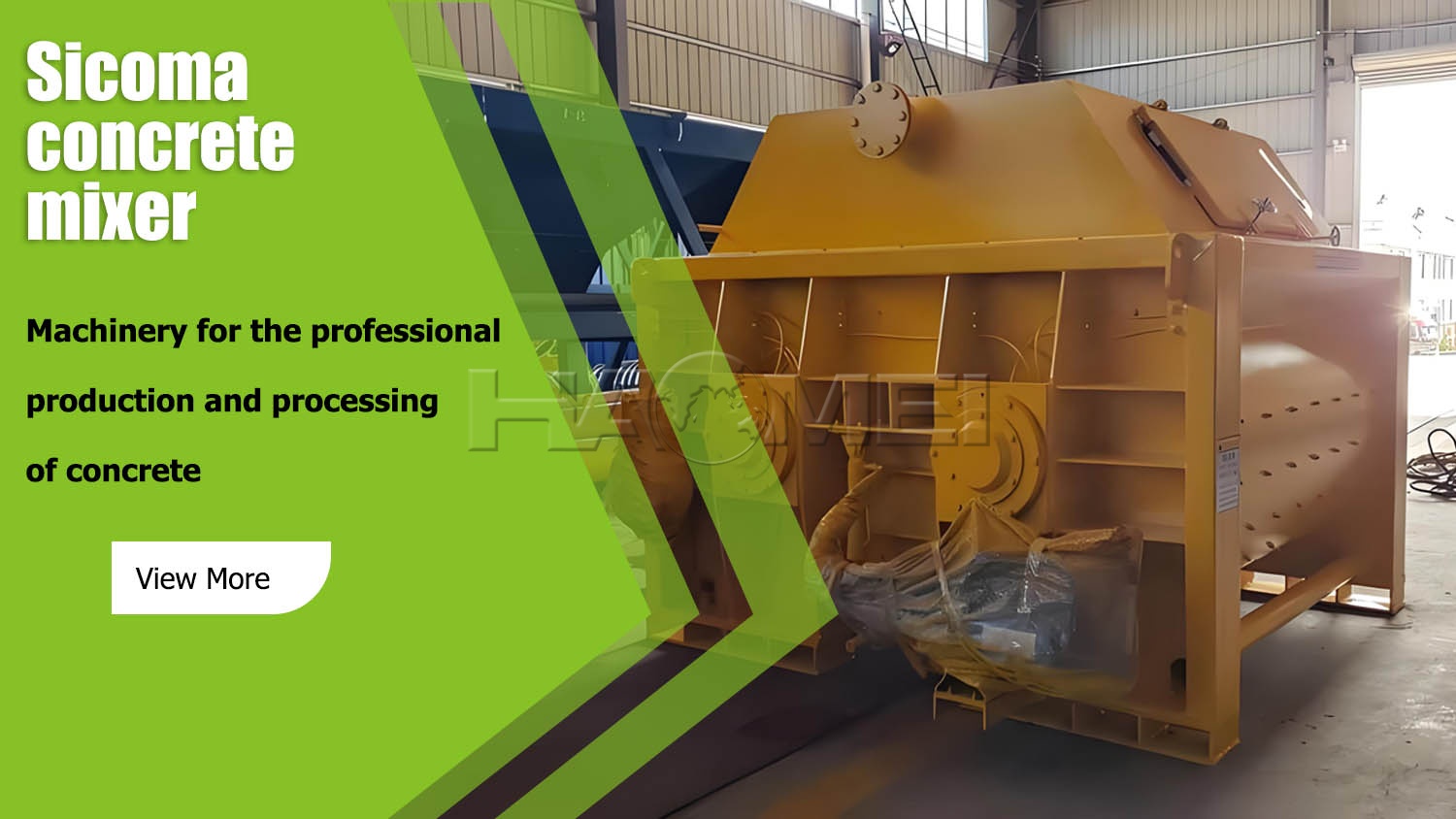
Sicoma mixers are commonly used in batching plants because their twin-shaft forced mixing structure can process conventional concrete, dry mixes, wet mixes, and many aggregate gradations. During operation, aggregates, cementitious materials, water, and admixtures create continuous abrasion and impact inside the mixing chamber. Wear parts must therefore match both the mechanical structure and the actual mix design.
A part that has a similar appearance may not have the same mounting hole position, thickness, rotation direction, material grade, or clearance requirement. For this reason, replacement planning should begin with technical confirmation.
| Verification Item | Why It Matters | Recommended Information |
|---|---|---|
| Mixer model and serial information | Helps identify the correct chamber and drive arrangement | Nameplate photo, equipment records |
| Part number or drawing | Supports dimensional and structural confirmation | Original part number, technical drawing |
| Worn-part sample | Useful when drawings are unavailable | Sample with key dimensions marked |
| Mixing application | Influences material and wear-resistance requirements | Aggregate size, concrete grade, production conditions |
| Installation position | Prevents confusion between left-hand and right-hand components | Photos of the installed component |
| Maintenance history | Helps identify repeated failure causes | Replacement interval and observed wear pattern |
Main Sicoma Concrete Mixer Spare Parts Categories
Spare parts for a Sicoma concrete mixer can be divided into mixing system components, wear liners, discharge components, shaft sealing parts, transmission parts, and electrical control accessories. The replacement frequency of each category depends on production volume, aggregate hardness, material cleanliness, maintenance practice, and mixer operating conditions.
| Spare Parts Category | Typical Components | Main Function | Key Selection Considerations |
|---|---|---|---|
| Mixing system parts | Mixing arms, mixing blades, scrapers, hubs | Mix and move materials inside the chamber | Installation angle, mounting dimensions, material grade |
| Wear lining parts | Wall liners, floor liners, end liners | Protect the mixing chamber from abrasion | Shape, thickness, bolt pattern, wear resistance |
| Shaft-end sealing parts | Seal rings, sealing assemblies, lubrication components | Limit slurry ingress around shaft ends | Shaft diameter, seal structure, lubrication method |
| Discharge system parts | Discharge door, door liners, cylinders, limit devices | Control concrete discharge | Door geometry, actuator connection, sealing condition |
| Drive system parts | Gearbox components, couplings, bearings, belts where applicable | Transfer motor power to mixing shafts | Torque requirements, shaft alignment, model compatibility |
| Electrical components | Sensors, limit switches, solenoid valves, cables | Support interlocking and operating control | Voltage, signal type, protection rating |
Wear Parts and Their Role in Mixer Service Life
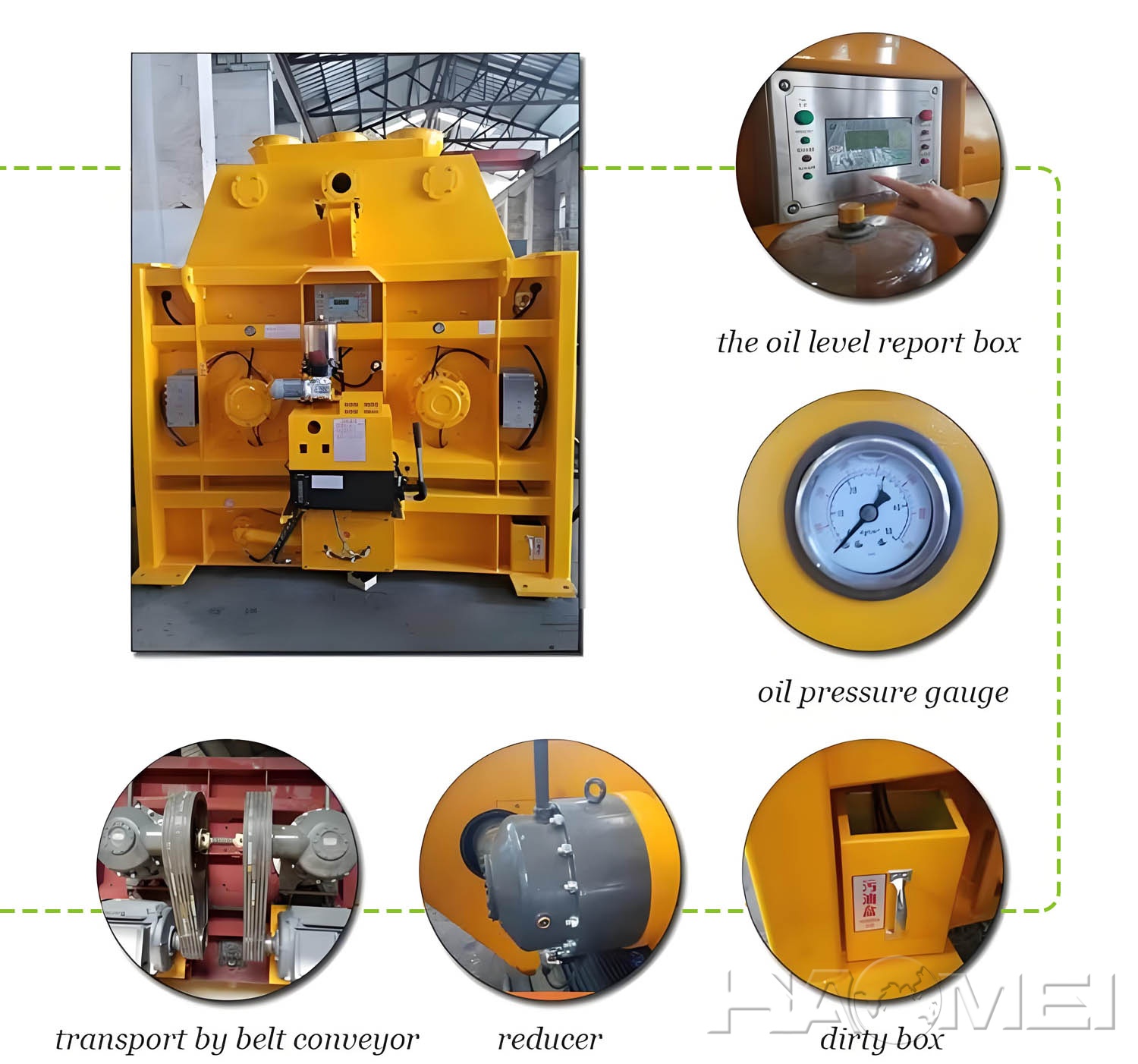
Mixing blades and liners are among the most frequently inspected components in a twin-shaft mixer. Their condition directly affects the mixing path, material circulation, discharge cleanliness, and protection of the main mixing chamber.
When blades become excessively worn, the clearance between blades and liners may increase. This can reduce mixing efficiency and allow abrasive aggregate to act more directly on the chamber surface. Similarly, damaged or loose liners can expose the steel structure beneath them and make subsequent repairs more complex.
| Component | Common Wear Mechanism | Inspection Focus | Replacement Consideration |
|---|---|---|---|
| Mixing blades | Abrasion from sand and aggregate | Blade thickness, edge profile, mounting bolts | Replace when wear affects mixing clearance or secure mounting |
| Mixing arms | Impact and abrasion | Arm deformation, cracks, bolt seat condition | Replace if alignment or structural integrity is affected |
| Floor liners | Sliding abrasion from aggregate | Surface wear, looseness, bolt wear | Replace before the base structure is exposed |
| Side liners | Material flow abrasion and impact | Localized wear near mixing zones | Check regularly in high-abrasion production |
| End liners | Wear around shaft-end areas | Fitment around seals and chamber ends | Replace when protection of the end wall is reduced |
| Discharge door liners | Abrasion during discharge | Door sealing surface and liner thickness | Replace when discharge leakage or sticking occurs |
Shaft-End Sealing and Lubrication Support
The shaft-end sealing system is an important maintenance area for Sicoma concrete mixers. It works under conditions involving cement slurry, water, fine particles, vibration, and rotating shafts. If a sealing assembly is not correctly matched or maintained, slurry may enter the seal area and accelerate wear of bearings or related components.
A spare-parts solution should consider the complete sealing arrangement rather than replacing only one visible component. Seal rings, pressure components, lubrication lines, grease distribution devices, and adjacent wear parts should be checked together.
| Maintenance Point | Potential Issue if Neglected | Practical Service Action |
|---|---|---|
| Lubrication condition | Increased friction and seal wear | Verify grease supply and lubrication line condition |
| Seal-ring condition | Leakage of slurry or water | Inspect for wear, cracking, and deformation |
| Shaft-end cleanliness | Material buildup around the seal area | Remove hardened concrete during planned maintenance |
| Bearing condition | Noise, heat, or vibration | Investigate abnormal operation before bearing damage progresses |
| Fastener tightness | Loosened components and seal misalignment | Check according to the equipment maintenance schedule |
Spare Parts for Batching Plant Applications
Different concrete production environments place different demands on mixer spare parts. A commercial batching plant may prioritize continuous production and rapid maintenance access, while a precast plant may require stable mixing consistency for repeated product cycles. Road and bridge projects can involve demanding aggregate characteristics and variable working schedules.
| Application Scenario | Typical Operating Need | Spare Parts Planning Priority |
|---|---|---|
| Commercial concrete plant | Continuous daily production and fast turnaround | Maintain stock of blades, liners, seals, and discharge wear parts |
| Precast concrete plant | Consistent batch quality and repeatable operation | Monitor blade clearance and chamber liner condition closely |
| Road and bridge project | Variable aggregate quality and project-based production | Prepare abrasion-resistant wear parts and key sealing components |
| Hydropower or infrastructure project | Long production cycles and demanding material conditions | Plan preventive replacement and maintain critical drive-system parts |
| Mobile or temporary batching plant | Limited maintenance windows | Select parts with confirmed fitment and simplify on-site replacement preparation |
For complete equipment planning, a mixer should be selected together with the batching system, aggregate handling process, control system, and expected production workflow. A properly configured Sicoma Concrete Mixer can be supported more effectively when the end user establishes a clear spare-parts list during commissioning.

Recommended Spare Parts Management Approach
A practical inventory strategy does not require storing every component in large quantities. Instead, it should focus on components that are subject to normal wear, those with longer procurement cycles, and those that could stop production if they fail.
| Inventory Level | Recommended Parts | Purpose |
|---|---|---|
| Routine stock | Mixing blades, scrapers, liner bolts, selected liners | Supports normal wear-part replacement |
| Critical maintenance stock | Shaft seals, lubrication fittings, discharge switches, solenoid valves | Reduces downtime caused by common functional failures |
| Planned overhaul stock | Full liner sets, mixing arms, coupling elements, selected bearings | Supports scheduled maintenance shutdowns |
| Model-specific reserve stock | Components confirmed by drawings or serial information | Prevents incorrect substitution across different configurations |
Manufacturer Support for Replacement Parts
As a construction equipment manufacturer, technical support for Sicoma concrete mixer replacement parts should include more than supply coordination. It should cover drawing review, sample measurement, material selection, manufacturing control, packing identification, and installation guidance where required.
For parts used in a broader batching plant system, compatibility with adjacent equipment should also be reviewed. For example, a mixer discharge component may affect hopper alignment, pneumatic control settings, or the batching plant interlock sequence. This is particularly important when upgrading older plants or integrating replacement mixers into existing production lines.
Equipment users evaluating a general Concrete Mixer solution should also consider maintenance accessibility, availability of wear parts, shaft sealing design, discharge arrangement, and control-system compatibility alongside nominal capacity.
Conclusion
Selecting Sicoma concrete mixer spare parts requires accurate model confirmation and an understanding of the mixer operating environment. Mixing blades, liners, shaft-end seals, discharge components, and drive-related parts all contribute to reliable batching plant operation.
A manufacturer-based spare-parts process should prioritize dimensional compatibility, appropriate materials, clear identification, and preventive maintenance planning. With proper inspection and timely replacement of wear components, concrete producers can support stable mixer operation and reduce avoidable maintenance interruptions.