
News
HBT Series Trailer Concrete Pump Specifications
HBT series trailer concrete pumps are widely used in building construction, infrastructure projects, tunnels, bridges, water conservancy works, and foundation engineering. As a manufacturer of concrete equipment, the focus in product design and production is not only on rated output, but also on pumping stability, system matching, service accessibility, and adaptability to different concrete mixes and site conditions.
This article summarizes the main points of HBT series trailer concrete pump specifications, including structural composition, working principle, core parameters, common configuration options, and practical selection considerations for engineering applications.
1. What Is an HBT Series Trailer Concrete Pump?
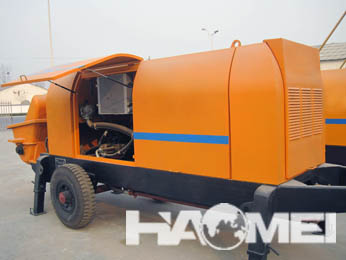
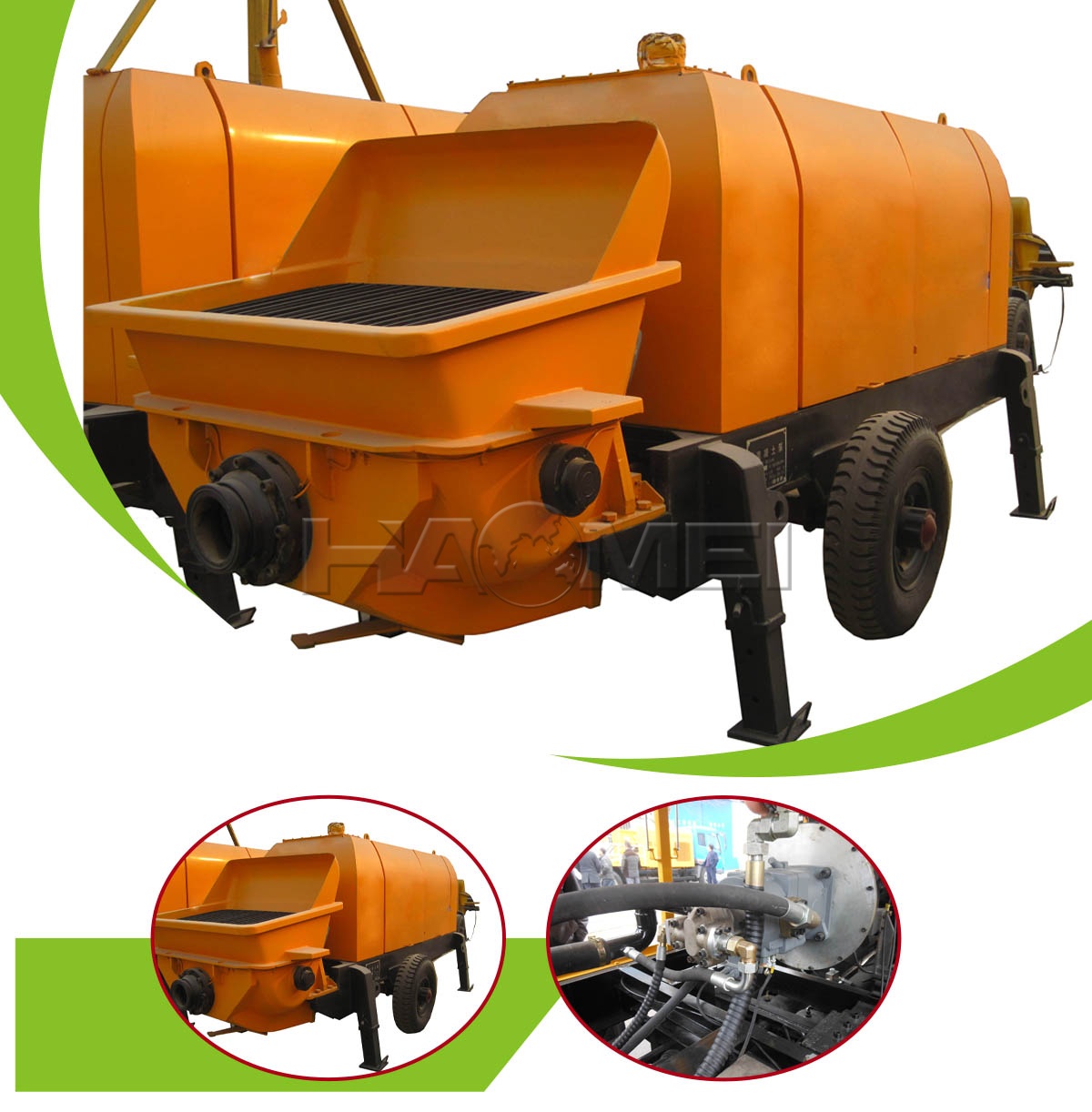
An HBT series trailer concrete pump is a towable concrete delivery machine that transports concrete through pipelines under hydraulic pressure. It is commonly matched with placing pipelines and accessories on site, and it can be powered by either an electric motor or a diesel engine depending on local power conditions and project requirements.
In practical applications, a Trailer Concrete Pump is often selected when the project needs flexible placement, continuous concrete conveying, and cost control across medium- to long-distance pumping tasks.
2. Basic Structure of an HBT Trailer Concrete Pump
Although configurations vary by model, the basic structure of an HBT series trailer concrete pump generally includes the following systems:
2.1 Power System
Electric motor or diesel engine
Coupling and drive components
Power output matched to the hydraulic system
2.2 Hydraulic System
Main hydraulic pump
Hydraulic valves and manifolds
Hydraulic oil tank
Cooling system
Hydraulic cylinders
The hydraulic system converts mechanical power into reciprocating pumping action. Its design directly affects pumping pressure, efficiency, and operational stability.
2.3 Pumping System
Concrete delivery cylinders
Material hopper
Agitator mechanism
S valve or distribution valve assembly
Concrete pistons and wear parts
This section is responsible for sucking concrete from the hopper and pushing it into the delivery pipeline.
2.4 Electrical Control System
PLC or relay-based control logic
Remote or local control functions
Safety monitoring and fault indication
2.5 Chassis and Towing Structure
Trailer frame
Axle and tires
Stabilizing legs
Protective covers
The chassis design affects transport convenience, site mobility, and structural durability.
3. Working Principle
The working principle of an HBT series trailer concrete pump is based on alternating suction and discharge.
One concrete cylinder draws material from the hopper.
The other cylinder pushes concrete into the pipeline.
The distribution valve switches the flow path.
The two cylinders repeat the cycle continuously.
The hydraulic system controls this reciprocating movement. The agitator in the hopper helps reduce segregation and supports smooth feeding into the cylinders. Stable pumping depends on proper coordination among hydraulic pressure, valve switching, concrete slump, aggregate size, and pipeline layout.
4. Main HBT Series Trailer Concrete Pump Specifications
The specifications of an HBT trailer concrete pump typically focus on output capacity, pumping pressure, motor or engine power, cylinder size, delivery distance, and aggregate requirements. Since exact values differ by model and configuration, the table below shows the common specification categories buyers should review.
4.1 Core Specification Items
| Specification Item | Description | Why It Matters |
|---|---|---|
| Theoretical concrete output | Maximum output under standard conditions | Indicates production capacity range |
| Maximum pumping pressure | Pressure available for pipeline delivery | Important for high-rise or long-distance pumping |
| Power type | Electric or diesel | Determines site adaptability and operating conditions |
| Main power rating | Motor or engine power | Affects hydraulic performance and system reserve |
| Distribution valve type | Usually S valve | Influences switching reliability and wear behavior |
| Concrete cylinder diameter x stroke | Main pumping cylinder dimensions | Related to pumping rhythm and output |
| Hopper capacity | Volume of receiving hopper | Affects feeding continuity |
| Maximum aggregate size | Allowed coarse aggregate size | Important for concrete mix compatibility |
| Delivery pipe diameter | Common pipeline size | Impacts resistance and matching |
| Maximum horizontal delivery distance | Reference transport distance | Used for pipeline planning |
| Maximum vertical delivery distance | Reference vertical pumping height | Important in high-rise projects |
| Overall dimensions | Transport size of the machine | Affects logistics and site arrangement |
| Total weight | Equipment operating weight | Relevant to transport and towing |
4.2 Typical Configuration Comparison
| Configuration Type | Typical Site Condition | Main Features | Selection Notes |
|---|---|---|---|
| Electric trailer concrete pump | Projects with stable power supply | Lower on-site emissions, stable drive | Suitable for urban sites and fixed working positions |
| Diesel trailer concrete pump | Projects with limited grid access | Better site independence | Suitable for remote, road, bridge, and rural projects |
| Standard pressure model | General low- to mid-rise construction | Balanced output and energy use | Suitable for common civil building work |
| High-pressure model | Long pipeline or taller structures | Greater pumping resistance capacity | Suitable for demanding line layouts |
5. How to Read HBT Model Codes
HBT model codes usually reflect the equipment category and key performance indicators. Different manufacturers may use slightly different coding methods, but the general logic often includes:
| Code Element | General Meaning |
|---|---|
| HBT | Trailer-mounted concrete pump |
| First number group | Theoretical output class |
| Second number group | Pumping pressure class |
| Final code or suffix | Motor/engine type or technical version |
When comparing models, it is important to review the full technical sheet rather than relying only on the model name. For example, two units with similar output classes may differ in power source, hydraulic brand selection, control mode, or wear-part arrangement.
For projects requiring a balanced combination of output and pressure, models such as the HBT80S1813-110 Trailer Concrete Pump are often evaluated based on pipeline distance, concrete grade, and expected daily pouring volume.
6. Key Technical Factors Behind the Specifications
A specification table is useful, but the actual performance of a trailer concrete pump depends on more than nominal values. The following technical points are especially important.
6.1 Hydraulic System Matching
A well-matched hydraulic system helps the pump maintain smooth reversing, stable pressure output, and reduced shock during operation. In engineering practice, efficient hydraulic design can support:
smoother pumping cycles
lower oil temperature rise
more consistent response under varying load
easier maintenance access
6.2 Distribution Valve Design
The S valve is commonly used in trailer concrete pumps because it offers reliable switching and good sealing performance for conventional concrete mixes. Valve wear resistance and alignment accuracy are important for long-term pumping stability.
6.3 Hopper and Agitation Performance
The hopper should provide enough buffer capacity for continuous feeding. The agitator must keep concrete moving uniformly and help reduce the risk of blockage near the suction area.
6.4 Wear Parts and Serviceability
Common wear parts include:
cutting ring
wear plate
concrete piston
delivery cylinder seals
pipeline elbows and clamps
From a manufacturing perspective, service accessibility and standardized replacement parts are important because they affect maintenance downtime and operating cost over the equipment lifecycle.
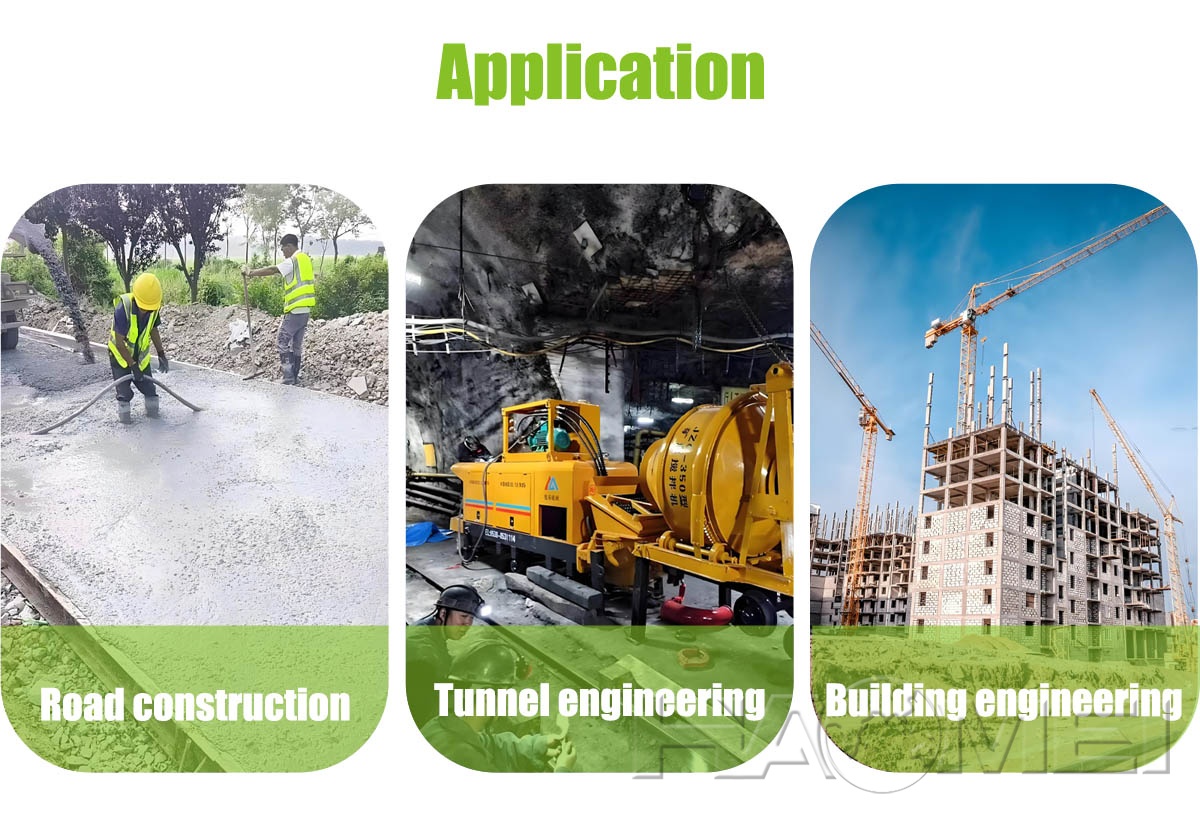
7. Engineering Applications of HBT Series Trailer Concrete Pumps
HBT series trailer concrete pumps are used across many types of projects. Selection should be based on delivery distance, concrete properties, pouring schedule, and site logistics.
7.1 Building Construction
In residential, commercial, and industrial buildings, trailer concrete pumps are commonly used for:
raft foundations
floor slabs
shear walls
columns and beams
Electric models are often preferred on sites with reliable power and stricter environmental control.
7.2 Bridge and Road Construction
For bridges, culverts, pavements, and municipal road projects, trailer pumps are valued for flexible pipeline layout and convenient repositioning. Diesel units are often selected where site power is unstable or temporary.
7.3 Tunnel and Underground Works
Tunnel construction requires attention to pumping pressure reserve, aggregate grading, pipeline wear, and continuous operation. In these conditions, the specification review should emphasize pressure capacity, valve reliability, and maintenance convenience.
7.4 Water Conservancy and Rural Infrastructure
Canals, retaining structures, slope protection, and remote civil works often require durable trailer pumps that can work under variable field conditions with practical transport and setup requirements.
8. Practical Selection Points for Buyers
When selecting HBT series trailer concrete pump specifications, the following factors should be reviewed together rather than separately.
8.1 Concrete Characteristics
| Concrete Factor | Impact on Pump Selection |
|---|---|
| Slump | Affects flowability and pumping resistance |
| Aggregate size | Must match cylinder and pipeline limits |
| Mix proportion | Influences wear, lubrication, and pressure demand |
| Admixtures | May affect setting behavior and pumping continuity |
8.2 Pipeline Layout
| Pipeline Condition | Selection Impact |
|---|---|
| Total horizontal length | Requires sufficient output and line pressure |
| Vertical rise | Increases pressure requirement |
| Number of bends | Adds pumping resistance and wear |
| Pipe diameter | Must match pump design and job demand |
| Reducers and elbows | Need careful layout to reduce blockage risk |
8.3 Site Conditions
| Site Condition | Recommended Consideration |
|---|---|
| Stable industrial power | Electric model may be suitable |
| Remote location | Diesel model may be more practical |
| Narrow site access | Review dimensions, towing, and setup space |
| Long working hours | Focus on cooling, service intervals, and wear-part management |
9. Operation and Maintenance Considerations
Correct operation and maintenance are essential for keeping a trailer concrete pump within its intended specification range.
9.1 Before Pumping
Check hydraulic oil level and cleanliness.
Inspect pipeline connections and clamp security.
Confirm proper lubrication of the pipeline.
Verify hopper cleanliness and agitator operation.
Check that concrete mix design matches pumping requirements.
9.2 During Pumping
Maintain continuous and uniform feeding.
Avoid excessive waiting time in the pipeline.
Monitor pressure changes and abnormal vibration.
Observe hopper level to prevent air entry.
9.3 After Pumping
Clean the hopper, cylinders, and pipelines thoroughly.
Inspect wear parts for service condition.
Check seals, hoses, and electrical connections.
Record operating hours and maintenance actions.
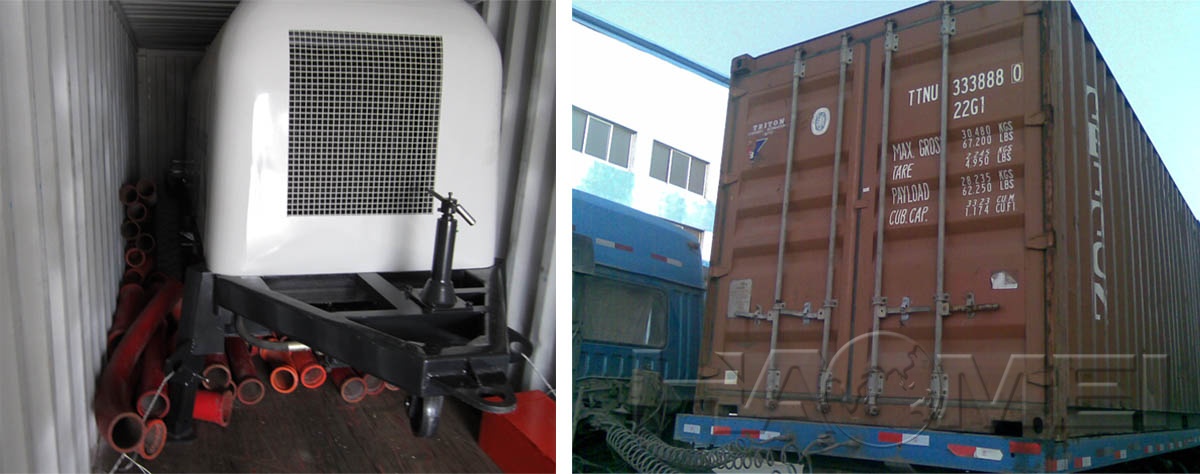
10. Industry Trends in Trailer Concrete Pump Development
Current market demand is pushing trailer concrete pump development toward several practical directions:
| Industry Trend | Technical Focus |
|---|---|
| Higher operating efficiency | Better hydraulic matching and faster response |
| Improved reliability | More durable wear parts and optimized structural design |
| Easier maintenance | Better service access and modular component layout |
| Wider jobsite adaptability | Flexible power options and stronger environmental suitability |
| Smarter control systems | Fault diagnosis, monitoring, and operation assistance |
From a manufacturing standpoint, equipment development is increasingly centered on total lifecycle value rather than only peak output figures.
11. Conclusion
Understanding HBT series trailer concrete pump specifications requires more than reading output and pressure values alone. The real suitability of a machine depends on system design, concrete characteristics, pipeline conditions, power configuration, and maintenance planning.
For contractors, project managers, and equipment buyers, a clear review of application requirements is the most reliable basis for model selection. A suitable HBT trailer concrete pump should match the jobsite's concrete mix, delivery distance, operating schedule, and service conditions, while maintaining practical reliability throughout the construction cycle.
When evaluating equipment, specification tables should always be read together with structural design, hydraulic configuration, wear-part strategy, and actual engineering needs. This approach helps ensure the selected machine is technically appropriate for the intended pumping application.