
News
How to Maintain a JS500 Twin-Shaft Concrete Mixer
The JS500 twin-shaft compulsory concrete mixer is widely used in small and medium-sized batching plants, precast component factories, and road construction projects due to its high mixing efficiency, strong adaptability, and excellent mixing uniformity. However, in actual operation, many users focus more on output capacity and purchase price while neglecting daily maintenance. This often leads to frequent failures, rising repair costs, and even project delays.
Scientific and systematic maintenance is the key to ensuring stable operation and long service life of the JS500 concrete mixer.
Understanding the JS500 Concrete Mixer
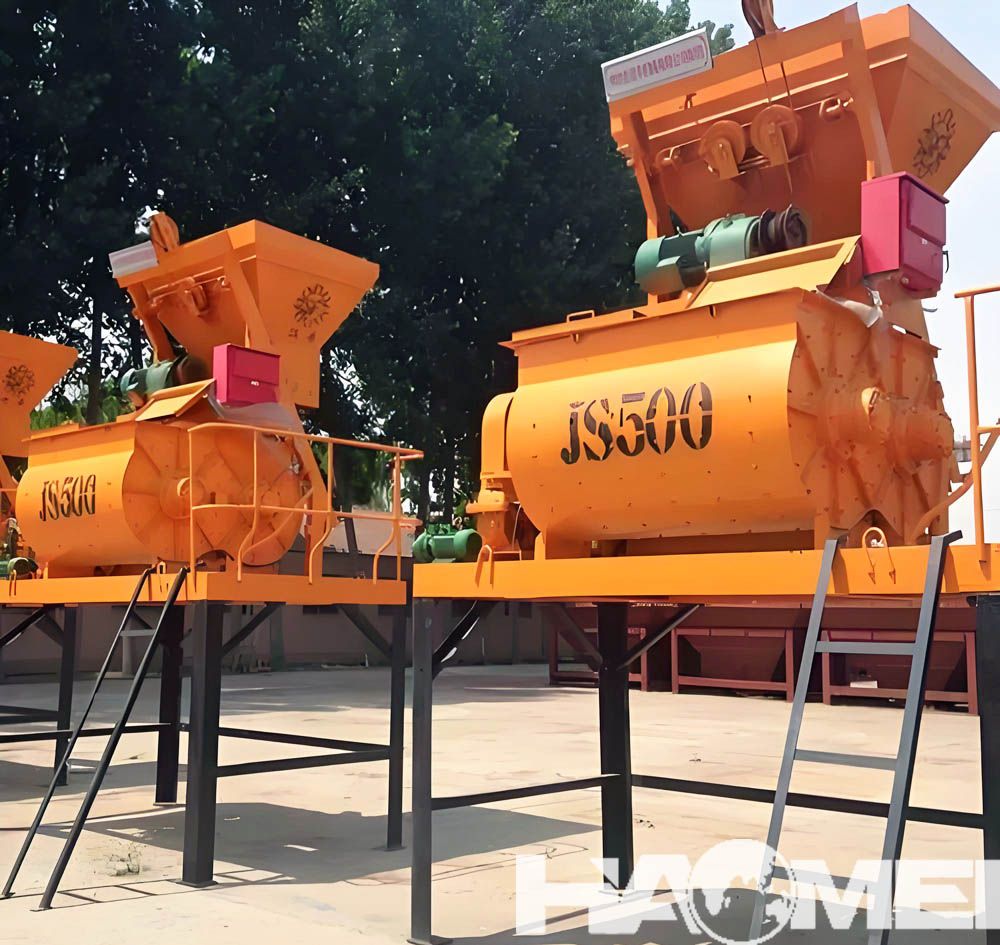
The JS500 twin-shaft concrete mixer (JS500 Twin-Shaft Concrete Mixer) is one of the most commonly used models in the construction industry. As a twin horizontal shaft compulsory mixer, it is designed to produce high-quality, highly uniform concrete in a very short time through powerful mechanical shearing and forced mixing.
The JS500 concrete mixer has a discharge capacity of 0.5 m³ (500 liters) per batch, with a theoretical hourly output of 20-25 m³. It can operate as a standalone unit or serve as the core mixing host of an HZS25 concrete batching plant. The machine is capable of mixing dry hard concrete, plastic concrete, flowing concrete, and various types of mortar, making it an ideal choice for small to medium construction sites and precast plants.
Main Structural Components
Mixing System:
Wear-resistant liners and mixing blades made of high-hardness alloy cast iron. These are the fastest-wearing components and require the most frequent maintenance.Transmission System:
Consists of an electric motor, belt pulley, and dedicated reducer, providing stable and powerful torque for mixing.Feeding System:
Typically equipped with a skip hoist (winch lifting system) to realize automatic feeding.Water Supply System:
A water pump sprays water directly above the mixing shafts to ensure even water distribution.Discharge System:
Uses a pneumatic or hydraulic discharge gate to ensure fast discharge and reliable sealing.
How to Maintain a JS500 Concrete Mixer
1. Daily Inspection (After Each Shift)
Clean residual concrete from the mixing shafts, arms, and inner wall of the mixing drum to prevent material hardening and reduced efficiency.
Check the lubrication system oil level to ensure sufficient lubrication at all points (such as shaft-end seals and reducer).
Inspect the V-belt tension. When pressed at the midpoint, the belt should deflect 10-15 mm; adjust if too loose or too tight.
Remove dust and debris from the motor, gearbox, and other key components to ensure proper heat dissipation.
2. Periodic Maintenance
Lubrication:
Add or replace lubricating oil according to equipment requirements. For example, the gearbox oil should be replaced for the first time after 50 operating hours, and subsequently at specified intervals. Check daily whether grease is properly delivered to the shaft ends.
Clearance Adjustment:
Regularly check the meshing clearance of transmission gears to ensure it remains within the specified range, preventing abnormal wear or noise.
Fastener Inspection:
Periodically check and tighten all bolts to prevent loosening caused by vibration, which may result in oil leakage or air leakage.
Control System Inspection:
Conduct a comprehensive inspection of the electrical control system every month to ensure sensors, instruments, and control circuits operate normally.
3. Seasonal Maintenance
Winter Maintenance:
Implement anti-freezing measures. After operation, thoroughly clean the mixer drum with water and drain all water from the pump, tank, and pipelines to prevent freezing damage. Note that lubricant viscosity changes at low temperatures; replace with low-temperature lubricants if necessary.
Summer Maintenance:
Pay close attention to heat dissipation. Regularly clean the motor and reducer surfaces to ensure adequate cooling under high-temperature conditions.
Rainy or High-Humidity Environments:
Strengthen moisture-proof protection for the electrical system to prevent short circuits or equipment failure caused by dampness.
Common Fault Diagnosis and Troubleshooting
During operation, some common faults may occur. Understanding how to diagnose and eliminate these issues can significantly reduce downtime.
1. Mixing Shaft Stops Rotating
Possible Causes:
Severe overload, foreign objects stuck between the mixing blades and drum wall, or excessively loose motor belts.
Solutions:
(1)Check the load condition and adjust the feeding amount if overloaded.
(2)Inspect and remove any foreign objects.
(3)Check and adjust belt tension as required.
2. Abnormal Noise
Possible Noise Sources: Mixing drum and reducer.
Solutions:
Sharp noise from the mixing drum usually indicates friction caused by foreign objects between blades or scrapers and the drum wall. Stop the machine, remove the foreign objects, and adjust the clearance.
Noise from the reducer may be caused by internal debris or bearing damage. Disassemble for inspection, remove debris, or replace damaged bearings.
3. Shaft-End Leakage and Excessive Temperature
Cause:
Damaged floating seal or insufficient lubrication.
Solution:
Replace the floating seal promptly and add lubricating oil according to specifications.
Safety Operation Guidelines
Pre-operation Inspection:
Ensure all safety devices are functioning properly and personnel are clear of the equipment.Load Control:
Strictly follow the mixing ratio and material loading limits to prevent overloading.Emergency Stop:
In case of abnormal conditions, immediately press the emergency stop button.
Through the above systematic maintenance, the service life of the JS500 twin-shaft concrete mixer can be effectively extended, ensuring its stable and efficient operation.